
Climate change exposes up to 560 million children worldwide to extreme heat for at least one month longer each year
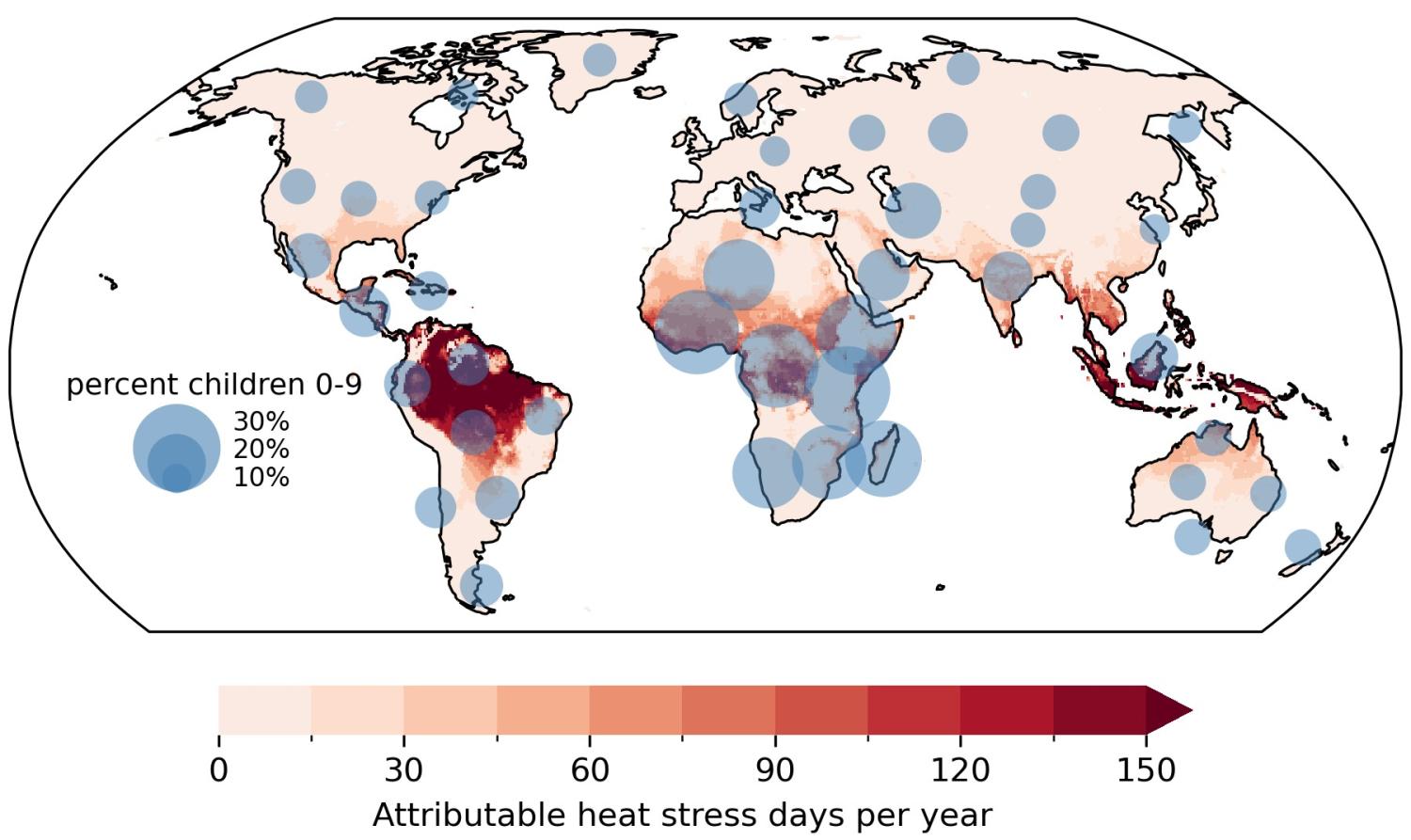
New research from the Vrije Universiteit Brussel (VUB) shows that up to 560 million children aged between 0 and 9 years worldwide experience at least one extra month (30 days or more) of heat stress per year due to human-induced climate change. This corresponds to 43 per cent of all children in this age group. This additional exposure exceeds that of any other age group and is almost three times higher than the 190 million people (30 per cent) aged between 60 and 69 who experience this additional health threat. Children are therefore already disproportionately exposed to high levels of dangerous humid heat, driven by human-induced climate change, and this exposure is expected to increase further as global warming continues.
Under the projected climate change scenarios of 1.5°C and 2°C of global warming – which are highly likely to be exceeded if countries continue with their current policies – the number of children exposed to an additional month of extreme heat is expected to rise to 620 million (49 per cent) and 650 million (59 per cent) children aged 0 to 9, respectively.
The study was carried out by an international research team led by the VUB and is published today in the scientific journal *Science Advances*. It is the first analysis to quantify, on a global scale, how heat resulting from climate change affects different age groups, both today and in the near future. To this end, the researchers combined population data with advanced climate models and attribution science, a method that assesses the extent to which climate change contributes to extreme weather conditions. The results show that the health risks of climate change are already a reality today and, moreover, are unevenly distributed across generations and regions.
Rosa Pietroiusti, lead author of the study and a PhD student at the VUB: “Climate change is already causing hundreds of millions of children worldwide to suffer from dangerous heat, posing serious risks to their health. Children in developing countries are disproportionately exposed to climate extremes, both now and in the future, despite having contributed the least to historical greenhouse gas emissions. At the same time, poverty, inadequate housing, limited access to cooling and overburdened health systems mean that many children have few options for protecting themselves from the heat. Young people are not only the hardest hit by climate change; they are also at the forefront of the fight against it, from leading school strikes for the climate to bringing important climate cases before national and international courts. We need governments to step up and take serious and immediate action to respond to young people’s calls for climate justice.”
Key findings
Extreme heat disrupts the normal functioning of the human body, exacerbates underlying health conditions and can lead to serious complications such as heatstroke, dehydration and organ failure. Dangerous heatwaves are becoming more frequent and intense due to climate change, which is primarily driven by the burning of fossil fuels such as oil, coal and gas.
The study focuses on humid heat, which is more dangerous than dry heat. Humid heat impairs the body’s ability to sweat and cool down, leading to dangerous levels of heat stress
Children are particularly vulnerable to extreme heat: their bodies heat up more quickly than those of adults, they sweat less efficiently and they are dependent on adult care. Overheating can lead to serious health risks, including dehydration and life-threatening heatstroke, as well as impacts on learning and cognitive development.
The findings come at a crucial moment for climate policy. The ongoing energy crisis has once again highlighted the risks of dependence on fossil fuels, and by 2026 the world had already experienced some of the most severe heatwaves ever recorded, some of which would have beenpractically impossible without the influence of climate change.
Wim Thiery, lead author of the study and professor at the VUB: “Our research emphasises that, in order to protect future generations, policymakers must urgently and drastically reduce fossil fuel emissions and limit global warming in line with the Paris Agreement to halt the most catastrophic consequences of the climate crisis. At the same time, a massive increase in climate finance for developing countries and targeted adaptation measures worldwide, such as heat action plans and improved public health systems, will be essential to protect younger generations in a rapidly warming world.”
https://www.vub.be/en/news/climate-change-exposes-560-million-children-worldwide


