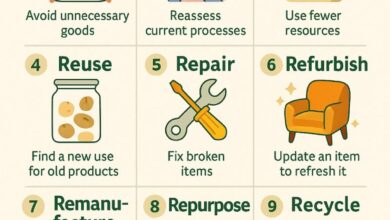
Scope 3 emissions in a nutshell

The Invisible Giant: Why Scope 3 Emissions Are the Ultimate Test of Corporate Climate Action
The climate narrative of many corporations has historically been focused on their direct operations (Scope 1) and purchased utilities (Scope 2). But that comfortable framework is now obsolete. The stark truth is that the majority of a company’s real climate impact often up to 90% of its total emissions hides within Scope 3: the complex web of activities across the entire value chain.
Scope 3 is the Invisible Giant in the corporate carbon footprint. Ignoring it is no longer possible; measuring and managing it is the new frontier of business transformation.
Unmasking the Value Chain: Where Scope 3 Lives
Scope 3 is defined by indirect emissions those “beyond the walls” of the company that occur both upstream (supplier-related) and downstream (customer-related).
| Upstream Activities | Downstream Activities |
| Purchased Goods & Services (The materials needed for the product) | Use of Sold Products (Energy consumed by a car or appliance sold) |
| Business Travel & Employee Commuting | End-of-Life Treatment of products (Disposal or recycling) |
| Waste Generated in Operations | Investments (For financial institutions) |
| Transportation & Distribution (Inbound materials) | Franchises and Leased Assets |
For key sectors like retail, finance, technology, and consumer goods, these indirect emissions are not a footnote they are the story of their environmental impact.
The Triple Imperative: Why Scope 3 is Non-Negotiable Now
Measuring Scope 3 has rapidly shifted from a voluntary best practice to a mandatory business imperative driven by three powerful forces:
- Regulatory Enforcement: Regulators worldwide are rapidly tightening disclosure rules. Scope 3 is fast becoming a mandatory reporting requirement, exposing non-compliant companies to legal and financial risk.
- Investor Demand: Investors view climate risk as financial risk. They are demanding full value-chain transparency to accurately assess a company’s long-term viability and resilience in a transitioning economy.
- Credibility & Greenwashing: Any corporate claim to Net-Zero or climate leadership lacks credibility without a robust, verified Scope 3 plan. Ignoring the majority of emissions is, fundamentally, a form of Greenwashing Risk.
Simply put: If companies aren’t measuring Scope 3, they aren’t measuring reality.
Scope 3: The Transformation Lens
The future of sustainability reporting is not about what you merely control (Scopes 1 & 2); it is about what you can influence across your entire ecosystem.
Scope 3 is more than just an emissions category; it is a business transformation lens because it compels organizations to look deep into their operations:
- Exposing Risk: It highlights vulnerabilities in the supply chain, such as reliance on high-carbon suppliers or unstable logistics networks.
- Unlocking Innovation: The requirement to reduce Scope 3 forces companies to collaborate with suppliers on decarbonization, redesign products for circularity, and innovate delivery systems.
The companies destined to win the sustainability race are the ones currently mapping their entire value chain, investing in supplier collaboration, redesigning the lifespan of their products, and proving their climate strategy is a real operational shift, not just a PR campaign.
source: