Ducth engineers grow moss absorbing CO2
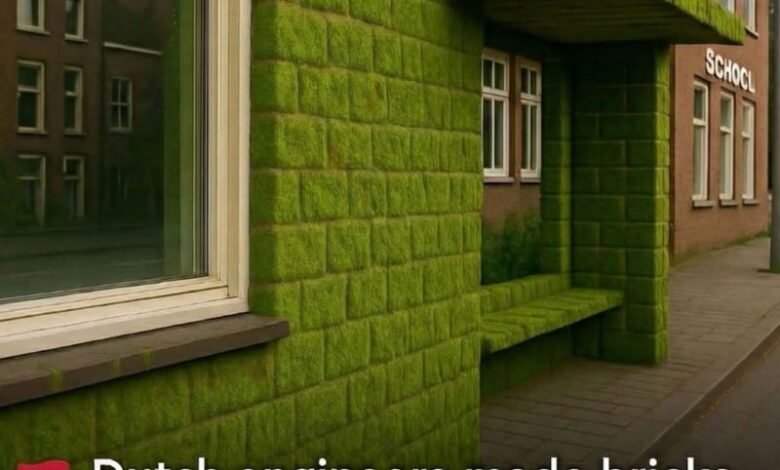
Living Architecture: The Dutch Engineering Feat of Moss-Integrated Bricks
In the pursuit of carbon neutrality, Dutch engineers have reimagined the most basic building block of civilization: the brick. By creating a bio-receptive concrete that encourages the spontaneous growth of moss, they have effectively transformed cold facades into biochemical filters.
How the Bio-Receptive Technology Works
Traditional concrete is alkaline and smooth, making it hostile to plant life. The Dutch innovation alters the material’s chemical and physical properties to create a “micro-habitat.”
- Porosity Engineering: The bricks feature a tailored rough texture and internal micro-pores that retain moisture, mimicking the natural rock surfaces where moss thrives.
- pH Neutralization: Engineers have lowered the surface alkalinity to a near-neutral level, allowing moss spores to anchor and grow without chemical inhibition.
- Water Management: The material acts as a reservoir, absorbing rainwater and slowly releasing it to the moss, eliminating the need for complex irrigation systems.
The Multi-Faceted Benefits of Urban Moss
Moss is a biological powerhouse. Unlike flowering plants, it lacks traditional roots (using rhizoids instead) and absorbs nutrients directly from the air, making it the perfect urban air purifier.
- Carbon Sequestration: Moss grows in dense mats, providing a large surface area to capture and store CO2.
- Particulate Matter (PM2.5) Capture: The sticky surface of moss traps fine dust, soot, and heavy metals, which the plant then metabolizes or sequesters.
- The Cooling Effect: Through evapotranspiration, these living walls can reduce the surface temperature of a building by 2°C to 5°C, significantly lowering air conditioning costs and mitigating the Urban Heat Island (UHI) effect.
- Acoustic Insulation: The soft, irregular texture of moss is an excellent sound absorber, reducing city noise pollution.
Comparison: Traditional vs. Living Facades
| Feature | Standard Brick/Concrete | Moss-Integrated Brick |
| Environmental Impact | Carbon-intensive; heat-absorbing | Carbon-absorbing; self-cooling |
| Maintenance | Requires cleaning/painting | Self-sustaining; no irrigation needed |
| Air Quality | Reflects pollutants | Filters NOx and PM2.5 |
| Biodiversity | Zero | Supports insects and microorganisms |
Implementation and Scalability
Piloted in cities like Amsterdam and Eindhoven, this technology is designed for “circularity.” Because the moss grows naturally from the environment, there is no need for expensive nursery-grown panels. These bricks can be used for new construction or as thin “retro-fit” tiles for existing skyscrapers, making green renovation accessible for older urban centers.
By merging biotechnology with structural engineering, the Netherlands is proving that the cities of the future won’t just stand in the environment they will breathe with it.
source: