Five Ways Communities Are Adapting To The Climate Crisis
This year, the world faced increasingly harsh realities as the climate crisis continues to intensify. From raging wildfires to relentless floods, storms, and droughts, the effects of climate change have left a trail of devastation across every continent. Experts agree: global efforts to adapt to these changes must be dramatically scaled up if communities are to survive the ongoing and future impacts. According to the United Nations Environment Programme’s (UNEP) 2023 Adaptation Gap Report, developing nations alone will need between $215 billion and $387 billion annually to cope with the fallout from climate change. Yet, current global adaptation spending falls far short of that figure.
Despite the staggering challenge, rays of hope are emerging in the form of innovative projects that help communities become more resilient. From the rice paddies of Cambodia to the mountain ecosystems of Peru, local solutions are taking root and proving that adaptation is not only possible but essential. Here are five key examples of how communities around the world are finding ways to adapt to the climate crisis.
1. Ecosystem-Based Adaptation in Cambodia
Rice is a lifeline for Cambodia, accounting for half of the nation’s agricultural output and serving as the foundation for both food security and economic stability. But climate change threatens this vital resource. Extreme weather patterns, including severe droughts and floods, have started to devastate rice crops. Adding to these challenges, Cambodia faces economic and institutional hurdles, such as inadequate irrigation infrastructure.
To combat this, UNEP has spearheaded a project that provides vulnerable households with drought-resistant rice seeds and introduces improved rice storage techniques. But the initiative goes beyond short-term fixes. UNEP also restored 1,875 hectares of degraded forests by planting 900,000 trees around paddy fields. These trees not only curb soil erosion worsened by extreme rainfall but also enhance soil fertility, significantly improving the productivity of 2,200 hectares of rice paddies. This ecosystem-based adaptation effort illustrates how restoring nature can provide vital protection against climate threats while securing food production.
2. A New Approach to Adaptation Finance
Financing adaptation projects has traditionally been seen as an expensive undertaking, often requiring grants or compensation. However, a growing understanding is emerging that private investment can play a key role in financing climate resilience. The Private Finance Advisory Network, a global consortium of climate finance experts, is breaking down barriers to facilitate private investment in adaptation.
This initiative, supported by Canada’s International Development Research Centre, connects adaptation projects with impact investors, enabling them to access private financing. So far, the network has received 477 business proposals in areas ranging from agriculture and water management to microfinance and ecosystem services. The project not only tests investor appetite for climate adaptation but also builds capacity among both project developers and investors. This innovative approach has the potential to unlock significant private capital for adaptation efforts around the globe.
3. Planned Relocation in Fiji
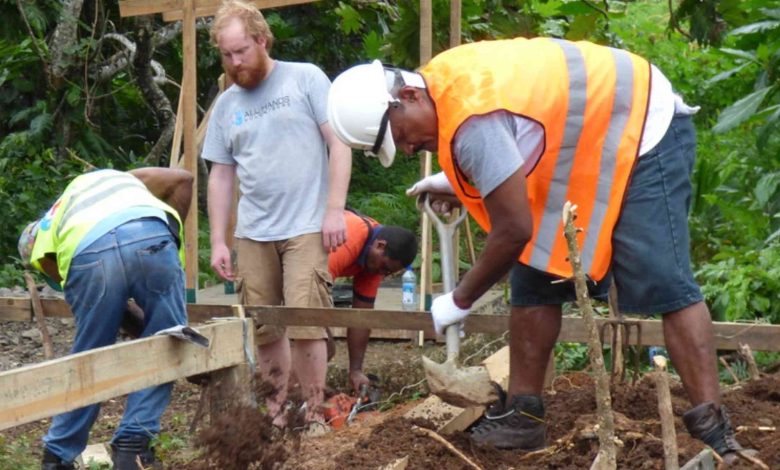
Few places are as vulnerable to rising sea levels as the Pacific island nation of Fiji. Coastal communities are already grappling with frequent cyclones and storm surges, with sea-level rise threatening to erase entire villages. Recognizing the existential threat, Fiji has taken a proactive approach by developing an innovative financing mechanism to support the relocation of 676 coastal communities—42 of which are expected to move by the end of this decade.
What sets this project apart is its emphasis on collaboration with the affected communities. Ensuring a smooth and coherent relocation process requires close coordination between local governments, community leaders, and international agencies. Drawing on lessons learned from earlier relocations, Fiji’s efforts are a powerful example of how countries can confront one of the most difficult climate adaptation challenges—moving entire populations while preserving their social and cultural fabric.
4. Protecting Mountain Ecosystems in Peru
Peru’s mountain ecosystems, particularly the glaciers and high-altitude environments, are crucial for regulating water supplies and sustaining agriculture. These ecosystems provide water for millions of Peruvians, but climate change is threatening their very existence. Glaciers are melting at unprecedented rates, putting water security and disaster risk management in jeopardy.
The Glaciares+ project is helping to protect these vital ecosystems by integrating local and Indigenous knowledge into climate adaptation strategies. Through this initiative, communities, regional governments, and academic institutions work together to manage water resources more sustainably and prepare for the risks of climate-related disasters. The project has led to the creation of early warning systems for landslides, benefiting nearly 70,000 people. By bringing together traditional wisdom and modern science, Peru is not only conserving its mountain ecosystems but also safeguarding its future water supply.
5. Early Warning Systems in the Caribbean
The Caribbean has long been known for its mild weather and occasional tropical storms. But in recent years, the region has been hit by increasingly severe hurricanes, flooding, droughts, and landslides. These changes in weather patterns are not only destructive—they are also creating new public health crises. The risk of mosquito-borne diseases, such as dengue fever, is rising, with outbreaks now occurring every one to three years, compared to the previous cycle of seven to ten years.
To address this growing threat, the Caribbean Public Health Agency has developed a suite of climate-adaptive public health initiatives. These include national food and water safety plans, quarterly climate-related health bulletins, and pioneering early warning systems that integrate climate data to predict disease outbreaks. By forecasting potential outbreaks up to three months in advance, these systems can help communities take preventive measures and reduce the health impacts of climate change.
These examples from around the world show that while the climate crisis is an immense challenge, it also presents opportunities for innovation, collaboration, and resilience. Communities are rising to the occasion, finding creative ways to adapt to an increasingly unpredictable world. As UNEP’s Adaptation Gap Report indicates, the financial scale of adaptation must grow exponentially. But with projects like these, a blueprint for building a more resilient, sustainable future is already taking shape.
Through a combination of local knowledge, financial innovation, and international cooperation, communities worldwide are proving that adaptation is not just possible—it’s happening right now. And while much more needs to be done, these efforts provide hope that we can, together, navigate the storm of climate change.
source :
https://www.preventionweb.net/news/five-ways-communities-are-adapting-climate-crisis