How the Comoros is taking climate action from promise to progress
Executing Its Climate Transition
As a volcanic archipelago in the southwestern Indian Ocean, the Union of the Comoros faces a dual crisis: acute vulnerability to extreme weather and deep-seated socio-economic fragility.
- Socio-Economic Landscape: 19% of the population lives in multidimensional poverty, with another 19% classified as highly vulnerable.
- Economic Dependencies: Heavily reliant on agriculture and a narrow set of export crops (vanilla, ylang-ylang, cloves).
- Climate Shock History: Devastating events such as Cyclone Kenneth (2019) which impacted 40% of the population (345,000 people) and wiped out 14% of GDP and Cyclone Chido (December 2024) highlight the nation’s urgent need for systemic adaptation.
Despite contributing a negligible fraction of global greenhouse gas (GHG) emissions, the Comoros has established a comprehensive policy framework, technical roadmap, and investment pipeline to build a low-carbon, climate-resilient economy.
1. National Policy & Policy Architecture (The Revised NDC)
In March 2026, the Comoros submitted its revised Nationally Determined Contribution (NDC) under the UNFCCC framework, supported by UNDP’s Climate Promise 2025.
                ┌─────────────────────────────────────────┐
                │        COMOROS 2035 NDC TARGETS         │
                └────────────────────┬────────────────────┘
                                     │
           ┌─────────────────────────┴─────────────────────────┐
           ▼                                                   ▼
┌──────────────────────┐                            ┌──────────────────────┐
│   Emissions Output   │                            │ Carbon Sequestration │
└──────────┬───────────┘                            └──────────┬───────────┘
           │                                                   │
 ┌─────────┴───────────┐                             ┌─────────┴───────────┐
 │ Unconditional: -14% │                             │    Target Capacity: │
 │ Conditional:   -57% │                             │    1,437 kt CO₂e    │
 └─────────────────────┘                             └─────────────────────┘
Key Mitigation Commitments
- Target Horizons: Reduce GHG emissions by 14% unconditionally (using the national budget) and up to 57% conditionally (contingent on international finance) by 2035 across five sectors: Energy, Agriculture, Forestry & Land Use, Waste, and Industrial Processes.
- Carbon Sink Ambition: Target a carbon dioxide sequestration capacity of 1,437 kilotonnes of CO2 by 2035.
Key Adaptation & Ecological Restorations
- Watersheds & Water Security: Restore 6,000 hectares of watersheds; construct 50 micro-dams/reservoirs.
- Ecosystem Restoration: Reforest 8,000 hectares of degraded land; rehabilitate 1,000 hectares of mangroves and 600 hectares of coral reefs.
- Social Dimension: Formally incorporates gender-responsive strategies and protection for youth and vulnerable demographics.
Financial Mobilization
The total cost to implement the NDC is estimated at US 6.6 billion by 2030.
- Green Climate Fund (GCF): Mobilized nearly $20 million in 2025, expanding the pipeline to $69 million.
- Geothermal Financing: Secured $44 million for initial exploration and development.
- Carbon Markets: Preparing participation under Article 6 of the Paris Agreement utilizing forestry and mangrove assets through REDD+ mechanisms.
2. Sector-by-Sector Action Plan
| Sector | Core Problem | Strategic Action & Infrastructure Investments | Partners / Funding |
| Water Governance & Supply | Grande Comore lacks permanent rivers; Anjouan & Mohéli face disappearing streams and drying aquifers. | • Established the Energy and Water Regulatory Agency. • Built resilient hydraulic infrastructure (boreholes, treatment plants, distribution) across 50 localities. • Benefiting 230,000 citizens. | UNDP, GCF |
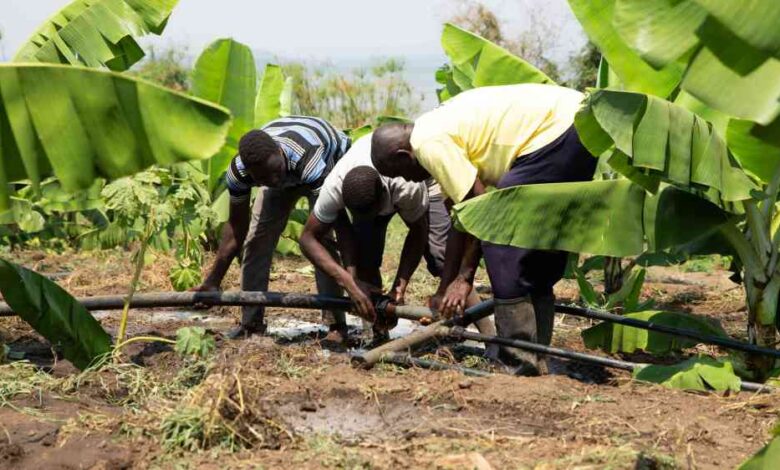
| Agriculture & Food Security | Crop yields and value chains (vanilla, cloves) threatened by severe rainfall variability and prolonged droughts. | • Deploying climate-smart practices across 8 Rural Centres for Economic Development. • Introduced heat/drought-resistant crop varieties (e.g., resilient banana strains) and agroecological soil/water management. • Projected to increase resilience for $>11\%$ of the population. | LDCF, GEF, UNDP |
| Early Warning & Health | Inadequate data infrastructure to anticipate extreme events and monitor climate-sensitive diseases (e.g., malaria, cholera). | • Modernized the Technical Directorate of Meteorology (DTM) hydromet network. • Constructed a National Water Quality Control Laboratory at the University of the Comoros. | GCF, UNDP |
| Disaster Risk Management | Geographically exposed islands with vulnerable communications during severe weather. | • Deployed real-time digital geolocation & data collection tools during Cyclone Chido (2024). • Updated the National Strategy for Disaster Risk Reduction 2024–2030. • Established the Insurance and Risk Finance Facility with the Central Bank of Comoros. | GEF, UNDRR, World Bank, AfDB |
3. The Energy Transition Framework
Although electricity access grew from 46% in 2017 to 71% in 2025, the energy sector still accounts for 60% of national GHG emissions due to heavy reliance on imported diesel generators.
1. Regulatory Modernization
- Electricity Code (2023): Overhauled the national legal architecture to enable private-sector clean energy investment.
- Secondary Decrees: Currently validating specific regulatory frameworks for solar minigrids, wind generation, geothermal energy, self-production, and feed-in tariffs.
2. Geothermal Energy (Base Load Expansion)
- Resource Mapping: Advanced geoscience equipment confirmed high-temperature geothermal resources at the Karthala volcano.
- Project Scale: Development of a 15 MW Geothermal Power Plant currently in the exploration and risk-mitigation phase.
- Institutional Support: Supported by the Platform for Investment Support and Technical Assistance (PISTA) (funded by Italy) to strengthen the Geological Bureau and build bankability for private investors.
3. Distributed Solar Minigrids (Africa Minigrids Program)
Testing three distinct, island-tailored technological and operational deployment models:
┌────────────────────────────────────────────────────────────────────────┐
│                        AFRICA MINIGRIDS PROGRAM                        │
└───────────────────────────────────┬────────────────────────────────────┘
                                    │
       ┌────────────────────────────┼────────────────────────────┐
       ▼                            ▼                            ▼
┌───────────────┐            ┌───────────────┐            ┌───────────────┐
│ Grande Comore │            │    Anjouan    │            │    Mohéli     │
├───────────────┤            ├───────────────┤            ├───────────────┤
│ Multifunction │            │ Standard      │            │ Grid-tied     │
│ Solar Platform│            │ Minigrid      │            │ Isolated      │
│ + Battery     │            │ System        │            │ Minigrid      │
└───────────────┘            └───────────────┘            └───────────────┘
- Policy to Action: The Comoros is moving beyond high-level climate targets by anchoring its 2026 NDC in legally binding regulatory codes (e.g., the 2023 Electricity Code, new Water Governance Frameworks).
- Systemic Adaptation: Investments prioritize multi-benefit interventions, combining water infrastructure, disease surveillance, and disaster insurance to shield vulnerable populations.
- The Finance Challenge: Unlocking the remaining capital out of the estimated $\text{US } \$6.6\text{ billion}$ required by 2030 will determine how quickly these pilot projects, minigrids, and geothermal plans reach full scale across the archipelago.
source:
https://www.preventionweb.net/news/how-comoros-taking-climate-action-promise-progress