From sustainability to ESG

The Strategic Hierarchy of Sustainability and ESG
In the corporate world, using “Sustainability” and “ESG” interchangeably isn’t just a semantic error it’s a management risk. Mixing them up leads to “execution gaps” where a company might report high ESG scores while failing to address its actual long-term viability.
To drive real change, leadership must understand these four distinct layers of responsibility:
1. Sustainability: The Systemic North Star
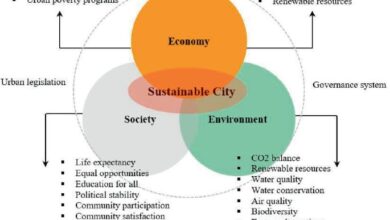
Sustainability is the broadest lens, sitting at the Macro/System Level. It isn’t about one company; it’s about the “Operating Manual” for the planet.
- Focus: Planetary boundaries, intergenerational equity, and ecological resilience.
- The Goal: Ensuring that the global economy functions without exhausting the natural and social resources it relies on.
2. Corporate Sustainability: The Strategic Integration
This is where the system level meets the Business Model. It is the process of embedding systemic realities into how a company actually makes money.
- Actions: Decarbonizing Scope 1, 2, and 3 emissions, ensuring human rights due diligence, and re-engineering supply chains.
- The Goal: Transforming the core business to be compatible with a sustainable future.
3. CSR (Corporate Social Responsibility): The Programmatic Bridge
CSR is often Tactical and Programmatic. While valuable, it usually sits “on top” of the business rather than at its core.
- Actions: Philanthropy, employee volunteering, and community grants.
- The Goal: Building “social license to operate” and brand equity without necessarily changing the production line or the balance sheet.
4. ESG (Environmental, Social, and Governance): The Measurement Tool
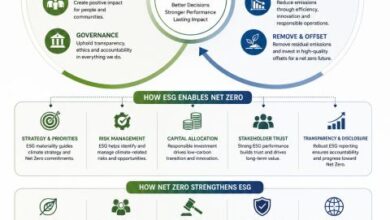
ESG is the Data and Disclosure Layer. It is a specialized framework built for capital markets to bridge the gap between performance and investment.
- Focus: Financial materiality, standardized metrics (KPIs), risk ratings, and regulatory compliance.
- The Goal: To provide investors with a comparable, data-driven “snapshot” of a company’s risk and health.
Why the Distinction Matters for Execution
The danger for modern organizations is “The ESG Trap”: focusing on the metrics (ESG) before defining the strategy (Sustainability).
| Concept | Purpose | Primary Audience |
| Sustainability | Survival of the System | Future Generations & Ecosystems |
| Corp. Sustainability | Transformation of the Firm | Board, Leadership, & Employees |
| CSR | Social Engagement | Local Communities & Public |
| ESG | Risk & Performance Valuation | Investors, Banks, & Regulators |
The “Top-Down” Coherence Challenge
For an organization to be truly effective, the flow must be upstream to downstream:
- Understand the systemic boundaries (Sustainability).
- Adapt the business strategy to those boundaries (Corporate Sustainability).
- Measure and report that progress to the market (ESG).
ESG does not create sustainability; it merely measures it. Without a systemic strategy at the top, ESG becomes a reporting exercise disconnected from real-world impact.
source: