Germany is convering its bike paths
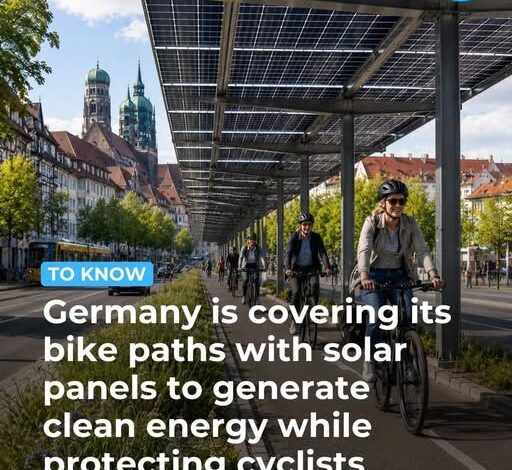
Germany is pioneering an urban design shift that turns standard bicycle infrastructure into active, clean-energy corridors. By building solar-panel canopies over bike paths, they are proving that green cities don’t always need to expand outward they just need to think upward.
Dual-Purpose Infrastructure: The Freiburg Model
For decades, urban planning treated infrastructure as a single-use tool: roads were for driving, sidewalks were for walking, and roofs were for shelter. The pilot project in Freiburg, Germany, shatters this old convention by building a 300-meter solar canopy directly over an existing cycling path.
This creates a symbiotic relationship between the cyclist and the city grid:
- Human-Centric Protection: At ground level, the canopy acts as a shield. It keeps cyclists dry during heavy downpours and cool under the blistering summer sun, making active, low-emission commuting far more appealing year-round.
- Grid-Level Production: Above the cyclists’ heads, more than 900 photovoltaic modules quietly work to harvest the sky. This single 300-meter stretch generates roughly 280,000 kWh of clean electricity annually enough to power the daily lives of over 180 local residents.
The “Stacking” Philosophy of Smart Cities
The true innovation here isn’t the solar panel itself; it is the concept of spatial stacking. Traditionally, massive solar farms require clearing hectares of natural land or agricultural fields. By stacking energy production directly on top of existing transportation lanes, cities maximize their footprint without claiming a single new square meter of territory.
Imagine applying this same mindset across an entire urban landscape:
| Existing Infrastructure | The Micro-Generation Upgrade |
| Bus Stops & Train Stations | Transparent solar roofs powering localized digital schedules and lighting. |
| Open-Air Parking Lots | Solar carports providing shade while directly charging the electric vehicles parked beneath them. |
| Highway Noise Barriers | Thousands of kilometers of roadside walls retrofitted with vertical solar cells. |
The future of sustainable design won’t be measured by how much concrete we mix, but by how intelligently we use the surfaces we already have. The smartest cities of tomorrow won’t just consume energy from distant power plants—they will quietly, brilliantly generate it right beneath and above our wheels.