Indonesia’s Food and Energy Estate Pivot: From Forest Clearing to Intensification and Restoration
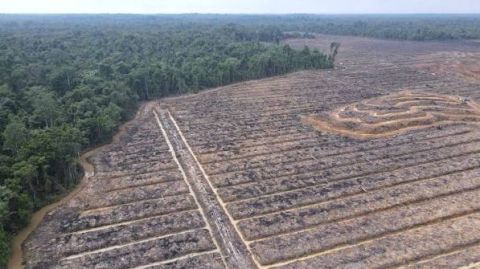
Indonesia may be approaching a significant turning point in the debate over how food security, energy development, and forest protection can coexist. According to announcements highlighted during the Indonesia Sustainability Forum, the government intends to stop clearing native ecosystems for future development associated with its Food and Energy Estates programme and instead direct agricultural and biofuel expansion toward degraded lands. If implemented as described, the shift would fundamentally change a development model that has attracted intense concern because of its potential impact on some of Indonesia’s remaining natural forests.
The significance of this change extends far beyond agricultural policy. The Food and Energy Estates programme has been associated with proposals for large-scale agricultural development, including areas in Papua where extensive natural ecosystems remain. The source describes the policy pivot as effectively halting what had been expected to become the world’s largest deforestation project and potentially sparing almost 4 million hectares of rainforest. It also argues that avoiding this forest conversion could protect important wildlife habitat, including habitat for tree kangaroos, while preventing more than a gigaton of potential climate pollution. These are substantial claims, and their real-world significance will ultimately depend on how the announced direction is translated into spatial plans, permits, implementation rules, and measurable changes on the ground.
At the centre of the new approach is a relatively straightforward proposition: Indonesia does not necessarily have to clear additional natural forests to increase food and energy production. Instead, production could be increased by improving yields on land that is already cultivated, deploying better crop varieties, increasing agricultural productivity, and directing future expansion toward previously degraded areas. This changes the central question from how much additional land should be converted to how effectively existing and degraded land can be used.
Producing More Without Clearing More Forest
One of the key announcements highlighted in the source came from Presidential Envoy Hashim Djojohadikusumo, who stated that Indonesia’s national food-security objectives could be pursued through agricultural intensification, including yield optimisation and the use of superior crop varieties, rather than through continued clearing of forest areas.
This distinction is crucial. For decades, agricultural expansion in many parts of the world has followed an extensive model: when greater production is required, additional land is brought into cultivation. Where agricultural frontiers overlap with forests, the result can be deforestation, habitat fragmentation, carbon emissions, and conflict over land.
Agricultural intensification offers a different pathway. Instead of expanding the physical footprint of agriculture, productivity is increased on land that is already being used. Better seeds, improved soil management, irrigation, precision agriculture, farmer training, appropriate mechanisation, improved storage, and reductions in post-harvest losses can potentially increase the amount of food produced without requiring a proportional increase in cultivated land.
The difference can be profound. If national food-security targets can genuinely be achieved through higher productivity rather than continued expansion into natural ecosystems, forest conservation and agricultural development no longer need to be framed automatically as competing objectives.
Degraded Land Becomes Central to the New Strategy
The second major element described in the announcement concerns approximately 12 million hectares of degraded land. Presidential Envoy Mari Pangestu outlined plans to utilise degraded areas for future food and biofuel development while incorporating them into a broader afforestation and revegetation initiative.
This could represent a major change in how land availability is understood.
Degraded land is often treated simply as land waiting to be developed. In reality, degraded landscapes vary enormously. Some may be suitable for agriculture, some may be better suited to ecological restoration, while others may still support communities, biodiversity, or important hydrological functions.
For that reason, a 12-million-hectare initiative would require much more than identifying a large area on a national map.
The condition of each landscape would need to be understood.
Land tenure would need to be clarified.
Community rights would need to be respected.
Water availability would need to be assessed.
Soil suitability would need to be determined.
And decisions would need to be made about which areas should support food production, which could support biofuel crops, and which should primarily be restored as functioning ecosystems.
Done carefully, degraded-land rehabilitation could simultaneously support economic production and ecological recovery. Done poorly, it could simply relocate environmental and social pressures from one landscape to another.
Four Million Hectares of Forest Represent More Than Trees
The source estimates that the policy shift could spare nearly four million hectares of pristine rainforest from clearing. The ecological importance of such an outcome would extend far beyond the number of trees remaining standing.
Natural forests are complex living systems.
They store enormous quantities of carbon in vegetation and soils. They regulate water. They influence local climate. They protect watersheds. They provide habitat for countless species. They sustain ecological relationships that may have developed over thousands of years.
In Papua especially, forests are also inseparable from the lives and cultures of many Indigenous communities.
A forest may simultaneously function as a source of food, medicine, construction materials, hunting grounds, cultural knowledge, customary territory, and spiritual identity.
This means that preventing forest conversion can protect not only biodiversity and carbon stocks but also social and cultural systems that cannot simply be recreated elsewhere.
Tree Kangaroos Symbolise a Much Larger Biodiversity Question
The announcement specifically mentions tree kangaroos among the species that could benefit from avoiding forest conversion.
But protecting a flagship species is only one part of the ecological significance.
A natural rainforest contains extraordinary biological complexity, from microorganisms and fungi in the soil to insects, birds, reptiles, mammals, and thousands of plant species. Many species depend on specific relationships with other organisms and particular forest structures.
Once an intact forest is converted into a simplified agricultural landscape, even if vegetation remains, those ecological relationships can be profoundly altered.
This is why avoiding deforestation generally provides a different conservation value from planting new trees elsewhere.
A newly revegetated landscape can deliver substantial benefits, but it cannot instantly reproduce the ecological complexity of an old natural forest.
Avoided deforestation and ecosystem restoration should therefore be understood as complementary strategies rather than interchangeable ones.
The Climate Implications Could Be Enormous
The source also argues that avoiding the proposed forest clearing could prevent more than a gigaton of potential climate pollution.
The basic mechanism is straightforward.
Forests contain carbon.
When forests are cleared, part of that stored carbon can be released into the atmosphere through burning, decomposition, or changes in soil conditions. At the same time, the landscape loses part of its future capacity to store additional carbon.
Avoiding forest conversion therefore delivers a double climate benefit: existing carbon remains stored, and the ecosystem can continue functioning as part of the terrestrial carbon cycle.
This is particularly important when development occurs in carbon-rich ecosystems.
From a climate perspective, preventing emissions before they occur can be far more effective than attempting to compensate for them later.
Restoration on 12 Million Hectares Would Be an Enormous Undertaking
The proposed restoration and degraded-land initiative is ambitious by any measure.
Twelve million hectares is not a conventional tree-planting programme.
At that scale, implementation would require long-term financing, institutional coordination, ecological expertise, nurseries, seed systems, land-tenure clarity, monitoring, community participation, and years of maintenance.
The number of seedlings planted would be one of the least meaningful measures of success.
What matters is what happens five, ten, twenty, or thirty years later.
Did the vegetation survive?
Did biodiversity return?
Did soil conditions improve?
Did watersheds recover?
Did carbon stocks increase?
Did local communities benefit?
Did agricultural productivity improve where production was intended?
Did restoration reduce pressure on remaining natural forests?
Those are the indicators that would determine whether millions of hectares were genuinely restored rather than simply counted as having received planting activities.
Restoration Is Not the Same as Planting Trees
This distinction becomes particularly important at such a large scale.
A plantation can contain millions of trees without functioning like a natural forest.
Ecological restoration aims to recover ecosystem functions, not merely tree cover. Depending on the landscape, that could involve natural regeneration, assisted regeneration, enrichment planting, rehabilitation of riparian areas, restoration of wetlands, agroforestry, or other approaches.
In some places, the best intervention may actually be to remove the source of degradation and allow natural regeneration to occur.
In others, active planting may be necessary.
The correct approach depends on the ecosystem.
A national restoration strategy therefore needs ecological diversity rather than a single planting formula applied everywhere.
Local Communities Will Be Critical
The original post places considerable emphasis on the role of Papuan communities and Indonesian civil society in defending local ecosystems.
That point raises a broader principle for implementation.
Communities should not merely become workers hired to plant trees after land-use decisions have already been made.
Their knowledge, rights, and priorities need to be incorporated much earlier.
Local and Indigenous communities often possess detailed knowledge about water systems, forest resources, seasonal changes, food sources, culturally significant areas, and historical land use.
This knowledge can substantially improve restoration planning.
It can also help prevent a familiar problem in large-scale environmental programmes: technically ambitious projects that look impressive on maps but fail because they do not reflect conditions on the ground.
Food Security Should Not Be Reduced to Land Area
The policy shift also challenges a persistent assumption: that increasing food security necessarily requires expanding agricultural land.
Food security is much more complex.
Production matters, but so do productivity, distribution, storage, affordability, logistics, food loss, farmer incomes, market access, nutrition, and consumer demand.
A country can cultivate enormous areas and still experience food insecurity if supply chains are inefficient or households cannot afford nutritious food.
Conversely, improvements in productivity and reductions in food loss can increase available food without expanding the agricultural frontier.
This is why agricultural intensification could become such an important component of the proposed approach.
The real measure should not be hectares converted.
It should be whether the food system becomes more productive, resilient, affordable, and sustainable.
Intensification Must Also Be Sustainable
However, agricultural intensification is not automatically environmentally benign.
Producing more from existing land can create new problems if it depends excessively on water extraction, fertilisers, pesticides, soil degradation, or monoculture.
The objective therefore should not simply be higher yield.
It should be sustainable productivity.
Soil health must be maintained.
Water use must remain within ecological limits.
Chemical inputs should be managed carefully.
Crop diversity and resilience should be considered.
Farmers need access to technology and knowledge.
Climate risks must also be incorporated into production systems.
Otherwise, deforestation pressure may decline while other forms of environmental degradation increase.
Biofuel Development Requires the Same Caution
The proposal to use degraded lands for biofuel production also requires careful implementation.
Biofuels can contribute to energy diversification, but their sustainability depends heavily on how and where feedstocks are produced.
If biofuel expansion indirectly displaces food production or communities, creates water stress, encourages monoculture, or leads to additional land conversion elsewhere, some environmental benefits can be undermined.
Land classification therefore becomes critical.
“Degraded” should not automatically mean “empty.”
Land that appears degraded from satellite imagery may still support communities, grazing, smallholder agriculture, secondary forests, biodiversity, or important hydrological functions.
Understanding who already uses the land is as important as understanding its physical condition.
Finance Will Determine Whether Restoration Becomes Reality
Restoring ecosystems across millions of hectares will require sustained capital.
The source points toward the need for partnerships involving philanthropy, bilateral donors, and the private sector.
Different financing mechanisms may ultimately be required for different landscapes.
Some restoration activities may generate commercial returns through agroforestry or sustainable production.
Others may produce primarily public benefits such as biodiversity protection, watershed restoration, carbon storage, or reduced disaster risk.
Those projects may require public or concessional financing.
Blended finance could potentially combine these sources, but financial structures must remain aligned with ecological outcomes rather than simply creating another investment product.
Funding also needs to extend beyond initial planting.
Restoration requires years of maintenance and monitoring.
A project funded for planting but not survival can create impressive short-term statistics while delivering little long-term ecological value.
Monitoring Will Be the Real Test
The announcement is significant, but implementation will determine its environmental legacy.
Clear spatial information will be essential.
Which natural forests will no longer be cleared?
Which planned development areas have changed status?
Where are the 12 million hectares of degraded land?
What portion will be restored ecologically?
What portion will be used for food production?
What portion will support biofuel development?
What environmental and social safeguards will apply?
And how will progress be independently monitored?
Satellite monitoring, field verification, public geospatial data, community monitoring, and transparent reporting could make it possible to compare commitments with actual land-cover change.
This matters because forest policy ultimately becomes meaningful when changes can be observed on the ground.
The Shift Could Offer an Important Development Model
If the announced approach is implemented consistently, Indonesia could demonstrate something of global relevance: that emerging economies do not necessarily have to choose between food security and forest conservation.
The alternative model would be based on improving productivity on existing agricultural land, rehabilitating degraded landscapes, protecting intact ecosystems, strengthening local participation, and directing investment toward restoration.
Such a model would not eliminate difficult trade-offs.
But it would change where those trade-offs begin.
Instead of asking how much natural forest must be sacrificed for economic development, policymakers could first ask how much additional value can be created from land that has already been altered.
That is a fundamentally different development question.
From Announcement to Landscape-Level Change
The most important phase now is implementation.
Policy announcements can change expectations, but ecosystems respond only to what actually happens on the ground.
A forest is protected when the bulldozers do not arrive.
A degraded landscape is restored when vegetation and ecological functions genuinely recover.
A community benefits when its rights, livelihoods, and knowledge are incorporated into decisions.
Food security improves when households have reliable access to nutritious food.
And climate benefits occur when carbon remains stored or is restored over time.
The potential scale described in the announcement is extraordinary: millions of hectares of natural forest potentially spared and 12 million hectares of degraded landscapes targeted for a new development and restoration approach.
If successfully implemented, the significance would extend well beyond Indonesia.
But the next chapter will be more difficult than the announcement itself.
It will require transparent land-use decisions, credible monitoring, long-term financing, sustainable agricultural practices, ecological expertise, and meaningful participation by the communities living in these landscapes.
Ultimately, the most important idea behind this policy pivot is remarkably simple:
economic development does not have to begin by clearing what remains.
Sometimes the greater opportunity lies in producing more efficiently from land already in use, restoring landscapes that have already been damaged, and allowing intact forests to continue doing what they have done for centuries: storing carbon, regulating water, supporting biodiversity, and sustaining the communities that call them home.
Source: LinkedIn — Farah Sofa
https://www.linkedin.com/posts/farah-sofa-08b8b223_climateaction-indonesia-forestrestoration-share-7513445476214628352-R7Ms/