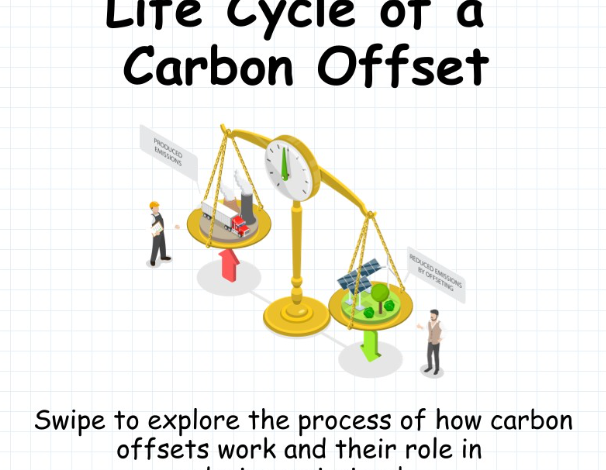
Life cycle a of carbon offset
1. The Genesis: Creating Real Value
A carbon credit isn’t just a piece of paper; it is a quantified unit of environmental success. One credit traditionally represents one tonne of CO2 equivalent that was either prevented from entering the atmosphere or actively removed from it.
The Two Pillars of Generation:
- Avoidance/Reduction: Projects that stop emissions before they happen. Examples include protecting a section of the Leuser Ecosystem from deforestation or replacing a coal-fired plant with a 100 GW solar initiative.
- Removal/Sequestration: Projects that pull existing carbon out of the sky. This includes high-tech Direct Air Capture (DAC) or “nature-based solutions” like massive reforestation and blue carbon (mangroves and seagrass).
2. The Market: From Projects to Portfolios
Once a project is verified by international standards (like Gold Standard or Verra), these credits enter the Voluntary Carbon Market (VCM).
- The Trade: Organizations purchase these credits to “offset” emissions they cannot yet eliminate from their own operations (Scope 3 emissions).
- The Pricing: Not all credits are equal. A credit from a “technological removal” project (like carbon mineralization) often commands a much higher price than a simple “avoidance” credit because its impact is more permanent.
3. The “Retirement”: Ensuring No Double-Counting
The most misunderstood part of the process is Retirement. A credit only “works” if it is used once.
- Once a company claims the credit against its footprint, that credit is “retired” in a public registry.
- It can never be sold or traded again. This ensures that the one tonne of CO2 reduced is only counted once toward the global Paris Agreement goals.
4. The “Additionality” Litmus Test
The real debate around carbon credits hinges on a concept called Additionality. For a credit to be valid, the project must prove that the CO2 reduction would not have happened without the carbon credit funding.
- The Goal: Moving from “Greenwashing” to “Green-funding.”
- The Future: We are seeing a shift toward High-Integrity Credits that also provide “co-benefits,” such as protecting indigenous land rights or improving local water quality.
| Feature | Low-Integrity Offset | High-Integrity Credit |
| Impact | Temporary or vague | Permanent and measurable |
| Verification | Self-reported | Third-party audited (Satellite/AI) |
| Co-benefits | None | Supports biodiversity & communities |
The Verdict: Tool or Distraction?
Carbon credits are a bridge, not a destination. They allow us to fund the protection of the world’s remaining carbon sinks while industries undergo the slow, difficult work of decarbonization.
When paired with aggressive internal emission cuts, carbon credits act as a “carbon tax” that companies choose to pay to accelerate the transition to a net-zero economy.
“The question isn’t whether carbon credits work, but whether we are using them to fund the future or simply to delay it.”