
Local Project Planning Workshop
As cities gain increasing significance worldwide, urban actors face common challenges in urban development. While local solutions are necessary, these issues are becoming increasingly relevant on a global scale. Many innovative solutions exist at the municipal level—ranging from energy efficiency to sustainable mobility and municipal service improvements—yet these solutions are often not widely known or systematically shared.
The rapid pace of urbanization worldwide calls for efficient and innovative approaches in several key areas, particularly:
- Good urban governance
- Integrated urban development
- Local economic development
- Municipal service provision
These four focus areas are at the heart of Connective Cities’ mission.
What is Connective Cities?
Connective Cities is the International Community of Practice for Sustainable Urban Development, a collaborative initiative by:
- The Association of German Cities (Deutscher Städtetag)
- Deutsche Gesellschaft für Internationale Zusammenarbeit (GIZ) GmbH
- Service Agency Communities in One World (Engagement Global)
This initiative is supported by the German Federal Ministry for Economic Cooperation and Development (BMZ) and aims to enhance knowledge sharing, peer learning, and municipal cooperation at the global level.
How Connective Cities Facilitates Global Learning
Connective Cities provides demand-driven services to improve cooperation among urban practitioners worldwide. The platform focuses on:
- Sharing best practices and expert knowledge
- Facilitating peer-to-peer consultations and networking
- Creating partnerships between urban stakeholders
- Developing transformative, locally adapted solutions
Through dialogue events and project workshops, Connective Cities fosters an exchange of innovative ideas while offering a platform for professional networking. To further its mission, the platform also organizes:
- Trainings and study tours
- Virtual discussion forums and webinars
- Action-planning workshops
By promoting collaborative urban development, Connective Cities enables new forms of cooperation among municipal actors, paving the way for joint projects that address sustainable urbanization challenges.
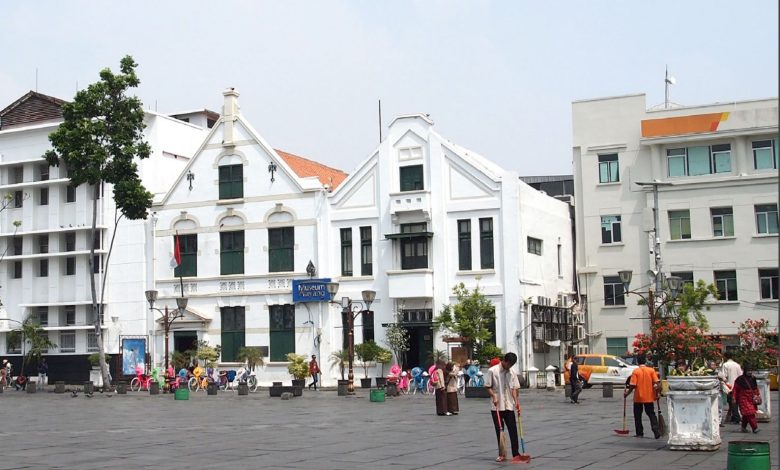
Regional Peer-Learning in Jakarta: Urban Renewal and Cultural Heritage
In collaboration with United Cities and Local Governments (UCLG) World Secretariat and UCLG Asia-Pacific (UCLG Aspac), Connective Cities hosted the Regional Peer-Learning and Action Planning Workshop on “Urban Renewal in Historic Town Centres and Public Space Improvement” in Jakarta, Indonesia (17-19 July 2017).
Urban renewal in historic city centres plays a crucial role in integrating cultural heritage into global sustainability efforts. This aligns with Sustainable Development Goal (SDG) 11.4, which calls for strengthening efforts to protect and safeguard cultural and natural heritage while making cities inclusive, safe, resilient, and sustainable.
The Jakarta workshop brought together urban practitioners from across the Asia-Pacific region and Germany to exchange insights on:
- Urban renewal policies and best practices
- Preservation of cultural and local assets
- Sustainable development strategies for historic town centres
Impact and Future Directions
The results of this workshop will contribute to policy development on heritage conservation and urban renewal. The event also supported Jakarta’s ongoing efforts to revitalize its Historic Town Centre, with the long-term goal of preparing an application for UNESCO World Heritage Site status.
Through initiatives like these, Connective Cities continues to play a vital role in empowering urban leaders, sharing transformative solutions, and fostering international cooperation for sustainable urban development.
Source:


