Net-zero operational carbon
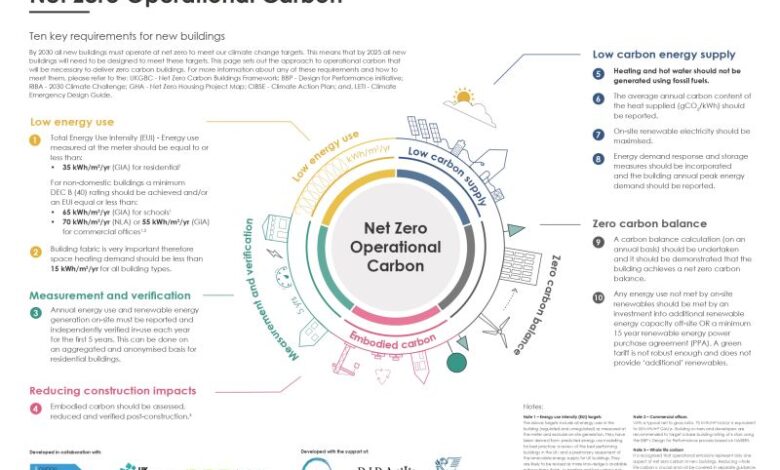
Reaching net-zero operational carbon in new buildings is a critical goal for addressing climate change, with a target date of 2030. This isn’t just a simple fix; it requires a fundamental shift in how buildings are designed, constructed, and operated. The concept goes beyond simply adding solar panels or offsetting emissions, focusing instead on a holistic approach to energy efficiency and carbon neutrality.
The Five Pillars of Net-Zero Operational Carbon
Achieving this ambitious goal rests on five core principles that guide the entire lifecycle of a building.
- Low Energy Use: This is the foundational principle. The first step is to drastically reduce the energy a building needs for its operation. This involves designing highly efficient building envelopes, using advanced insulation, and installing high-performance windows. The goal is to minimize energy demand from the start, with a specific target of less than 35 kWh/m²/yr for residential buildings.
- Measurement & Verification: To manage something, you must be able to measure it. This pillar emphasizes rigorous monitoring and reporting of a building’s energy use and renewable energy generation. Annual reporting for at least five years after completion ensures that the building performs as designed and allows for continuous improvement.
- Reducing Construction Impacts: The “hidden carbon” in building materials, known as embodied carbon, is a significant part of a building’s total carbon footprint. This pillar requires assessing and reducing the carbon emissions generated during the extraction, manufacturing, and transportation of materials. Utilizing low-carbon materials, recycled content, and efficient construction methods are key strategies.
- Low Carbon Energy Supply: Buildings should be designed to operate without relying on fossil fuels for heating, cooling, or hot water. The ideal solution is to power them with on-site renewable energy sources like solar panels or wind turbines, complemented by smart energy storage systems. This ensures a clean energy supply directly at the source.
- Zero Carbon Balance: Any remaining energy demand that can’t be met on-site must be offset by adding new, additional renewable energy capacity not just by purchasing “green tariffs” from the grid. This ensures a true balance, where the building’s total energy consumption is matched by its clean energy production.
A Look Toward the Future
Net-zero buildings are no longer a luxury but a necessity for a sustainable future. They represent a harmonious integration of comfort, function, design, and environmental responsibility. Imagine a city where every new building is a miniature power plant, producing as much clean energy as it consumes.
This vision is both ambitious and achievable. The question remains, is the construction industry moving quickly enough to meet this 2030 deadline? It will require unprecedented collaboration between architects, engineers, developers, and policymakers to truly transform our urban landscapes.
source:
https://lnkd.in/p/gEbSbZaK