The SDGs & overflowing plastic waste
The Invisible Threat: How Our Plastic Problem Undermines the UN Sustainable Development Goals
Our planet is in crisis, and one of the most visible and insidious threats is the relentless tide of plastic waste. It’s choking our oceans, despoiling our cities, and insidiously infiltrating our food chain. Yet, the true gravity of this crisis extends far beyond mere pollution; it directly and profoundly jeopardizes our collective ability to achieve the ambitious UN Sustainable Development Goals (SDGs).
The SDGs represent a universal call to action to end poverty, protect the planet, and ensure that all people enjoy peace and prosperity by 2030. However, the pervasive nature of plastic pollution acts as a silent, powerful barrier to realizing these vital global objectives. Let’s connect the dots and explore how our plastic problem is derailing progress across key SDGs:
Plastic’s Far-Reaching Impact on the SDGs:
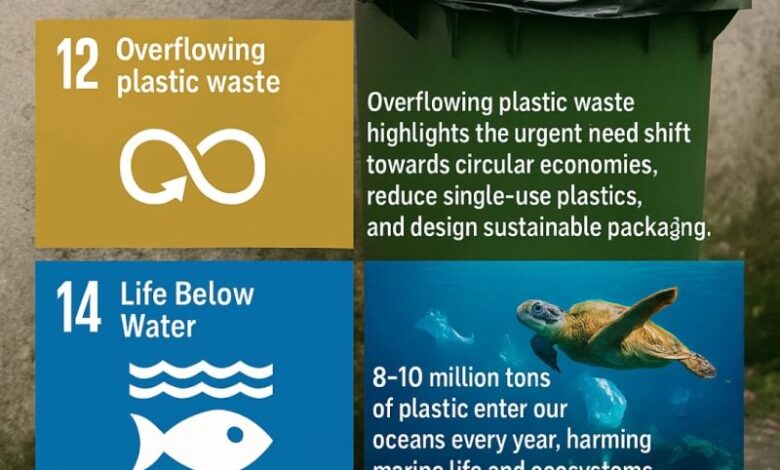
- SDG 12: Responsible Consumption & Production: The sheer volume of overflowing plastic waste is a stark indictment of our current linear economy. It screams for an urgent paradigm shift towards circular economic models, where resources are kept in use for as long as possible. Achieving SDG 12 necessitates a drastic reduction in single-use plastics and a fundamental redesign of sustainable packaging solutions that prioritize reusability, recyclability, and biodegradability.
- SDG 14: Life Below Water: This is perhaps the most visually devastating impact. An alarming 8 to 10 million tons of plastic choke our oceans every single year. This colossal influx directly harms marine life through entanglement and ingestion, degrades vital marine ecosystems like coral reefs and mangroves, and disrupts the delicate balance of aquatic biodiversity. Achieving the target of healthy, productive, and resilient oceans is simply impossible without decisively tackling this marine plastic crisis.
- SDG 15: Life on Land: While marine pollution often captures headlines, the terrestrial impact is equally dire. Landfills brimming with plastics leach toxic chemicals that poison soils, contaminate groundwater, and harm terrestrial wildlife. Microplastics are now found in virtually every ecosystem, disrupting nutrient cycles and threatening the very biodiversity essential for healthy land-based life.
- SDG 6: Clean Water & Sanitation: The insidious spread of microplastics has led to widespread contamination of our freshwater sources, including rivers, lakes, and even tap water. This makes the already monumental global challenge of ensuring access to safe and affordable clean water for all even more complex and costly, impacting public health and hygiene.
- SDG 3: Good Health & Well-Being: The presence of plastics, particularly microplastics and associated chemicals, in our food, water, and even the air we breathe, poses significant risks to human health. Research continues to emerge on the potential for these particles to act as carriers for toxins, affecting various bodily systems and increasing risks of disease, thereby directly diminishing the quality of human life and hindering progress towards universal health and well-being.
A Call to Action: Every Step Towards Plastic Reduction Matters
The plastics crisis is undeniably more than just an environmental pollution issue; it is a fundamental barrier to sustainable development itself. It infiltrates critical systems and undermines the very foundations upon which the SDGs are built.
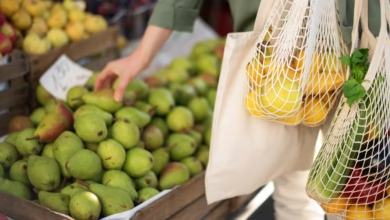
Yet, there is powerful good news: every single action we take to reduce, reuse, and redesign plastic products brings us measurably closer to achieving the SDGs. Whether it’s choosing reusable bags, supporting companies with sustainable packaging, or advocating for stronger policy, each choice contributes to the solution.
It is imperative that we collectively align corporate strategies, policymaking, and individual consumer choices with the urgent vision of a world free from plastic pollution. Only then can we truly accelerate our progress and ensure we are firmly on track for the transformative 2030 Agenda for Sustainable Development.
source: