Turning Coconut Waste into Climate Solutions
Turning Coconut Waste into Climate Solutions
What if the solution to rising urban temperatures wasn’t more air conditioning…
…but agricultural waste?
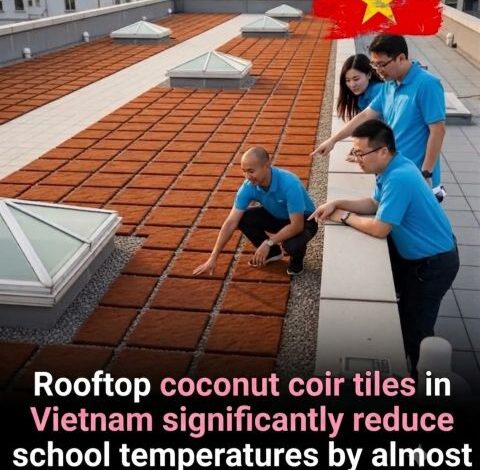
In Vietnam, some schools are using rooftop insulation tiles made from compressed coconut husk fibers to keep classrooms cool naturally.
The results are remarkable:
🌡️ Indoor temperatures drop by nearly 6°C
⚡ Cooling happens with zero electricity consumption
🏫 Students and teachers enjoy more comfortable learning environments
♻️ Agricultural waste becomes a valuable construction material
The secret lies inside the coconut itself.
Coconut coir fibers naturally trap air, creating an effective insulation layer that slows heat transfer from scorching concrete rooftops into classrooms below.
Instead of fighting heat with more energy-intensive cooling systems, these schools are stopping heat before it enters the building.
This is climate adaptation at its smartest:
Take a local problem.
Use a local resource.
Create a local solution.
And the benefits extend far beyond thermal comfort.
🥥 Farmers gain new markets for agricultural byproducts.
🏙️ Cities reduce the urban heat island effect.
⚡ Schools lower energy demand and operating costs.
🌍 Communities embrace circular economy principles in action.
As global cooling demand is expected to triple by mid-century, simply installing more air conditioners cannot be the entire answer.
The future of sustainable cities may depend less on producing more energy…
…and more on designing buildings that need less of it in the first place.
Sometimes the most advanced climate technologies aren’t high-tech at all.
Sometimes they grow on trees.