
Urban climate action impacts framework
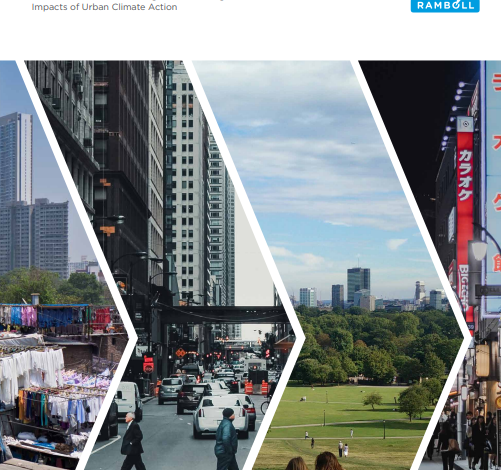
Cities must be at the forefront of efforts to deliver the Paris agreement and avoid the worst of climate
change, as they will bear the brunt of its effects. As our climate changes, cities, with their high populations, often being coastal, sometimes remote from water or food supplies, are particularly exposed
to the increased frequency of storms, floods, droughts and heat waves. Cities are also the global hubs for
economic growth and so account for over 70% of global energy emissions. When emissions associated with consumption are included, it is clear cities are a primary driver of GHG emissions globally. Without urgent and transformative city climate action, delivering a climate safe future, as defined and committed to internationally with the signing of the COP21 Paris Agreement, will be impossible. This is why the C40 Cities Climate Leadership Group (C40) is committed to delivering that agreement, and has established the C40 Deadline 2020 Program, which aims to support every C40 city in establishing a Climate Action Plan (CAP) to put the city on a trajectory consistent with the ambition of the Paris Agreement. This includes the aim of limiting global temperatures to the only climate safe level of 1.5 degrees.
As the urban population continues to bloom, cities leaders must deal with multiple urgent priorities.
Achieving the ambition of the Paris Agreement will require deep transformation in all cities, and yet climate change is far from the only topic on the agenda for citizens and their leaders. With 1.4 million extra citizens added to the urban population every week, cities are increasingly at the confluence of multiple pressures and challenges. Overpopulation, aging and overstretched infrastructure, frustrated employment expectations, growing inequality, lack of adequate and affordable housing, deteriorating air quality or insufficient access to sanitation and amenities, to name but a few. Maintaining and improving conditions for citizens will be crucial to meeting the Sustainable Development Goals. Rates of urbanisation, and their associated challenges, are particularly acute for cities in the developing world.
In global cities, inequality increasingly manifests as sprawling slums where the urban majority face an
acute lack of access to land, housing, basic services and livelihoods. According to UN-Habitat, one in eight people – or approximately one billion people – presently live in slum conditions. Action on these various agendas must be transformative, but also urgent, to avoid locking in negative trajectories.
source:


