
What is ESG and why is it important?
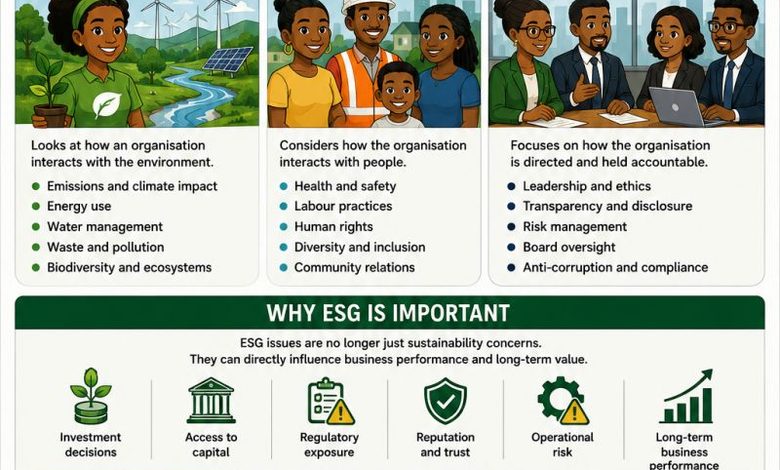
ESG: The New Operating System for Modern Business
For decades, business performance was measured by a single metric: the quarterly balance sheet. Today, that framework is rapidly becoming obsolete.
ESG Environmental, Social, and Governance represents a fundamental shift in how value, risk, and corporate longevity are defined. It is no longer a peripheral PR strategy or a moral nice-to-have; it has transformed into a core financial and operational framework across global markets.
                    ┌─────────────────────────┐
                    │      ESG FRAMEWORK      │
                    └────────────┬────────────┘
                                 │
     ┌───────────────────────────┼───────────────────────────┐
     ▼                           ▼                           ▼
┌──────────────┐          ┌──────────────┐          ┌──────────────┐
│ ENVIRONMENTAL│          │    SOCIAL    │          │  GOVERNANCE  │
├──────────────┤          ├──────────────┤          ├──────────────┤
│ Climate Risk │          │ Labor Rights │          │ Ethics       │
│ Emissions    │          │ Safety       │          │ Oversight    │
│ Biodiversity │          │ Community    │          │ Transparency │
└──────────────┘          └──────────────┘          └──────────────┘
Decoding the Three Pillars
Rather than evaluating a company solely on immediate profit, ESG measures how an organization manages external risks and impacts over time:
- Environmental (Planet): Focuses on physical and transition risks. Key variables include carbon intensity, resource depletion, waste management, water stewardship, and biodiversity loss.
- Social (People): Examines internal and external human impact. Key variables include workplace safety, fair labor practices, human rights compliance, diversity and inclusion, and community stakeholder relations.
- Governance (Oversight): Evaluates corporate accountability structures. Key variables include executive compensation alignment, board independence, anti-corruption safeguards, audit controls, and shareholder rights.
Why ESG Shapes Modern Value Creation
ESG matters because non-financial factors routinely lead to massive, highly tangible financial outcomes.
| Dimension | Operational Impact | Financial & Strategic Consequence |
| Capital Access | High ESG ratings open access to green bonds and sustainability-linked loans. | Lower Cost of Capital: Institutional investors systematically price non-financial risk into valuation models. |
| License to Operate | Proactive community engagement prevents project shutdowns and regulatory friction. | Operational Continuity: In sectors like mining or energy, poor local relations can stall multi-billion-dollar investments overnight. |
| Risk Mitigation | Strict governance policies prevent regulatory non-compliance, fraud, and supply chain abuse. | Protection Against Catastrophic Loss: Prevents severe penalties, litigation expenses, and systemic brand damage. |
| Talent Acquisition | Strong social and environmental positioning attracts top-tier early- and mid-career professionals. | Competitive Hiring: Reduces turnover costs and boosts productivity in tight labor markets. |
The Interconnected Nature of Risk
The true power of ESG lies in how its pillars interlock. A failure in one pillar almost always compromises the others.
Consider a natural resources company:
- The Catalyst: Neglecting waste management causes a chemical runoff into local rivers (Environmental failure).
- The Escalation: Nearby communities lose access to clean water, triggering protests and damaging local health (Social failure).
- The Collapse: A lack of internal controls or board oversight allows executives to cover up the breach rather than remediating it (Governance failure).
The result isn’t just an environmental issue it is a collapse of corporate trust, leading to regulatory fines, lost licenses, stock devaluation, and leadership turnover.
From “Doing Good” to Building Resilience
ESG asks a critical strategic question: Is this business model resilient enough to generate value sustainably over the next 20 to 50 years?
Organizations that treat ESG as a dynamic risk-management framework build systemic resilience. Those that view it as a mere compliance exercise remain exposed to regulatory shifts, market disruptions, and investor pullbacks.
source:


