
𝗚𝗿𝗲𝗲𝗻𝘄𝗮𝘀𝗵𝗶𝗻𝗴 𝗥𝗶𝘀𝗸 𝗜𝗻𝗱𝗶𝗰𝗮𝘁𝗼𝗿𝘀
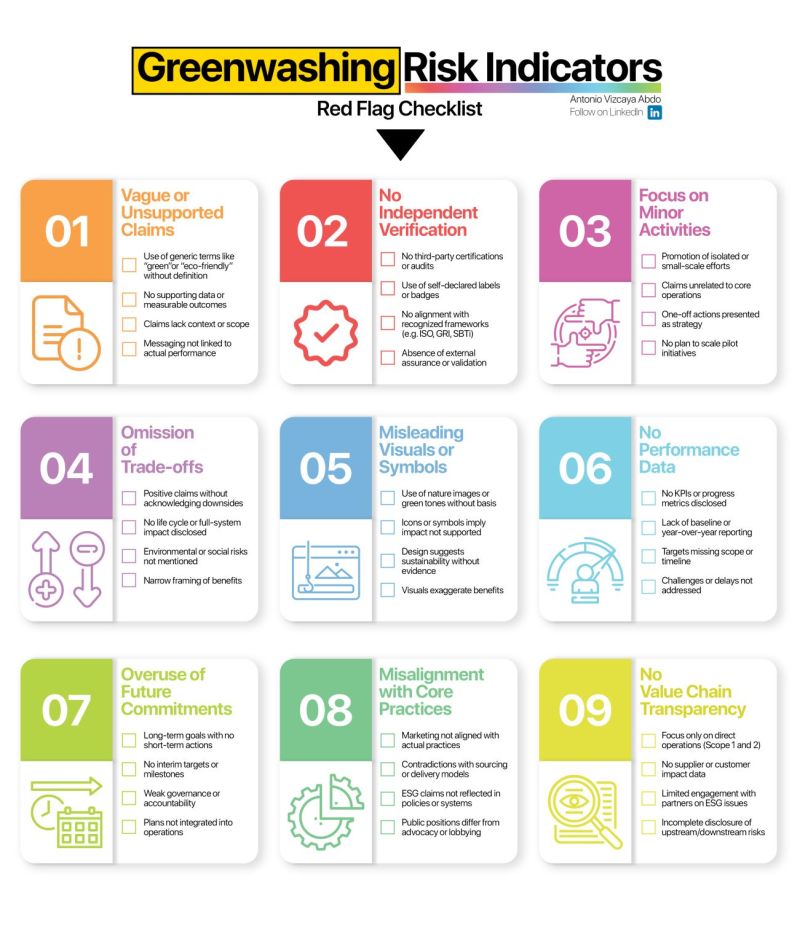
As sustainability gains traction, so do the risks of superficial claims and overstated credentials. The integrity of our collective climate action depends on honesty, transparency, and accountability. Yet, too often, we see vague promises, glossy visuals, and sustainability narratives that crumble under scrutiny.
That’s why I highly recommend this excellent 𝗚𝗿𝗲𝗲𝗻𝘄𝗮𝘀𝗵𝗶𝗻𝗴 𝗥𝗶𝘀𝗸 𝗜𝗻𝗱𝗶𝗰𝗮𝘁𝗼𝗿𝘀 𝗖𝗵𝗲𝗰𝗸𝗹𝗶𝘀𝘁, developed by Antonio Vizcaya Abdo. It’s a timely and practical tool for leaders, sustainability teams, and communicators to identify red flags and protect the credibility of their ESG efforts. 👏 🌍
Among the nine indicators, here are a few that resonate most with what I see on the ground:
➡️ Vague or unsupported claims — e.g., “eco-friendly” with no context or data.
➡️ Lack of independent verification — missing third-party audits or credible frameworks.
➡️ Highlighting small wins — when tiny actions are amplified beyond their real impact.
➡️ Omitting trade-offs — failing to disclose risks, uncertainties, or limitations.
➡️ No KPIs or measurable performance data — what can’t be measured can’t be trusted.
Greenwashing isn’t always deliberate. But whether accidental or strategic, the consequences are the same: reputational damage, regulatory scrutiny, and loss of stakeholder trust.
📌 Use this checklist as more than a diagnostic—treat it as a compass for honest, high-integrity sustainability storytelling.
Which of these red flags do you think is most common in today’s ESG reports? Drop your insights in the comments and let’s have a fruitful discussion!
Source:


