Tahukah Anda
Global greenhouse gas emission by sector
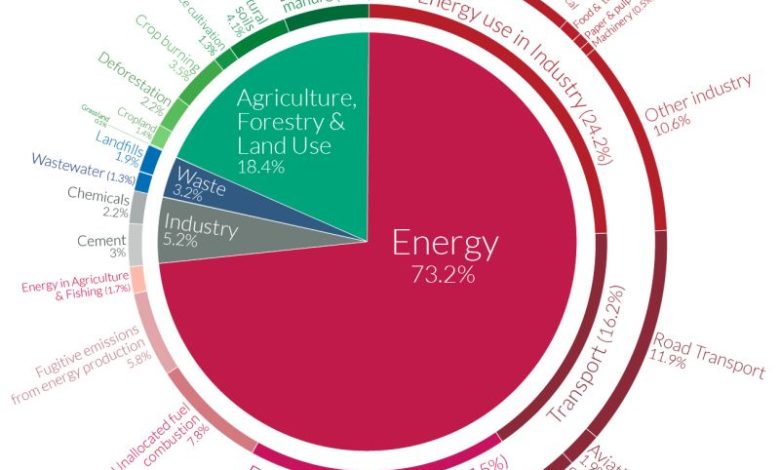
Achieving net zero for hard-to-abate sectors like cement, steel, chemicals, aviation, shipping, and heavy-duty transport is crucial for a sustainable future. These sectors face unique challenges due to their reliance on high-energy, carbon-intensive processes, which are hard to decarbonize.
Why These Sectors are Challenging
- High Dependence on Fossil Fuels: Many processes require high temperatures typically generated by coal, oil, or gas.
- Carbon-Intensive Production: CO₂ emissions aren’t just energy-based; they’re often a direct byproduct (e.g., cement).
- Long Capital Cycles: Infrastructure in these sectors has lifespans of 20–50 years, making upgrades costly and slow.
- Increasing Demand: The need for essential goods and services continues to grow, adding complexity to emissions reductions.
Strategies for Decarbonization
- Carbon Capture, Utilization, and Storage (CCUS): Capturing emissions from industrial processes and either storing them or reusing them. This is crucial for sectors like cement and steel where emissions are unavoidable.
- Electrification with Renewable Energy: Technologies like electric arc furnaces and high-temperature heat pumps enable electrification in industries like steel, which can then be powered by renewable energy.
- Green Hydrogen: Clean hydrogen can replace fossil fuels in high-energy applications, especially in steel production, shipping, and processes requiring high heat.
- Bioenergy and Biomass: Sustainable biomass can substitute fossil fuels in sectors where alternatives are scarce, such as aviation and cement.
- Material Efficiency & Recycling: By reducing the demand for new materials through design efficiency and recycling, emissions can be lowered (e.g., using recycled steel or alternative binders in construction).
- Low-Carbon Processes & Materials: Innovations in production, like carbon-neutral cement or synthetic aviation fuels, are key for long-term impact.
- Policy & Market Mechanisms: Carbon pricing and initiatives like the Carbon Border Adjustment Mechanism (CBAM) incentivize low-carbon technologies.
- Cement: Exploring CCUS and CO₂-free binders to mitigate emissions from chemical processes.
- Steel: Projects like H2Green Steel in Sweden are using green hydrogen to transform steel production.
- Shipping & Aviation: Sustainable aviation fuels, biofuels, and hydrogen- or electric-powered vessels are being developed for more sustainable travel.
The road to decarbonizing these sectors is complex but achievable through innovation and strong policy support. These advances place us on a promising path to global net zero, proving that even the hardest sectors can evolve for a sustainable future.
source :