3 key principles of the circular economy
Imagine a world where waste doesn’t exist where every product, every material, and every resource is continuously repurposed, restored, and regenerated. This is the vision of the circular economy, a revolutionary approach that redefines how we produce and consume, ensuring that our planet’s natural wealth is preserved for generations to come.
At the heart of the circular economy lie three transformative principles each a stepping stone toward a future where sustainability isn’t just an ideal but an everyday reality.
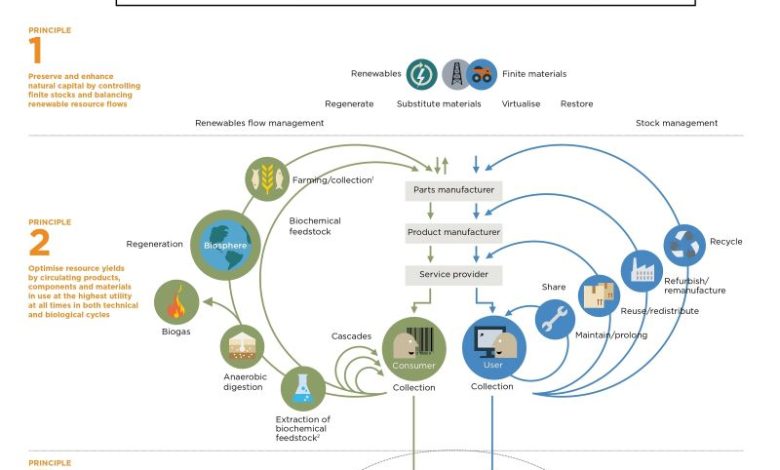
1. Regenerating Nature: Preserving and Enhancing Natural Capital
Nature is our greatest asset, yet we have long treated it as an infinite resource extracting, depleting, and polluting without pause. The circular economy flips this mindset, prioritizing the restoration of ecosystems and the responsible management of renewable resources.
- Imagine forests thriving as we use sustainably sourced timber.
- Picture oceans free of plastic, with biodegradable alternatives replacing harmful waste.
- Envision an economy where industries give back more than they take, ensuring that natural cycles remain intact.
By shifting from extraction to regeneration, we move from consumption to stewardship, ensuring that nature continues to sustain us.
2. Extending the Life of Resources: Maximizing Value from Every Material
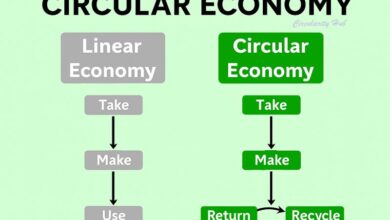
Why throw something away when it can be used again, and again, and again? The second principle of the circular economy challenges the traditional “take-make-dispose” model, urging us to extend the lifespan of products and materials through:
- Repairing and refurbishing rather than discarding.
- Reusing and remanufacturing to keep items in circulation.
- Recycling materials back into production, closing the loop.
Think of your smartphone what if, instead of buying a new one every few years, you could upgrade individual components instead? Or clothing what if fashion brands designed garments that could be easily repaired or recycled into new fabric?
By treating waste as a valuable resource, we unlock an endless cycle of utility, reducing pressure on raw materials while keeping materials in play for as long as possible.
3. Designing Out Waste: Eliminating Pollution Before It Begins
What if waste wasn’t an afterthought but something we designed out of existence? The third principle of the circular economy focuses on preventing waste before it happens, rethinking how we create products and build systems that generate no harm.
🔹 Smart design ensures that every product is meant to last or be repurposed.
🔹 Closed-loop systems eliminate inefficiencies, keeping resources in motion.
🔹 Sustainable production reduces pollution at the source, benefiting both people and the planet.
Imagine packaging that dissolves harmlessly in water, or buildings made from materials that can be deconstructed and reused. This isn’t science fiction it’s the next frontier of sustainable innovation.
A Future We Can Build Together
The circular economy isn’t just about sustainability it’s about transformation. It challenges industries, businesses, and individuals to think differently, to design smarter, consume consciously, and waste less.
By embracing these principles, we create a world where resources aren’t lost they are reborn. A world where the economy and the environment work in harmony, not in opposition. A world where the future isn’t depleted, but continually renewed.
source :