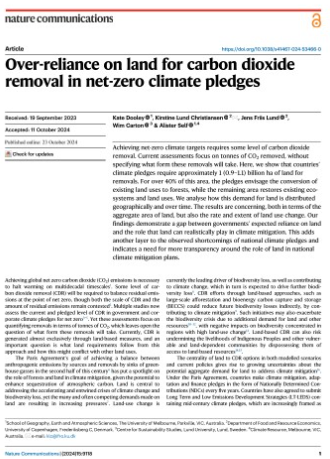
Over reliance on land for carbon dioxide removal in net zero climate pledges
As the world scrambles for solutions to mitigate climate change, land-based carbon offsets are often championed as a cost-effective and straightforward strategy. On the surface, the idea seems promising: forests, grasslands, and other ecosystems naturally absorb carbon dioxide, offering a way to balance out emissions from fossil fuels. But can we truly rely on land-based carbon removals to meet global climate goals? The answer is a resounding no. Here’s why this approach falls short—and why we need to rethink our strategies.
1. The Myth of Permanence
Land-based carbon removals, such as tree planting and soil carbon sequestration, are inherently temporary solutions. Forests can burn, degrade, or be cut down, releasing stored carbon back into the atmosphere. Unlike fossil fuel emissions, which are permanent and cumulative, the carbon stored in ecosystems is precarious. This impermanence makes it impossible for land-based offsets to truly “neutralize” the enduring impact of fossil fuel emissions.
2. Delaying the Inevitable
The allure of future carbon removals and net-zero pledges often serves as a convenient excuse for inaction today. Companies and governments banking on speculative removals to meet distant climate targets risk undermining the urgent need for immediate emissions reductions. Every delay in cutting fossil fuel emissions exacerbates the climate crisis, pushing the planet closer to tipping points from which recovery may be impossible.
3. The Land Problem
Meeting ambitious land-based carbon removal pledges requires vast tracts of land. But in many countries, the available land is already stretched thin—needed for agriculture, housing, and natural ecosystems. Sacrificing these uses for carbon storage creates conflicts over land use, threatening food security and biodiversity. It’s a strategy that simply doesn’t add up in a world with finite resources.
4. A Biodiversity Crisis in the Making
Large-scale monoculture plantations, often promoted for carbon storage, can wreak havoc on biodiversity. These plantations prioritize rapid carbon sequestration over the preservation of natural ecosystems, replacing rich, complex habitats with homogenous landscapes. The result? A loss of biodiversity, disruption of ecosystem services, and diminished resilience to climate change.
5. The Risk of Land Grabs and Inequality
Land-based offsets can fuel speculative investments in land, concentrating ownership and control in the hands of a few. This often leads to the dispossession of Indigenous Peoples, peasant communities, and other land-dependent populations, stripping them of their territories and livelihoods. These injustices are not just ethical failures—they also undermine the long-term sustainability of climate solutions by alienating the very stewards of the land.
6. Exclusion and Food Insecurity
Top-down approaches to carbon offset projects frequently exclude local land users and food producers, sidelining their knowledge and needs. This marginalization not only disempowers communities but also jeopardizes food security, as productive land is diverted away from agriculture to meet carbon storage goals.
A Better Way Forward
Instead of relying on land-based offsets, real emissions reductions must take center stage. The most effective climate strategy is simple: keep fossil fuels in the ground. There is no substitute for directly addressing the root cause of the crisis—our dependence on fossil fuels.
At the same time, healthy ecosystems remain vital for climate mitigation, but their value must extend beyond carbon storage. A holistic approach is needed—one that addresses the drivers of biodiversity loss and recognizes the intricate interconnections within ecosystems.
Protecting People, Planet, and Land
To achieve meaningful and equitable climate action, we must:
- Cap large-scale land acquisitions: Prevent land grabs by limiting speculative investments.
- Prioritize land tenure reforms: Secure the land rights of Indigenous Peoples, peasant communities, and local stakeholders who have long safeguarded the land.
- Empower local voices: Involve communities as equal partners in decision-making, ensuring solutions are rooted in their needs and knowledge.
These actions are not just about fairness they are about effectiveness. Communities with secure land tenure and a voice in governance are far more likely to implement and sustain climate-friendly practices.
A Vision Beyond Carbon
The path to a livable climate future cannot be paved with false promises of carbon offsets. Instead, it requires transformative change a shift away from fossil fuels, a commitment to protecting natural ecosystems, and an unwavering focus on social and environmental justice.
We have the tools. We have the knowledge. Now, we need the courage to act. Let’s stop seeking shortcuts and start building a future that works for the planet and its people. The stakes are too high to settle for anything less.
source :
Temukan peta dengan kualitas terbaik untuk gambar peta indonesia lengkap dengan provinsi.