What is climate literacy?
In the vibrant, ongoing conversations about “What Literacy Truly Means” and the vast expanse of knowledge, behavior, and skills it encompasses, I often find myself humbly sharing a vision that resonates deeply within me. For me, and indeed, a meaning that is continually evolving, Climate Literacy is fundamentally about cultivating a profound knowledge and an unwavering attitude of care for our Earth. It’s not just about understanding data; it’s about internalizing a responsibility, nurturing a bond with the very planet that sustains us.
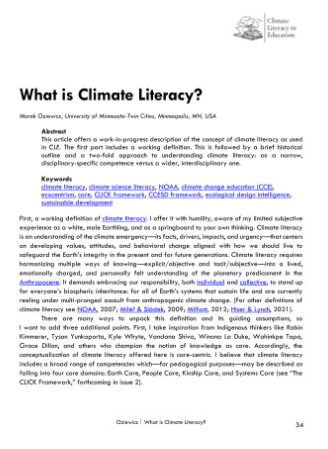
This journey of understanding has been profoundly illuminated by voices like Marek Oziewicz, whose insights offer a powerful working definition of Climate Literacy in Education, rooted in pillars that resonate with my evolving perspective. His exploration of its history and evolution reveals not just an academic concept, but a vital, dynamic call to action.
At its heart, Climate Literacy, as articulated by Oziewicz and amplified by my own convictions, is a multi-faceted imperative:
The Notion of Knowledge as Care: This is where the intellectual truly meets the emotional. It’s not enough to simply know about rising sea levels or melting glaciers. True climate literacy transforms this knowledge into an empathetic understanding, spurring a visceral desire to protect, restore, and nurture. When we truly know the intricate web of life, the delicate balance of ecosystems, and the profound impact of our actions, that knowledge compels us to care in a way that mere facts never could. It fosters a stewardship that transcends textbooks and permeates our very being.
Truth Over Convenience – Unpacking the Realities of the Neoliberal Global System: This pillar is a potent challenge to the comfortable narratives we often cling to. Climate literacy demands an unflinching gaze at the systemic drivers of environmental degradation. It requires us to peel back the layers of convenience, profit motives, and short-term gains that often obscure the long-term consequences. This isn’t about finger-pointing, but about understanding the complex interplay of economic forces, political decisions, and societal structures that have brought us to this critical juncture. It’s about empowering individuals with the critical thinking skills to discern genuine solutions from greenwashing, to advocate for equitable transitions, and to challenge the status quo when it serves convenience over truth.
A Narrative Capacity for Society – Stories That Engage Imagination and Mobilize Action: This is perhaps the most captivating and often overlooked aspect. Data is crucial, but stories are what move hearts and minds. Climate literacy isn’t just about absorbing scientific reports; it’s about fostering our collective ability to craft and embrace narratives that ignite imagination, inspire hope, and most importantly, mobilize action. From the ancient myths that revered nature to contemporary tales of resilience and innovation, stories have the unique power to connect us to the future, to make abstract threats tangible, and to envision a thriving, sustainable world. When we can tell compelling stories about our shared climate future, we unlock a potent force for change, inviting everyone to become protagonists in this most vital human narrative.
This guidebook, launched by Kadin Indonesia, titled “Transitioning to Net Zero: Net Zero Roadmap Guideline for Property Developers,” is a shining example of this narrative capacity put into practice. On May 23, 2025, when Kadin, under the visionary leadership of Pak Anindya Novyan Bakrie and Budiarsa Sastrawinata, unveiled this practical guide, they didn’t just publish a document; they launched a refreshing new story.
Unlike the typically heavy, text-filled tomes we often encounter, this guide is a revelation. It feels, in the best possible way, almost like reading a children’s book vibrant, engaging, and remarkably clear. Its playful design, bright visuals, and friendly tone are a masterstroke, making the inherently serious and complex subject of climate action not just accessible, but genuinely inviting. This is precisely how we transform intimidating concepts into actionable steps, demonstrating that knowledge can indeed be a form of care, presented in a way that embraces truth over convenience through a compelling narrative capacity.
My profound congratulations to KADIN and the brilliant team behind this initiative: Pak Setyo, Bu Theresia Rustandi, Lany Harijanti, Satrio Prakoso, Dewi Suyenti Tio, CESGA®, Devyandra Putri, Jessica Hanafi, Fajar Kurniawan, Wisnu Rizki Wibisono, CFA, and Dedy Mahardika Eko Susi Rosdianasari. Your collaborative effort has yielded not just a guide, but a blueprint for inspiration.
My personal hope echoes across the industry: may this guidebook be far more than a beautiful addition to a shelf. May it be a catalyst. May it empower property developers to move beyond admirable intentions, to truly take concrete steps, and to make real, tangible change happen on the ground toward a sustainable future. Because when literacy evolves to embrace care, truth, and compelling stories, the potential for genuine transformation becomes limitless.
source: