
20 urban planning term you should never
Beyond Buzzwords: Why Precise Language is the Foundation of Real Urban Planning
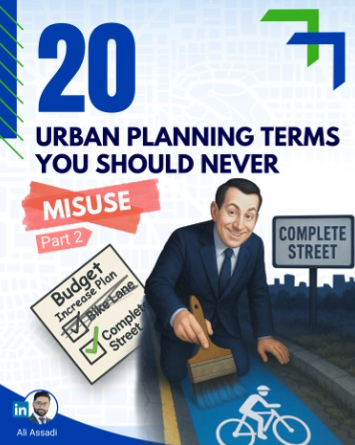
“One bike lane doesn’t make a street complete. Not every sidewalk equals walkability.”
We toss around terms like “walkability,” “15-minute city,” “livability,” and “affordable housing” with increasing frequency. But these aren’t just trendy words; they’re powerful signals. They communicate intent and vision to funders, residents, and colleagues.
So, when we label a street “complete” simply because it has a single bike lane painted on one side, or call a building “mixed-use” just because there’s a ground-floor café without any genuine functional integration, it’s more than just inaccurate. It’s misleading.
The Danger of Placeholder Planning Terms
Unfortunately, some have turned crucial planning terms into mere placeholders, using them more for effect than for genuine clarity. This might generate initial hype, but it’s a dangerous game.
In the critical work of urban planning and development, language itself is infrastructure. If we fail to define our terms with precision and care, someone else will define them for us. And trust me, when the initial excitement fades, the consequences of such imprecision won’t be pretty. Misaligned expectations, wasted resources, and ultimately, a loss of trust can quickly derail even the most well-intentioned projects. Let’s commit to using language that reflects the true depth and complexity of our goals. Our communities deserve nothing less.


