SDG’s vs plastic waste
The Plastic Predicament: Why the World’s “Wonder Material” Is Undermining the SDGs
Plastic is everywhere. This versatile, low-cost material has become the backbone of modern life, showing up in everything from our packaging and healthcare equipment to the homes we live in. But this convenience comes with a steep price: an environmental and social crisis that’s actively derailing the world’s most critical development goals. The clock is ticking toward the 2030 Agenda deadline, and the sheer scale of plastic pollution is a monumental obstacle we can no longer ignore.
A System Under Strain
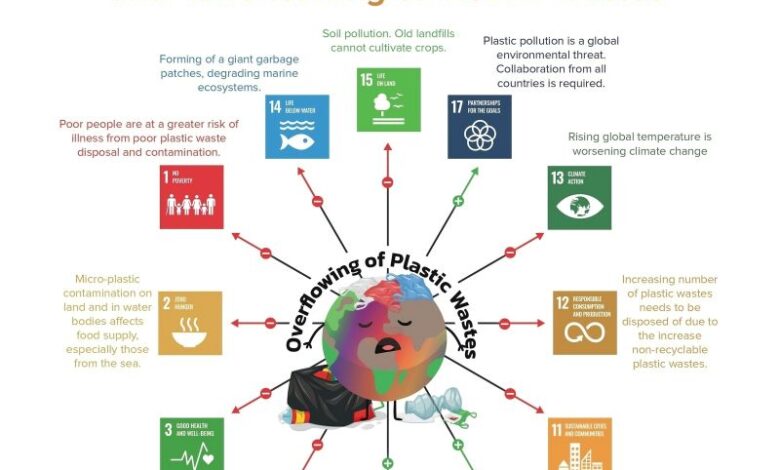
Our addiction to plastic is overwhelming the very systems meant to manage our waste. Municipalities, particularly in developing regions, are drowning in non-recyclable plastics. This isn’t just an eyesore; it’s a financial and operational nightmare that saps resources and cripples efforts to build sustainable cities and communities (SDG 11). What was meant to be a solution has become a systemic failure, making it nearly impossible for communities to manage their waste effectively.
Polluting Our Bodies, Poisoning Our Planet
The damage doesn’t stop at landfills. Plastic waste is seeping into our most precious resources. It contaminates our water sources and infiltrates our food systems. Microplastics tiny, insidious fragments of plastic are now a regular part of the food chain, posing a serious threat to public health, especially for our most vulnerable populations. This contamination directly undermines food security, health equity, and reduced inequalities (SDGs 2, 3, and 10), chipping away at the foundation of a healthy, equitable world.
The Ocean’s Silent Killer
Our oceans are bearing the brunt of this crisis. The Great Pacific Garbage Patch is a stark reminder of our irresponsibility, with plastic debris accumulating in staggering quantities.
Licensed by Google
. These plastics don’t just float harmlessly; they degrade vital marine habitats, entangle and kill species, and threaten the livelihoods of coastal communities that depend on the ocean for survival. This direct assault on marine ecosystems makes achieving Life Below Water (SDG 14) an increasingly difficult, if not impossible, task.
A Climate Threat in Disguise
The connection between plastic and climate change is often overlooked, but it’s undeniable. From the fossil fuels used to produce it to the emissions released during its disposal, plastic is a significant contributor to greenhouse gases. Without a dramatic shift in our approach, plastic will continue to jeopardize global climate targets and slow the transition to low-carbon economies, actively working against Climate Action (SDG 13).
The Path Forward: Business as a Catalyst for Change
The good news is that we have the power to change this trajectory. Businesses, in particular, hold a critical role in this transformation. By embracing circular design, innovating to replace unnecessary plastic, and investing in better recovery and recycling systems, companies can be part of the solution instead of the problem. This isn’t just about corporate social responsibility; it’s about building long-term resilience and securing a sustainable future for us all.
Addressing plastic waste isn’t just an environmental issue; it’s a fundamental challenge to the global promise of a better future. It demands a coordinated, systemic response from everyone governments, businesses, and individuals to protect public health, foster inclusive development, and accelerate the achievement of the Sustainable Development Goals.
source: