Climate Adaptation and Mitigation
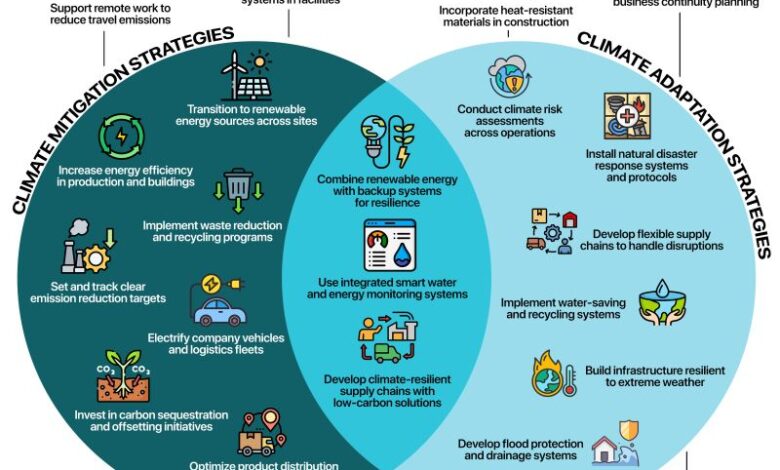
Any climate strategy needs to consider both adaptation and mitigation. Businesses cannot reduce risk or create long term value if they act on only one side of the equation.
Mitigation focuses on reducing emissions. Companies can transition to renewable energy, improve energy efficiency, electrify fleets, reduce waste, and source sustainable materials. These actions cut carbon footprints and address the root causes of climate change.
Adaptation prepares organizations for climate impacts that are already here. Risk assessments, resilient infrastructure, flexible supply chains, and emergency planning strengthen operations and protect against disruption.
Some initiatives create benefits on both fronts. Smart monitoring systems, renewable energy with backup capacity, and resilient supply chains contribute to decarbonization while building resilience.
A credible climate strategy integrates both approaches. Reducing emissions without preparing for impacts leaves companies exposed. Preparing for impacts without addressing emissions undermines long term relevance.
The priority is to embed these actions into core business operations. Done effectively, they reduce risks, lower costs, and open opportunities for innovation and growth.
Source: