
What is urban resilience?
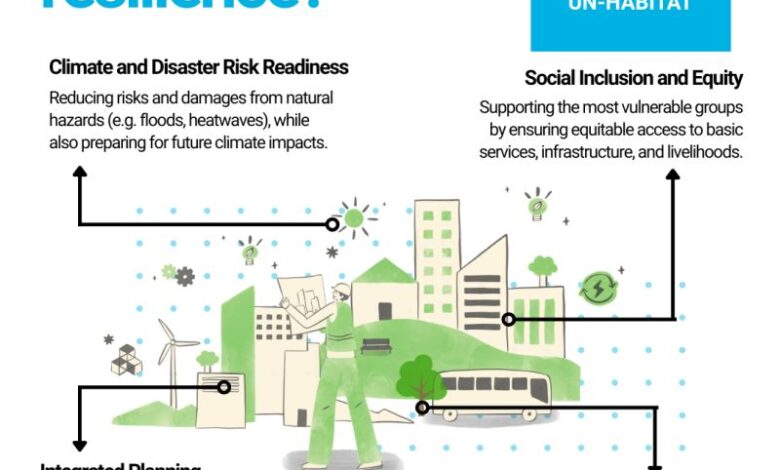
Urban resilience is a city’s ability to prepare for, withstand, and recover from a variety of shocks and stresses. But it’s about far more than just bouncing back. It’s a transformative approach that allows cities to become more equitable, sustainable, and vibrant than they were before.
Last year, climate-related disasters cost cities $250 billion, with the most vulnerable communities bearing the heaviest burden. Building resilience is a strategic investment in a better future, not just a defensive measure. For every £1 spent on resilience, an estimated £4 is saved in avoided damages.
Pillars of Urban Resilience
Building a resilient city requires a holistic strategy focused on two key pillars:
- Social and Economic Resilience: This pillar is about protecting people and their livelihoods. It involves investing in the most vulnerable communities and diversifying local economies to create a foundation of strength. By making sure everyone has access to resources and opportunities, a city can better withstand any challenge.
- Environmental and Infrastructure Resilience: This focuses on protecting the planet and the systems that support urban life. It involves investing in robust, durable infrastructure and using nature-based solutions. For example, integrating green spaces can help a city absorb up to 70% more stormwater and reduce peak temperatures by 4°C, making it cleaner and safer.
The cost of inaction is staggering, with projected urban losses reaching $314 billion by 2030 and heat-related deaths potentially doubling by 2050. However, urban resilience offers a powerful path forward. It’s the key to future-proofing our cities, closing the inequality gap, and ensuring a safer, more prosperous future for everyone.
source:


