The caterpillar that eat plastic
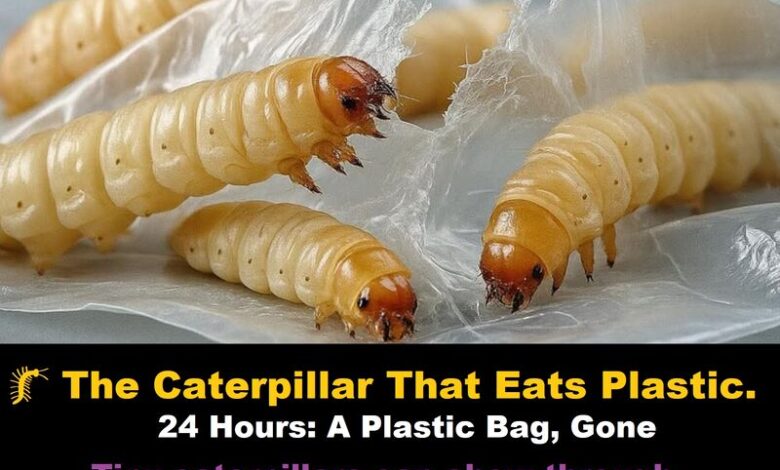
The Plastic-Eating Caterpillar: A Glimmer of Hope in the War on Waste
In a world drowning in plastic, a tiny, unassuming creature may hold a key to a groundbreaking solution. The waxworm caterpillar (Galleria mellonella), a common pest of beehives, has emerged from the shadows of scientific obscurity with a remarkable ability: it can rapidly degrade polyethylene, one of the most durable and widespread plastics on Earth.
The Science Behind the Breakthrough
The initial discovery, made by a team of Spanish researchers, revealed that these caterpillars can chew through and chemically break down polyethylene at an astonishing rate. What’s even more fascinating is that it’s not just the mechanical action of their chewing that does the trick. The magic lies in their saliva. Scientists found that the caterpillars’ saliva contains specific enzymes that are able to break down the tough chemical bonds within polyethylene. This process, known as depolymerization, is what makes polyethylene so resistant to natural decomposition.
To put this in perspective, this is a feat that has long eluded human technology. Current methods for breaking down plastic often require high temperatures, harsh chemicals, or immense pressure, making them energy-intensive and often environmentally unfriendly. The waxworms’ enzymes, by contrast, can initiate this process at ambient temperatures, offering a potentially clean and sustainable alternative.
The Potential and The Problems
The discovery has sparked a wave of excitement, but it’s important to understand the practical challenges. While the caterpillars themselves are incredibly efficient with about 2,000 of them capable of consuming an entire plastic bag in a single day using them on a large scale is not a viable option. As the original article pointed out, a plastic only diet is fatal to the caterpillars. They lose body mass and can’t survive without their natural food source, beeswax. Furthermore, releasing billions of these caterpillars into the environment could have unforeseen ecological consequences.
The real breakthrough, then, isn’t the caterpillars themselves, but the enzymes within their saliva. Scientists are now focused on isolating, identifying, and mass-producing these specific enzymes. The goal is to develop a “bioreactor” where these enzymes can be applied directly to plastic waste, effectively “digesting” it without any living creatures involved. This would be a form of biomimicry, a field of science that seeks to solve human problems by imitating nature’s designs.
A Broader Context: Plastic’s Environmental Toll
To understand the significance of this discovery, we need to grasp the scale of the plastic crisis. Plastic bags and packaging, largely made of polyethylene, are major contributors to pollution. They clog our landfills, litter our oceans, and break down into microplastics that are entering our food chain. A single plastic bag can take hundreds of years to fully decompose, and even then, it doesn’t truly disappear—it just fragments into smaller pieces.
This discovery is more than just a scientific curiosity; it’s a powerful reminder that solutions to some of humanity’s biggest challenges might be found in the least expected places. While the waxworm won’t solve the plastic crisis overnight, the hope it offers is a crucial step forward, paving the way for a future where we can break down plastic as effectively as we create it.
source: