Type of green buildings
The global real estate sector is facing a reckoning: buildings currently account for nearly 40% of global carbon emissions. To meet our climate goals, the structures we inhabit must evolve from passive energy consumers into active climate solutions.
The transition to “Net Zero” is not a single leap, but a sophisticated hierarchy of engineering and intent. Here is the roadmap for the buildings of tomorrow.
The 5 Levels of the Green Building Revolution
Understanding these categories is essential for homeowners, developers, and policymakers aiming for a resilient future.
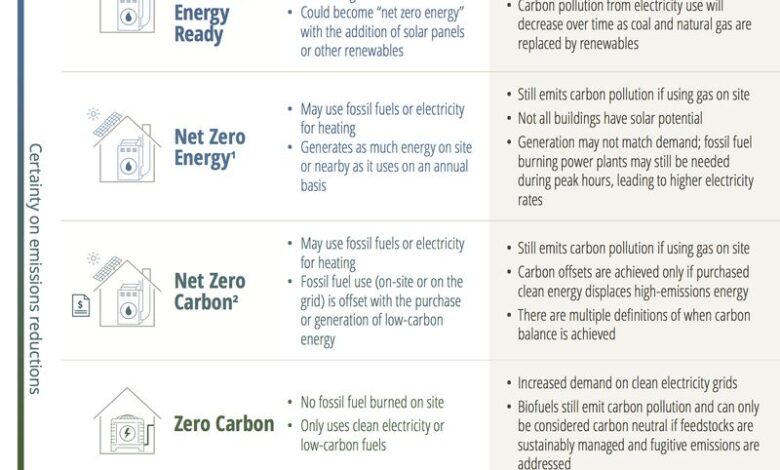
1. Net Zero Energy Ready (The Foundation)
A building designed with such high efficiency that a future solar or wind installation could easily offset its entire annual energy consumption.
- Key Feature: High-performance insulation and airtight envelopes.
- Strategic Role: It “prepares” the building for independence, though it may still rely on the grid for now.
2. Net Zero Energy (The Balanced Scale)
These buildings produce as much renewable energy on-site as they consume over the course of a year.
- The Reality: They often “export” energy during the day and “import” it at night.
- The Impact: Achieves a net-neutral energy bill, though it remains tethered to the grid for peak demand.
3. Net Zero Carbon (The Emissions Offsetter)
The focus shifts from energy volume to carbon impact. These buildings may use fossil fuels but neutralize their footprint through the purchase of high-quality carbon offsets or clean energy credits.
- The Lever: Uses financial and market instruments to achieve a zero-carbon balance sheet.
4. Zero Carbon (The Combustion-Free Zone)
A “Zero Carbon” building operates with zero on-site fossil fuel combustion. No gas stoves, no oil boilers—only clean, renewable electricity or biofuels.
- The Challenge: Requires a highly decarbonized local grid or massive on-site storage to manage the intermittency of renewables.
5. Zero Carbon + Grid Interactive (The Gold Standard)
This is the “Tesla of Buildings.” It doesn’t just sit on the grid; it communicates with it.
- Dynamic Resilience: It uses AI to store energy when it’s cheap/clean and feeds it back to the grid during peak stress.
- The Future: It acts as a mini-power plant, stabilizing the entire city’s energy ecosystem.
Comparison: Impact vs. Complexity
| Building Type | Decarbonization Level | Grid Impact | Resilience |
| Energy Ready | Moderate | Passive | Low |
| Net Zero Energy | High | Neutral | Moderate |
| Zero Carbon | Very High | Independent | High |
| Grid Interactive | Ultimate | Supportive | Total |
Beyond the Blueprint: Why This Matters Now
The shift toward Net Zero is no longer just an environmental choice it is a financial and social imperative:
- Asset Protection: Net zero homes retain higher resale value and are shielded from rising carbon taxes.
- Health & Comfort: Superior insulation and filtered ventilation lead to better indoor air quality and reduced respiratory issues.
- Energy Security: Grid-interactive homes provide a safety net during blackouts and extreme weather events.
The Bottom Line
The buildings of the 21st century must do more than shelter us; they must sustain us. Every move toward Level 5 is a move toward a planet that remains livable for generations to come.
source: