Type of carbon explained
A Strategic Taxonomy of Risk and Resilience
In the boardroom, “carbon” is often reduced to a single metric: CO2e. However, for the climate scientist and the sophisticated urban planner, carbon is a multidimensional spectrum. Understanding the chromatic taxonomy of carbon from the soot in our city air to the seagrass in our oceans is the difference between a superficial sustainability report and a robust, future-proofed climate strategy.
The Atmospheric Accelerants (Warming Carbon)
These forms of carbon do not just linger; they actively “superheat” the atmosphere. They are the primary targets for rapid-response mitigation in urban centers.
Black Carbon (The Soot Factor)
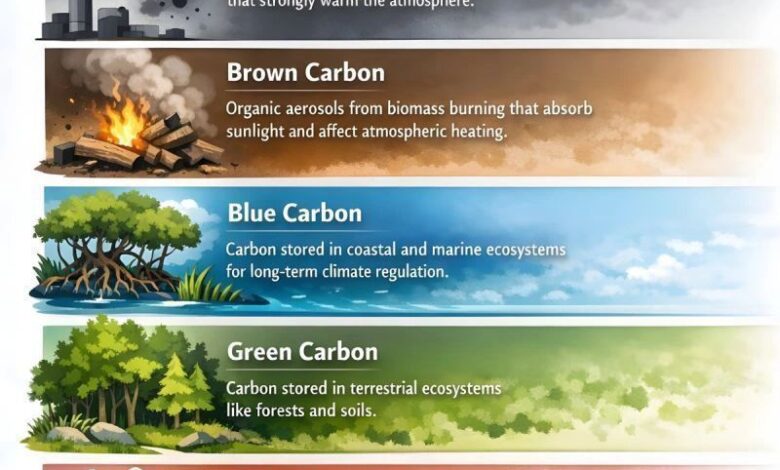
- Origin: Incomplete combustion from diesel engines, industrial flares, and cookstoves.
- The Danger: It is a “Short-Lived Climate Pollutant.” While it stays in the air for only days, its warming impact is up to 1,500 times stronger than CO2.
- The Albedo Crisis: When it settles on Arctic ice, it turns white surfaces dark, absorbing heat and triggering a terminal melt loop.
Brown Carbon (The Wildfire Feedback)
- Origin: Biomass burning and organic aerosols (forest fires and wood fuel).
- The Danger: As global wildfires increase, brown carbon creates a feedback loop trapping solar radiation and further drying out forests, leading to even more intense fires.
The Natural Fortresses (Sequestration Carbon)
These represent “Nature-Based Solutions” (NbS). They are the world’s most efficient carbon sinks and the focus of high-quality voluntary carbon markets.
Blue Carbon (The Coastal Powerhouse)
- Origin: Mangroves, seagrasses, and salt marshes.
- Strategic Value: These ecosystems can sequester carbon 40 times faster than terrestrial forests.
- The Multiplier: Beyond carbon, Blue Carbon assets provide coastal storm protection and support global fisheries, offering massive “co-benefits” for ESG reporting.
Green Carbon (The Terrestrial Anchor)
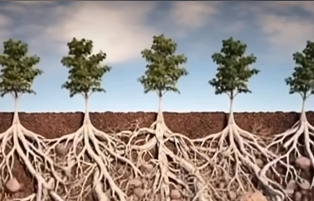
- Origin: Carbon stored in forests, grasslands, and soil through photosynthesis.
- Strategic Value: This is the bedrock of regenerative agriculture. Healthy soil is the second-largest carbon store on Earth after the ocean.
The Industrial & Biological Drivers
Grey Carbon (The Legacy Emissions)
- Origin: Fossil fuel-heavy industrial output (power plants, manufacturing, transit).
- Strategic Value: This represents the “Scope 1 & 2” inventory that must be eliminated to reach Net Zero.
Red Carbon (The Biological Melt)
- Origin: Deep-red pigmented algae blooming on snow and glaciers.
- The Danger: Often overlooked, red carbon darkens the “Earth’s Mirror.” By reducing reflectivity, it accelerates glacial retreat, directly impacting global sea-level rise projections.
Strategic Matrix: Carbon Types vs. Action
| Carbon Type | Impact Velocity | Strategic Response | Reporting Focus |
| Black/Brown | Immediate | Fleet Electrification & Air Filters | Public Health & Quick Warming Wins |
| Blue/Green | Long-term | Ecosystem Restoration & Soil Health | Biodiversity & Long-term Stability |
| Grey | Sustained | Energy Transition & Renewables | Decarbonization Pathways |
| Red | Feedback Loop | Global Cryosphere Protection | Physical Asset Risk Assessment |
When Cities Grow Their Own Food
How does this taxonomy apply to the “Vertical Farming” revolution mentioned in China?
- Reducing Grey Carbon: By growing food in 1,000-acre vertical cities, we eliminate the high-carbon “Grey” logistics of long-haul trucking.
- Enhancing Urban Green Carbon: These farms act as internal carbon scrubbers, using the $CO_2$ exhaled by residents to accelerate plant growth.
- Water Resilience: By using 90% less water, these systems protect the surrounding “Green Carbon” ecosystems from being drained for traditional irrigation.
The Executive Summary
To lead in the 2026 climate economy, organizations must evolve their carbon vocabulary:
- Mitigate the “Short-Lived” Warmers: Reducing Black Carbon offers the fastest possible ROI for the planet’s temperature.
- Invest in the “Blue” and “Green”: Protecting natural sinks provides a hedge against rising carbon prices.
- Audit the “Grey”: Transitioning away from fossil-based carbon is the baseline for legal and financial compliance.