Cassava bags: plastic’s circular alternative
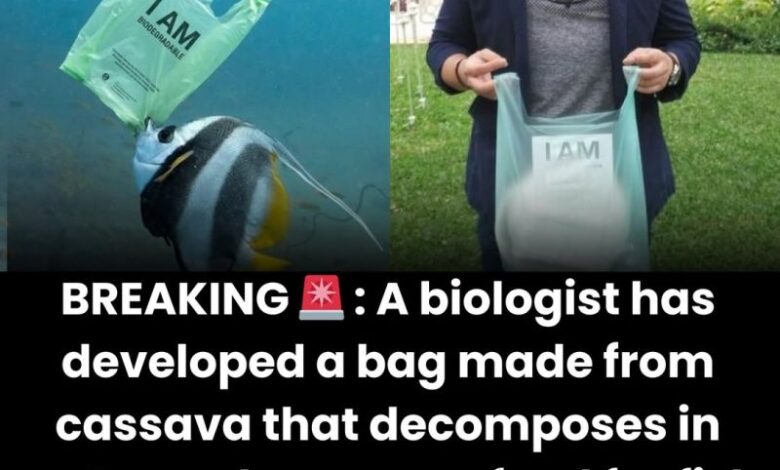
A Bio-Circular Material Innovation Replacing Plastic
Single-use petroleum-based plastics represent the most significant hurdle in achieving a global circular economy. These materials persist for centuries and leave behind a permanent trail of microplastics. As a solution, cassava starch-based material innovation has emerged as a bioplastic alternative capable of reintegrating into nature without toxic residues.
1. Material Profile: Why Cassava?
Cassava is chosen as the primary raw material due to its biological characteristics and abundant availability, particularly in tropical regions like Indonesia.
- Natural Polymer Composition: Cassava starch contains amylose and amylopectin, which can be processed into flexible films through thermoplastic starch (TPS) techniques.
- Total Biodegradability: Unlike “oxo-degradable” plastics that merely break down into smaller fragments, cassava bags are fully decomposed by microorganisms into water, $CO_2$, and biomass in less than 180 days in soil.
- Water Solubility: The latest innovations allow these bags to dissolve instantly in hot water or degrade gradually in seawater without harming aquatic ecosystems.
2. Circular Economy Value Analysis
The cassava bag is not just a “green” product; it is a manifestation of the designing out waste principle:
| Circular Pillar | Implementation in Cassava Bags |
| Resource Efficiency | Utilizes renewable resources with a rapid regeneration cycle compared to fossil fuels. |
| Ecosystem Safety | Edible and safe for marine fauna, transforming potential pollution into organic nutrient sources. |
| Zero Toxic Residue | Contains no harmful plasticizers or phthalates; safe for the human food chain. |
| Waste-to-Value | Used bags can be processed into high-quality compost for agriculture. |
3. Industrial Landscape & Scalability
Currently, the adoption of plant-based starch technology has reached the stage of mass commercialization. Startups in Indonesia, Australia, and Europe have begun producing water-soluble packaging for various needs:
- Retail & Fashion: Shopping bags and garment packaging.
- Logistics: Eco-friendly polymailers for e-commerce shipments.
- Agriculture: Seedling wraps that can be planted directly into the soil.
4. Challenges and the Future
While promising, the primary challenges lie in production costs, which are currently higher than conventional plastics, and moisture resistance, which requires ongoing R&D improvements.
However, as regulations on single-use plastics tighten globally, economies of scale will eventually be achieved, positioning cassava bags as a new standard in the global packaging industry.
Cassava bags are living proof that circular design can align human logistical needs with Earth’s regenerative boundaries. This is a concrete step toward a future where waste no longer exists as pollution, but as organic raw material for the next cycle of life.