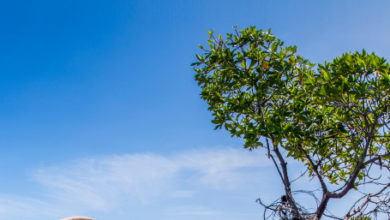
The potency of Cratoxylum arborescens blume (geronggang) and combrecarpus rotundatus dans (tumih) as natural regeneration in degraded tropical peat swamp forest
The Resilience Narrative: Evaluating Cratoxylum arborescens and Combrecarpus rotundatus in Fire-Scarred Peatlands
1. The Context: A Landscape in Crisis
Massive forest fires have transformed vast swathes of tropical peat swamp forests into degraded, carbon-heavy landscapes. The challenge for conservationists is finding species that can bridge the gap between “wasteland” and “ecosystem.” This study evaluates the natural regeneration potential of two indigenous pioneers: Geronggang (Cratoxylum arborescens) and Tumih (Combrecarpus rotundatus).
2. Methodology: Tracking Survival Across Two Decades
To gauge the long-term success of these species, research was conducted across five distinct locations devastated by the historic 2006 fires.
- Sampling: 25 plots were established per location.
- Metric: Biodiversity and density were measured across four critical growth stages: Seedling, Sapling, Pole, and Tree.
- Analysis: Vegetation indices were calculated using the standard Magurran formulas to assess dominance and distribution.
3. Comparative Performance: Survival vs. Succession
The data reveals a fascinating “changing of the guard” between the two species as they mature:
| Growth Level | Species Performance |
| Tree Level | Tumih (C. rotundatus) is the clear survivor. Individuals present today are largely those that withstood the initial 2006 fires, outnumbering Geronggang in the canopy. |
| Pole, Sapling, & Seedling | Geronggang (C. arborescens) takes the lead. While both species regenerate well, Geronggang shows slightly higher dominance in newer growth, suggesting a more aggressive colonization strategy. |
4. Key Findings: The Biodiversity Paradox
While both species are exceptional survivors, the study highlights a critical ecological nuance:
- The Success: Both species are highly suitable for Natural Regeneration (NR). Their ability to persist without human intervention makes them ideal for remote, budget-constrained restoration projects.
- The Limitation: Neither species significantly improved the overall floristic diversity of the ecosystem. They act as “pioneer monocultures” rather than catalysts for a wider variety of plant life.
5. Management Implications: A Strategic Choice
The potency of C. arborescens and C. rotundatus lies in their cost-effectiveness.
Strategic Recommendation: In remote degraded areas where active replanting is financially or logistically impossible, these species should be prioritized as the primary “natural engineers.” They provide quick canopy cover and soil stabilization, even if secondary intervention is eventually needed to boost wider biodiversity.
Geronggang and Tumih are not just survivors; they are the foundation for the future of peatland recovery. While they may not spontaneously restore a “perfect” biodiverse forest, their sheer tenacity in the face of fire makes them indispensable tools for large-scale tropical reforestation.
source:
https://journal.pusbindiklatren.bappenas.go.id/lib/jisdep/article/view/185