The Truth Behind ESG, CSR & Sustainability
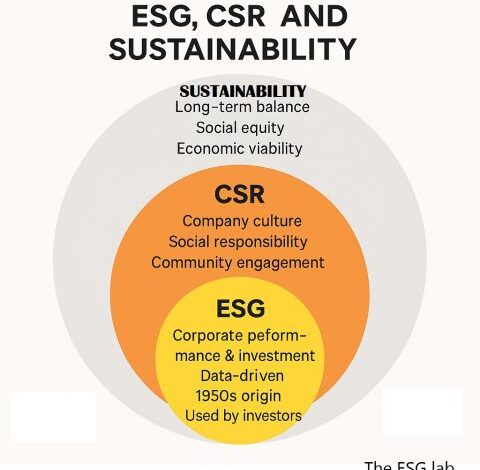
Sustainability is no longer a side conversation in business—it is the core narrative shaping investment, reputation, and long-term survival. Yet three terms are often used interchangeably: ESG, CSR, and Sustainability. While connected, each serves a distinct purpose.
💛 ESG (Environmental, Social, Governance)
ESG is a structured, data-driven framework used primarily by investors and analysts to evaluate risk and performance. It focuses on measurable indicators—carbon emissions, labor practices, board transparency, and governance quality. ESG answers a financial question at its core: How responsibly and sustainably is a company managed over time?
🧡 CSR (Corporate Social Responsibility)
CSR reflects a company’s voluntary commitment to society. It includes community programs, philanthropy, employee welfare, and ethical initiatives. Unlike ESG, CSR is less about metrics and more about values, culture, and brand responsibility. It answers: How does a company contribute beyond profit?
🤍 Sustainability
Sustainability is the broadest and most fundamental concept. It represents the balance between environmental integrity, social equity, and economic viability. It is not limited to companies—it applies to systems, economies, and societies as a whole. It asks: How can current needs be met without compromising future generations?
🔥 Why the distinction matters
ESG influences capital flow.
CSR builds public trust.
Sustainability defines long-term survival.
Confusing them weakens strategy. Aligning them strengthens impact.
💡 When ESG provides structure, CSR adds humanity, and Sustainability sets direction—business moves from short-term growth to long-term resilience.
The future of business is not about choosing between profit and purpose. It is about integrating both into a coherent system of responsibility.