
The True Cost of Climate Change
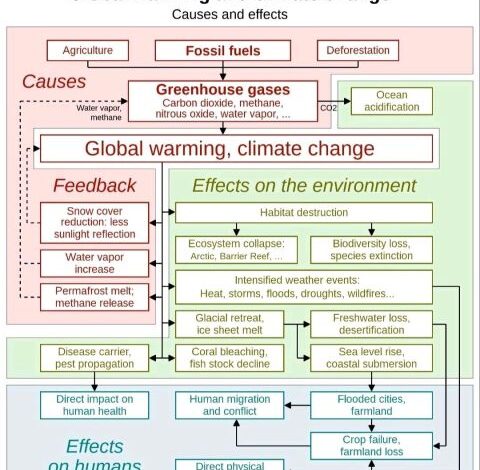
Climate change is not a single crisis.
It is a chain reaction reshaping ecosystems, economies, and human life across the planet.
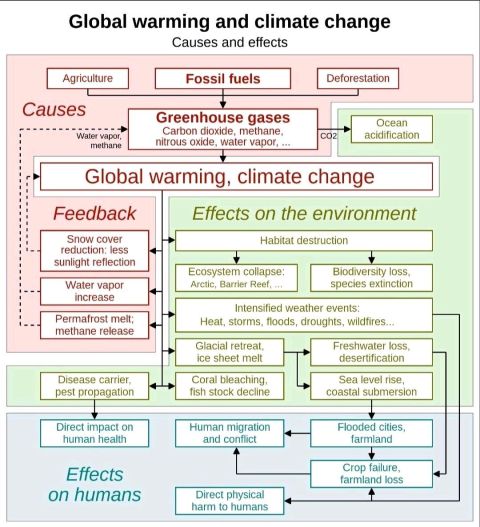
At the center of this system lies one core driver: greenhouse gas emissions produced by fossil fuels, deforestation, and unsustainable agriculture. Carbon dioxide, methane, and other greenhouse gases trap heat in Earth’s atmosphere — triggering global warming and destabilizing natural systems that humanity depends on.
But the real danger is the domino effect that follows.
As temperatures rise:
🔥 Heatwaves become more extreme
🌊 Glaciers and ice sheets melt faster
🌪️ Storms, floods, droughts, and wildfires intensify
🐠 Coral reefs bleach and marine ecosystems collapse
🌳 Biodiversity declines as habitats disappear
💧 Freshwater scarcity and desertification spread
🌍 Sea levels rise, threatening coastal cities and farmland
Climate change also creates powerful feedback loops.
Melting permafrost releases methane.
Shrinking snow cover reflects less sunlight.
Rising temperatures increase atmospheric water vapor.
These feedbacks accelerate warming even further.
And ultimately, every environmental impact becomes a human impact.
Climate change threatens:
⚠️ Food security and crop yields
⚠️ Public health and disease spread
⚠️ Economic stability and infrastructure
⚠️ Human migration and geopolitical stability
⚠️ Vulnerable communities already facing inequality
This is why climate action cannot be delayed or treated as a niche environmental issue. It is an economic, humanitarian, health, and security challenge all at once.
The good news is that the same systems causing the crisis can also solve it:
clean energy, circular economies, regenerative agriculture, ecosystem restoration, sustainable cities, and climate-smart innovation.
The future is still being written.
What humanity does this decade will define life for generations to come.
Temukan peta dengan kualitas terbaik untuk gambar peta indonesia lengkap dengan provinsi.


