Carbon neutral
The Strategic Leap From Carbon Neutral to Net Zero
If you are confused by the shifting goalposts of corporate climate claims, you are in good company. In boardrooms and marketing materials alike, “Carbon Neutral,” “Net Zero,” and “Carbon Credits” are frequently tossed around as if they mean the exact same thing.
They don’t. And using them interchangeably is becoming a massive regulatory and reputational risk.
As greenwashing scrutiny tightens globally, understanding the distinction between these terms isn’t just an academic exercise it is the difference between a credible transition plan and a public relations disaster.
The Glossary: Re-aligning the Definitions
To understand the progression, we have to look at what each mechanism actually does.
Carbon Credits: The Currency of Compensation
A carbon credit is a tradable certificate representing one metric tonne of CO2 (or equivalent greenhouse gas) that has been prevented from entering, or removed from, the atmosphere.
- The Mechanism: Buying a credit funds external projects like reforestation, methane capture at landfills, or renewable energy grids.
- The Reality: Credits are a tool, not a destination. They allow a company to financially sponsor carbon reduction somewhere else to make up for pollution it is causing today.
Carbon Neutral: Balancing the Scales
Achieving carbon neutrality means your organization’s total carbon output is mathematically balanced out to zero.
- The Strategy: You calculate your current footprint, reduce what you can easily manage, and then buy enough carbon credits to “offset” the rest.
- The Loophole: Technically, a company could change absolutely nothing about its high-polluting business model, buy millions of dollars in cheap avoidance credits, and legally claim to be “Carbon Neutral.” This is exactly why the market is moving past this definition.
Net Zero: The Ultimate Destination
Net Zero is a much stricter, science-based standard (typically aligned with the Science Based Targets initiative, or SBTi). It demands deep decarbonization across your entire value chain.
- The Strategy: You must aggressively eliminate emissions at the source aiming for a 90–95% absolute reduction across your operations and supply chain.
- The Role of Offsets: You cannot buy your way out of Net Zero. Carbon removal credits (like direct air capture or permanent geological storage) are permitted only for the final 5–10% of residual emissions that are technologically impossible to eliminate.
The Corporate Climate Maturity Curve
The easiest way to view these concepts is not as competing ideas, but as stages of an organization’s sustainability maturity.
| Dimension | Stage 1: Carbon Credits | Stage 2: Carbon Neutral | Stage 3: Net Zero |
| Primary Action | Financing external projects | Offsetting remaining emissions | Eliminating emissions at the source |
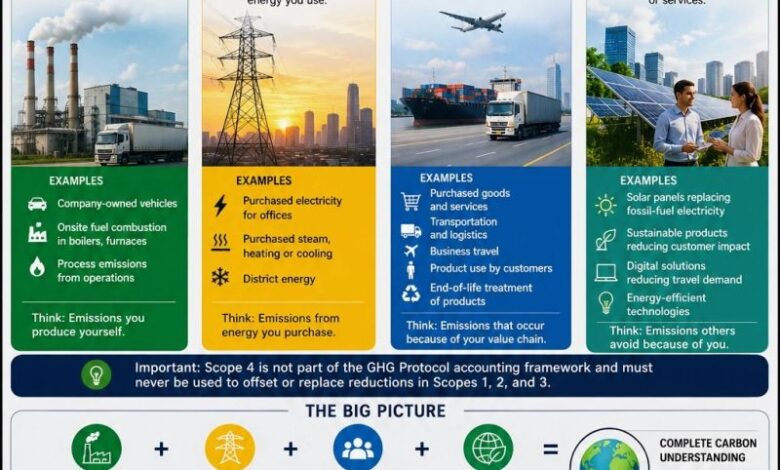
| Scope Covered | Usually selective | Typically Scopes 1 & 2 | Scopes 1, 2, and 3 (Full Value Chain) |
| Reduction Requirement | None required to purchase | Voluntary/Incremental | 90–95% absolute reduction required |
| Role of Offsets | The primary mechanism | Used to balance the entire footprint | Restricted to unavoidable residual emissions |
Carbon neutrality is about balancing today’s accounts; Net Zero is about redesigning your business for tomorrow.
As supply chain mandates tighten and stakeholders demand transparent data, companies relying solely on offsetting will find themselves left behind. True competitive advantage belongs to the organizations doing the hard work of cutting emissions at the source.