The fence that powers the farm
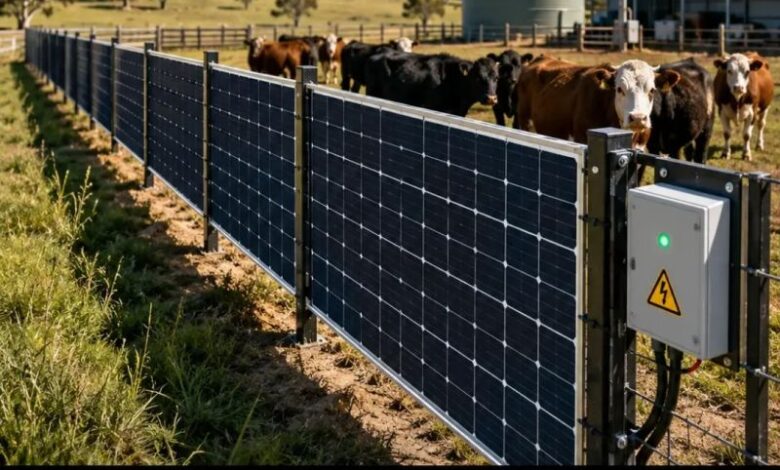
The Infrastructure in Plain Sight: Why the Next Solar Boom is Shaped Like a Fence
For generations, agricultural infrastructure had a singular, passive job. A roof kept the rain off the tractors; a barn kept the grain dry; a fence kept the livestock from wandering onto the highway.
But a quiet evolution in agrivoltaics (co-locating agriculture and solar energy) is turning these passive expenses into active revenue generators.
Case in point: Solar fencing.
Instead of swallowing up prime arable land with massive, horizontal solar arrays, farmers across Australia and Europe are turning their boundary lines into vertical, decentralized power plants. It is a masterclass in a principle that the global energy transition often overlooks: We don’t always need more land. We just need to use the land we have smarter.
The Anatomy of a Vertical Solar Fence
At first glance, a solar fence seems counterintuitive. Aren’t solar panels supposed to face the sun at a precise angle on a roof?
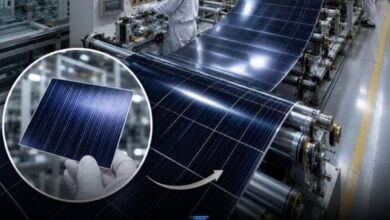
Not necessarily. Vertical solar fencing relies on bifacial solar panels, which harvest sunlight from both sides.
   [Sunlight] --->  | █ |  <--- [Reflected Light from Ground/Albedo]
                    | █ |
                    | █ |
              ================= [Ground Level]
Mounted vertically and oriented in an East-West direction, these fences capture two distinct energy peaks throughout the day—one in the morning and one in the afternoon—unlike traditional South- or North-facing arrays that peak only at noon.
Why This Shifts the Economics of Farming
For remote and commercial agricultural operations, energy isn’t just an administrative bill; it’s a massive operational bottleneck. Solar fences directly solve three of the biggest pain points in modern farming:
- Zero Footprint Penalty: Traditional solar farms take acreage out of production. Vertical fences have a near-zero footprint, leaving pasture land 100% available for grazing cattle or growing crops. In fact, they double as windbreaks, reducing soil erosion and providing shade for livestock.
- The Death of the Diesel Generator: Remote paddocks require energy for water pumps, automated gates, security lighting, and electric fencing. Delivering grid power to these corners is prohibitively expensive. Solar fences create an independent microgrid exactly where the work is happening.
- Dust and Snow Resilience: Because the panels stand completely vertical, they don’t collect dust, bird droppings, or debris anywhere near as fast as flat arrays. In colder regions, they shake off snow instantly and benefit from the “albedo effect”—capturing the highly concentrated sunlight reflecting off the snow on the ground.
The Macro Picture: The energy transition is moving away from purely centralized utilities and embedding itself into the physical fabric of our world.
The future of sustainability isn’t about finding massive, empty spaces to build new infrastructure. It’s about looking at the infrastructure we’ve already built our roads, our roofs, and our boundary lines—and asking a simple question: What else can this do?
Temukan peta dengan kualitas terbaik untuk gambar peta indonesia lengkap dengan provinsi.