
Life before plastic
How Yesterday’s Mindset Can Save Tomorrow’s World
What if the blueprint for a sustainable future is already written in our past?
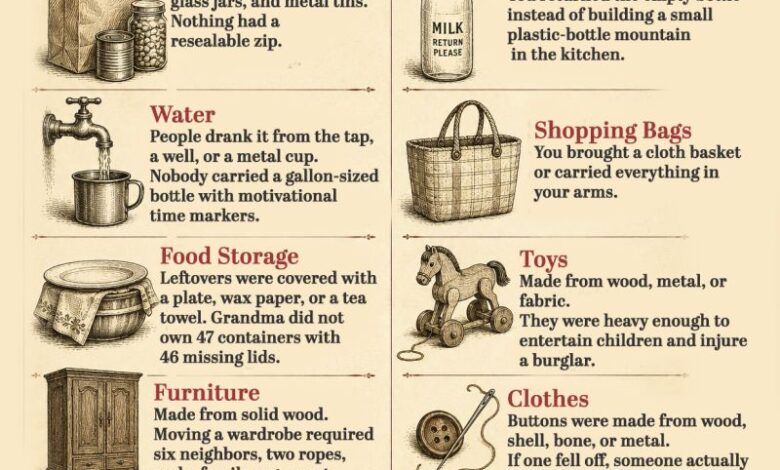
Long before single-use plastics invaded global supply chains, everyday life was anchored in durability and resourcefulness. Milk arrived in glass bottles that were washed, collected, and refilled. Groceries were carried home in hand-woven jute or cotton totes. Household furniture was crafted from solid timber meant to pass down through generations, and broken appliances were taken to local repair shops rather than tossed into a dumpster. Waste wasn’t a inevitable byproduct of daily living it was simply a material awaiting its next purpose.
This wasn’t mere romantic nostalgia; it was a functioning, highly efficient circular economy driven by practical necessity. Revisiting these pre-plastic principles offers more than just a historical trip it provides a pragmatic path forward for addressing today’s global waste crisis.
The Plastic Age: How Convenience Built a Global Crisis
The shift toward a plastic-dominated world accelerated in the mid-20th century. Celebrated for its low cost, light weight, and versatility, synthetic plastic revolutionized medical technology, food preservation, and manufacturing. However, this material miracle came with a hidden environmental tab: durability without biodegradability.
    [Linear Economy]       Take  ───>  Make  ───>  Use  ───>  Dispose
                                                                 │
                                                                 ▼
                                                        400M+ Tonnes/Year

    [Circular Economy]     Design ───> Use ───> Repair/Refill ───> Recycle ───┘
The Scale of the Crisis
- Massive Production: Over 400 million tonnes of plastic are produced globally every year.
- Low Recycling Rates: Less than 10% of all plastic ever produced has been recycled. The vast majority ends up in landfills, incinerators, or open ecosystems.
- Environmental Burden: Single-use polymers take anywhere from 200 to 500 years to degrade, fragmenting over time into microplastics that penetrate soil, freshwater systems, marine life, and human bloodstream networks.
Pre-Plastic Materials vs. Modern Polymers
To understand how to reduce reliance on single-use synthetics, it helps to analyze how traditional materials compare with modern synthetic plastics across key lifecycle metrics:
| Material | Durability & Longevity | End-of-Life Environmental Impact | Circular Potential |
| Glass | High (Indefinite lifespan if unbroken) | Inert; breaks down into natural sand over time | 100% Recyclable & Refillable without loss of quality |
| Natural Fibers (Cotton, Jute, Linen) | Moderate to High (Washable, repairable) | Fully biodegradable in natural soil | Compostable; low toxic footprint at end-of-life |
| Wood & Metals (Steel, Brass, Cast Iron) | Extremely High (Decades to centuries) | Metals are endlessly recyclable; wood decomposes naturally | Repairable, Upcyclable, & Recyclable |
| Single-Use Synthetic Plastics (PET, HDPE, Polystyrene) | Low utility life (minutes to days), high environmental longevity | Persists for centuries; degrades into harmful microplastics | Low Circularity; downcycled or landfilled |
5 Core Principles from the Past to Reclaim Today
Returning to a sustainable lifestyle does not mean abandoning medical breakthroughs, modern safety standards, or advanced technology. Instead, it means merging modern engineering with time-tested resource values:
- Design for Permanence (Built to Last)Transition away from “planned obsolescence.” Products should be engineered using high-grade, durable materials designed for long service lives.
- The Right to RepairA product that cannot be opened, serviced, or repaired is inherently disposable. Reviving repair networks—from shoe cobblers and tailors to electronics technicians—keeps materials in rotation.
- Refill & Reuse InfrastructureStandardized, returnable packaging systems (such as glass deposit programs) drastically reduce the energy required to process raw waste.
- Valuing the Material LifecycleShifting consumer psychology from viewing items as temporary conveniences to viewing them as valuable resources that require maintenance.
- Embracing Industrial CircularityDesigning products from the start so that every component can be easily disassembled, biodegraded, or continuously recycled into equal-quality products.
Moving Forward: Progress, Not Regression
Solving the plastic crisis isn’t about stepping backward in time; it’s about advancing forward with greater wisdom. By pairing 21st-century technological innovation with the timeless principles of care, durability, and resourcefulness, society can build an economy that serves human needs without overloading the planet.
source:


