From Coconut Waste to Cooler Classrooms
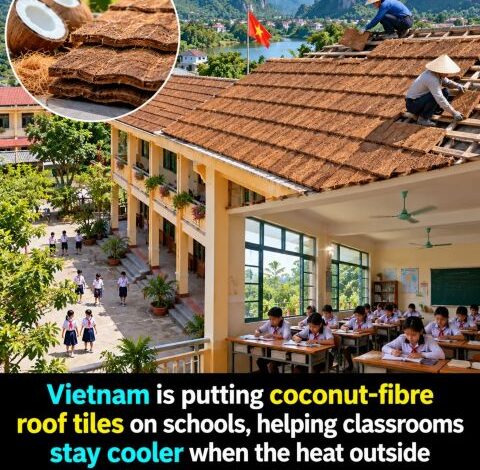
From Coconut Waste to Cooler Classrooms!
What if agricultural waste could help create more comfortable learning environments for children?
Coconut husks, often discarded after harvesting, contain natural fibres with promising thermal insulation properties. Researchers have explored using coconut coir in insulation boards, wall panels and roofing materials.
🏫 Why does this matter?
☀️ Natural Cooling: Coconut-fibre insulation can help slow heat transfer through building materials.
♻️ Circular Economy: Turning agricultural by-products into useful construction materials reduces waste and creates additional value.
🌿 Lower Energy Demand: Better-insulated classrooms may reduce dependence on air conditioning and mechanical cooling.
📚 Better Learning Environments: More comfortable indoor temperatures can support students’ concentration and well-being.
Research published in Construction and Building Materials has also explored coconut-fibre-based roofing components, demonstrating their potential for thermal performance.
The opportunity is bigger than roofing. It is about rethinking how we build schools using renewable, locally available resources.