Biodegradable coffe cups
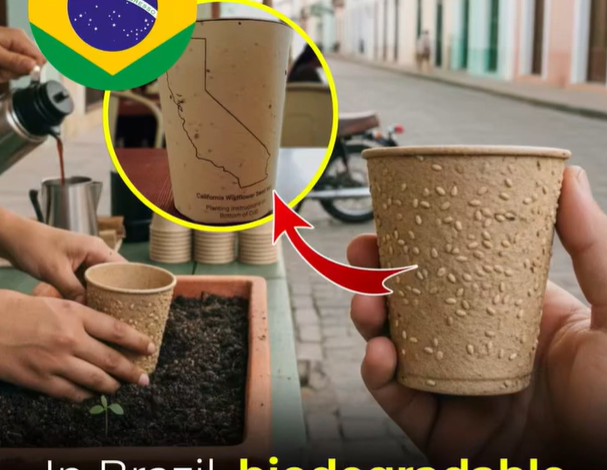
1. The Anatomy of a Living Cup
Traditional “paper” cups are often a recycling lie they are typically lined with a thin layer of polyethylene (plastic) to prevent leaking, making them nearly impossible to compost. The Brazilian “Seed Cup” strips away the plastic and replaces it with a mission.
- The Matrix: Crafted from recycled, unbleached paper pulp and natural vegetable glues.
- The “Payload”: Deep within the fibers of the base, native seeds ranging from wildflowers to chamomile or basil are embedded in a dormant state.
- The Trigger: Once the cup is discarded into the soil, moisture and microbial activity break down the organic walls, acting as a starter “nursery” for the seeds inside.
2. From “Trash” to “Terroir”
The brilliance of this design lies in its End-of-Life strategy. Most sustainable products aim to be “carbon neutral,” but a seed-embedded cup aims for a carbon-negative impact by actively sequestering CO2 as it grows.
The Lifecycle Comparison
| Feature | Standard “Eco” Cup | The Seed Cup |
| Lining | Polyethylene or PLA (Plastic) | 100% Organic Bio-wax |
| Decomposition | 20+ years (in landfill) | 30–60 days (in soil) |
| Ecological Value | Waste | Habitat & Pollen Source |
| Consumer Role | Disposer | Gardener |
3. The Psychology of Regeneration
This innovation tackles the hardest part of the green revolution: Human Behavior.
By turning a piece of trash into a “living thing,” the brand changes the consumer’s emotional relationship with the object. You aren’t just throwing away a cup; you are “planting” a future. This creates a powerful marketing narrative for coffee shops, transforming every customer into a micro-activist.
“Can products give back more than they take?”
4. Scaling the Micro-Forest
For this to move from a niche “cool idea” to a global standard, the movement requires three pillars of support:
- Bio-Infrastructure: Cities need “planting bins” or urban compost zones where these cups can thrive if they aren’t taken home.
- Seed Stewardship: Ensuring the seeds are non-invasive and native to the specific region where the coffee is sold to protect local biodiversity.
- Economic Incentives: Shifting subsidies from plastic production to bio-material innovation.
The Verdict: A Cup That Breathes
The Plant Your Cup initiative proves that waste is merely a failure of imagination. When we stop viewing objects as “single-use” and start viewing them as “transitional,” we move closer to a world where our urban footprint looks less like a concrete jungle and more like a blooming garden.