Decoding the path to decarbonization: a closer look at carbon emissions
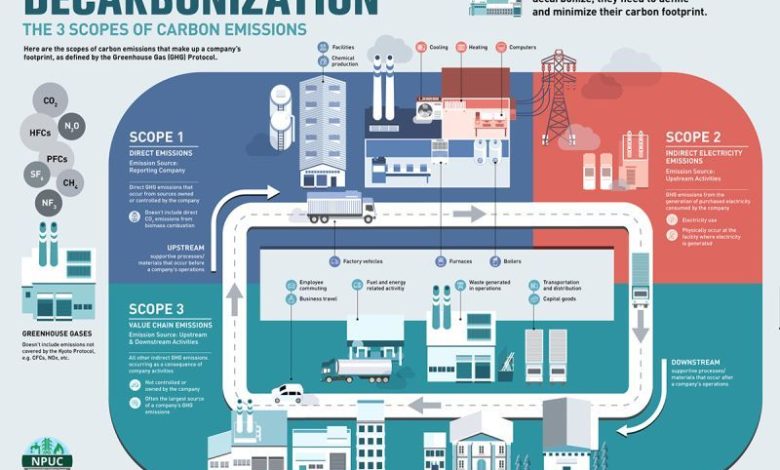
In the race against climate change, understanding and addressing carbon emissions is a cornerstone of decarbonization. The Greenhouse Gas (GHG) Protocol offers a structured framework to help organizations identify, measure, and reduce their carbon footprint. This system divides emissions into three critical scopes, each shedding light on where greenhouse gases originate and how businesses can tackle them.
Here’s a deep dive into the three scopes of carbon emissions and why they matter in our collective journey toward sustainability.
Scope 1: Direct Emissions—Where Responsibility Starts
These are emissions directly from sources owned or controlled by a company. Think of it as the most immediate and visible impact of an organization’s activities.
Examples:
- Emissions from vehicles in the company’s fleet.
- On-site combustion from heating, cooling, or industrial production.
- Use of equipment like computers or machinery.
These emissions represent a company’s most immediate opportunity to implement changes—such as transitioning to electric vehicles, optimizing energy use, or adopting cleaner fuel alternatives.
Key Takeaway: Tackling Scope 1 is about ownership. Every action here is directly tied to a company’s operational decisions.
Scope 2: Indirect Emissions from Electricity Use
Though indirect, Scope 2 emissions stem from energy purchased and consumed by the organization. While companies might not generate these emissions directly, they are responsible for the demand that drives them.
Examples:
- The electricity powering office buildings, data centers, and manufacturing facilities.
For many organizations, addressing Scope 2 involves transitioning to renewable energy sources like solar or wind, investing in energy efficiency, or purchasing renewable energy certificates (RECs).
Key Takeaway: Scope 2 highlights the power of choice—opting for clean energy can significantly reduce these emissions.
Scope 3: Emissions Across the Value Chain—The Big Picture
Scope 3 emissions are often the largest and most complex to manage. They include all other indirect emissions occurring across the entire value chain, both upstream and downstream.
Examples:
- Employee commuting and business travel.
- Transportation and distribution of products.
- Waste generated by operations or end-of-life product disposal.
This category requires organizations to think beyond their operations, working with suppliers, customers, and partners to create a truly sustainable value chain.
Key Takeaway: Collaboration is key. Addressing Scope 3 demands a holistic approach and shared responsibility across industries.
Why This Framework Matters
The GHG Protocol provides more than just a categorization—it’s a roadmap for accountability and action. By understanding their emissions profile, companies can better align with global decarbonization goals, face regulatory pressures, and meet growing consumer expectations for sustainability.
Did You Know?
Common greenhouse gases like CO₂, methane (CH₄), and nitrous oxide (N₂O) are just the beginning. Complex gases like hydrofluorocarbons (HFCs) and perfluorocarbons (PFCs) are also significant contributors to global warming.
The Kyoto Protocol set the stage for international collaboration, but emissions like chlorofluorocarbons (CFCs) and nitrogen oxides (NOx) remain unregulated by this framework. This underscores the need for proactive, voluntary action by businesses to address the full spectrum of climate impacts.
The Call to Action: Beyond Compliance
Decarbonization isn’t just about compliance—it’s about leadership. By measuring and reducing emissions across all three scopes, organizations can drive meaningful change, not just within their walls but across their industries.
Imagine This: A future where decarbonization isn’t an obligation but a standard, with businesses innovating to create a thriving, low-carbon economy.
Let this framework inspire you to act. Whether you’re an industry leader or a concerned citizen, every step toward understanding emissions is a step closer to safeguarding our planet.
Find this insightful? Share it with your network and be part of the change!
source :