ESG framework
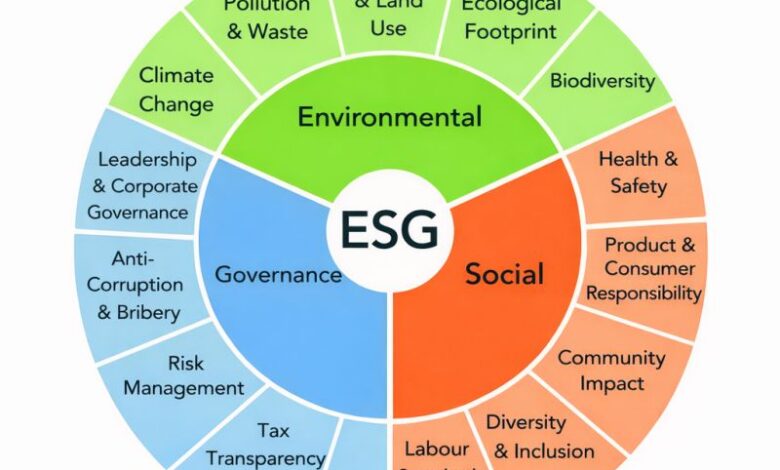
1. The Three Pillars: Measuring What Matters
ESG provides a standardized language for non-financial performance. By quantifying these impacts, organizations can manage risks that traditional balance sheets often miss.
Environmental (The Planetary Boundary)
This pillar measures an organization’s role as a steward of the natural world.
- Climate Strategy: Decarbonization pathways and net-zero targets.
- Circular Economics: Waste management and resource efficiency.
- Nature Positivity: Impact on biodiversity and land use.
- The Risk: Transition risks (policy changes) and physical risks (extreme weather).
Social (The Human Capital)
This focuses on the “Social License to Operate” the strength of an organization’s relationships with people.
- Equity & Inclusion: Building diverse workforces that drive innovation.
- Supply Chain Ethics: Ensuring human rights and fair labor standards across the entire value chain.
- Product Stewardship: Safety, privacy, and the long-term impact on the consumer.
- The Goal: Moving from “doing no harm” to “creating social value.”
Governance (The Ethical Architecture)
Governance is the system of checks and balances that ensures the other two pillars stand firm.
- Executive Accountability: Linking leadership compensation to ESG performance.
- Business Ethics: Anti-corruption, tax transparency, and data privacy.
- Resilience: Board-level oversight of long-term strategic risks.
- The Result: Enhanced investor confidence through transparency.
2. From Compliance to Competitive Advantage
The true power of ESG lies in integration, not just reporting. When embedded into the core business strategy, ESG acts as a catalyst for:
- Cost Reduction: Efficiency in energy and water use directly impacts the bottom line.
- Top-Line Growth: Attracting conscious consumers and accessing sustainable finance (Green Bonds/Sustainability-Linked Loans).
- Risk Mitigation: Identifying regulatory shifts (like the Carbon Border Adjustment Mechanism or CBAM) before they become liabilities.
- Talent Attraction: Gen Z and Millennial professionals increasingly choose employers whose values align with their own.
3. The Global Momentum: 2026 and Beyond
We have entered the era of mandatory disclosure. With the adoption of standards like the ISSB (International Sustainability Standards Board) and the ESRS (European Sustainability Reporting Standards), “Greenwashing” is being replaced by audited, high-quality data.
ESG is no longer about “saving the world” in isolation it is about building a business that is resilient enough to survive in it.
The Verdict: Profit and Purpose are no longer at odds. In the 21st century, profit is a byproduct of how well you manage your purpose.