Hot cities ramp up precipitation for rural area downwind
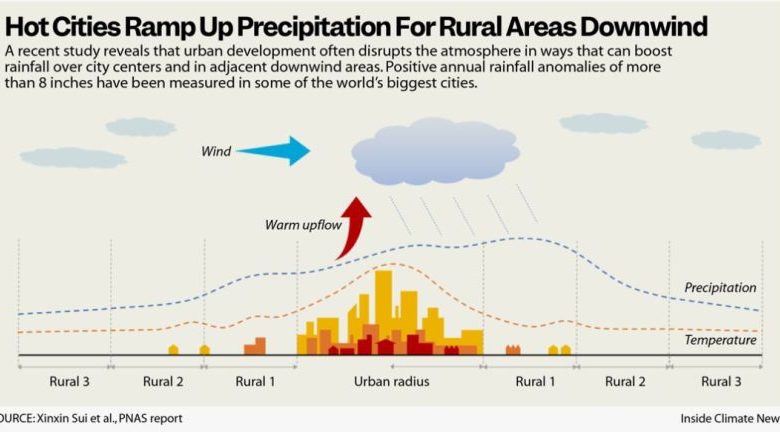
When we think of flooding, we often blame extreme weather, poor drainage, or climate change. But what if cities themselves are actively shaping their own rainstorms? A groundbreaking study analyzing over 1,000 cities worldwide has revealed something astonishing: urban areas are experiencing more intense and frequent rainfall than their rural surroundings.
In simple terms: Cities are becoming “wet islands,” triggering more rain and worsening extreme weather events.
But why is this happening? And more importantly, what can we do about it?
Cities Are Reshaping the Weather – Here’s How
Urbanization isn’t just about buildings, roads, and infrastructure—it’s also changing the sky above. Scientists have pinpointed three major ways that cities influence rainfall patterns:
The Urban Heat Island Effect
Think of a city as a giant heat sponge. Concrete, asphalt, and buildings absorb heat during the day and release it at night, making cities significantly warmer than their surroundings. This trapped heat causes air to rise, cool, and condense into rain clouds, often leading to heavier and more frequent downpours—especially in hot, humid regions.
Pollution Creates “Rain Seeds”
Urban air pollution isn’t just bad for health—it also affects how clouds form. Aerosols and pollutants act as tiny “seeds” that encourage raindrop formation, sometimes intensifying storms. In some cases, this can mean more rainfall; in others, pollution delays storms, making them more intense when they finally hit.
Skyscrapers & Urban Layouts Disrupt Wind & Moisture
Tall buildings and dense infrastructure redirect wind and moisture, sometimes slowing down storm movement. This can prolong rainfall over cities, making extreme weather events even worse.
Where Is Urban Rainfall Hitting the Hardest?
Not all cities are affected equally. The study found that some regions are experiencing dramatic increases in annual rainfall:
🔹 Africa & Oceania – Cities in these regions see the biggest jumps, with some African cities getting 200+ mm more rain per year than nearby rural areas.
🔹 Tropical & Temperate Cities – Hot, humid cities show the most extreme urban rainfall anomalies compared to drier or colder areas.
🔹 Coastal Cities – Proximity to oceans means extra moisture, fueling stronger storms and intense downpours.
And here’s the alarming part: In just two decades, some cities have seen urban rainfall increase by up to 62mm per year.
What Can Cities Do?
The findings of this study should be a wake-up call for policymakers, urban planners, and climate scientists. Cities are no longer just reacting to climate change—they’re actively shaping it.
1. Upgrade Drainage Systems – Many cities were designed for past climate conditions, not the intense rainfall they now experience. Smart, adaptive drainage infrastructure is critical.
2. Integrate Green Spaces – More parks, green roofs, and permeable pavements can absorb excess water and prevent flash floods.
3. Rethink Urban Climate Models – If urban-driven rainfall isn’t factored into climate models, cities will remain unprepared for future floods.
What’s Next?
We often view climate change as something happening to us, but this study shows we are active participants in shaping our own extreme weather.
The challenge now is not just to adapt—but to redesign cities in ways that work with nature, rather than against it.
source :