How are climate change, biodiversity loss and pollution connected?
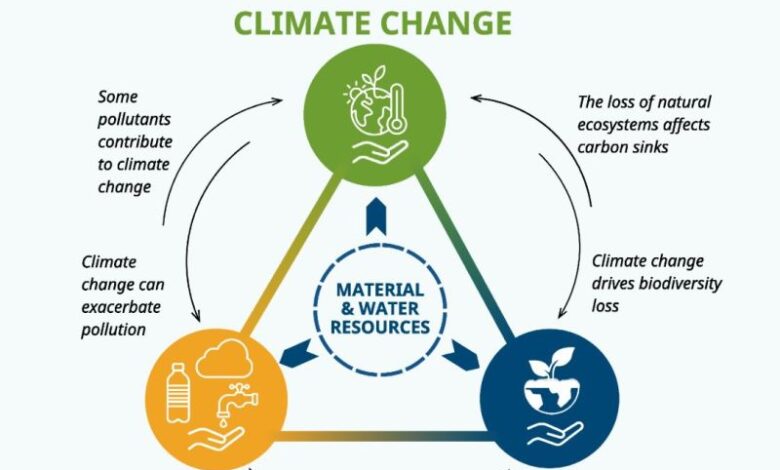
The Triple Threat: Unraveling the Interconnected Crises of Climate, Nature, and Pollution
We often treat Climate Change, Biodiversity Loss, and Pollution as three separate enemies. This compartmentalized view is a dangerous fallacy. In reality, these three crises are deeply intertwined, forming a devastating planetary emergency where each factor amplifies and accelerates the others. The whole is far more destructive than the sum of its parts.
To genuinely address our survival, we must understand this destructive, circular feedback loop:
1. Climate Change Accelerates Biodiversity Loss
Climate change acts as a primary stressor, aggressively dismantling the natural world faster than species can evolve or migrate.
- Habitat Destruction: Rising global temperatures and increasingly volatile weather patterns (such as prolonged droughts, intense heatwaves, and extreme floods) directly destroy or render habitats uninhabitable.
- Ecosystem Collapse: Iconic and vital ecosystems are unraveling coral reefs suffer massive bleaching events, tropical forests face increased risk of collapse, and permafrost thawing destabilizes the Arctic environment. This pushes species toward extinction and makes entire biomes non-functional.
2. Biodiversity Loss Worsens Climate Change
When nature dies, the planet loses its built-in defenses against global warming, turning a natural ally into a victim.
- Dismantling Carbon Sinks: Healthy forests, wetlands, and oceans are the Earth’s most powerful natural carbon sinks. When these ecosystems are destroyed (through deforestation, draining, or overfishing), their capacity to absorb atmospheric CO2 is eliminated.
- Releasing Stored Carbon: Furthermore, the destruction of these sinks, particularly forests and peatlands, releases vast amounts of previously stored carbon back into the atmosphere, directly worsening climate change. Nature, the original climate stabilizer, is being actively dismantled.
3. Pollution Damages Ecosystems and Fuels the Crisis
Pollution acts as a debilitating agent, poisoning the natural world and simultaneously intensifying the climate crisis.
- Poisoning the Planet: From ubiquitous plastics choking waterways and soils to chemical runoff and heavy metals, pollution degrades the health of both land and water ecosystems.
- Weakening Regulation: As ecosystems become weaker and less healthy due to pollution, their essential ability to regulate the climate (e.g., absorbing carbon, stabilizing local temperatures, and controlling the water cycle) is severely compromised.
- Direct Warming: Certain forms of pollution, such as black carbon from industrial sources and sulfur aerosols, can directly interact with the atmosphere to intensify warming effects.
The Solution: Integrated Action
This intricate, high-stakes loop where the impacts are circular and the societal cost is exponentially rising demands an integrated response. The OECD has warned that siloed, piecemeal solutions are no longer sufficient to prevent irreversible societal and economic damage.
The good news is that because the problems are connected, progress in one area creates cascading benefits across all three:
| Action Area | Integrated Result |
| Restore Ecosystems | -> Absorb more carbon -> Reduce pollution impacts. |
| Cut Pollution | -> Protect biodiversity -> Limit warming. |
| Advance Climate Action | -> Safeguard nature -> Stabilize resources. |
This is fundamentally a survival issue, not merely an environmental concern. Our strategy must shift from treating symptoms to designing integrated, cross-sector solutions that acknowledge this unified planetary emergency.