
SDGs and Waste Management
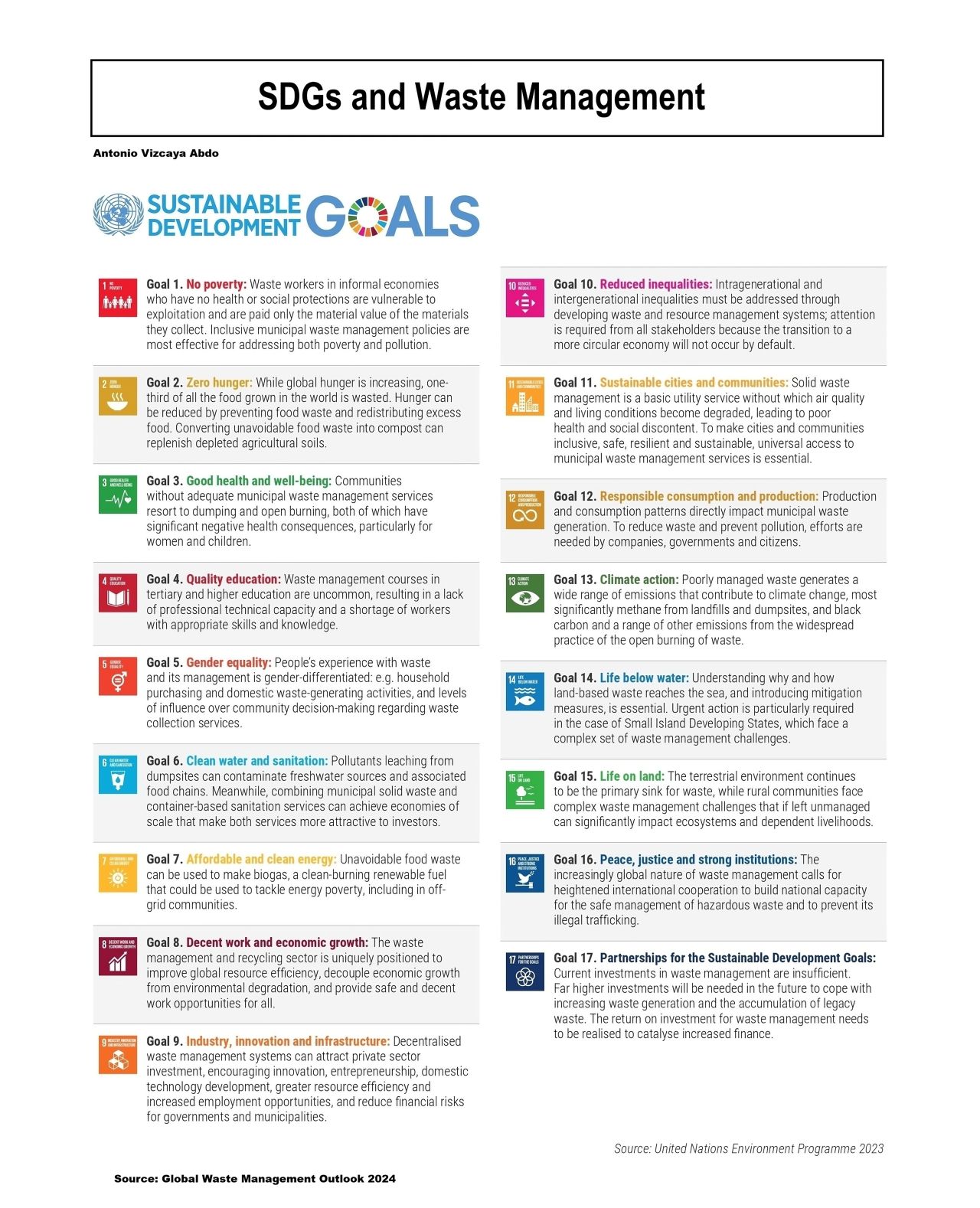
Effective waste management is not just an environmental issue. It is a critical enabler for advancing the Sustainable Development Goals (SDGs) across economic, social, and environmental dimensions. As waste generation continues to rise globally, the way it is managed plays a direct role in shaping sustainable development outcomes.
Poorly managed waste contributes to poverty and inequality by exposing informal workers to unsafe conditions and environmental hazards. Inclusive policies that integrate informal sectors and provide social protections can help reduce vulnerability and improve livelihoods, advancing SDG 1 and SDG 10.
Food waste remains a major challenge, with one-third of all food produced being lost or discarded. Addressing food waste can simultaneously reduce hunger, lower emissions, and restore soil health through composting, supporting SDG 2, SDG 12, and SDG 13.
Uncollected or improperly treated waste poses serious health risks, especially in vulnerable communities. The open burning and dumping of waste lead to respiratory diseases, soil and water contamination, and other public health concerns, making waste management essential to achieving SDG 3 and SDG 6.
The waste sector has high potential for job creation, innovation, and economic growth. Investment in recycling infrastructure, decentralized systems, and circular economy models can promote decent work, industrial development, and local entrepreneurship, directly contributing to SDG 8 and SDG 9.
Gender perspectives in waste management are often overlooked. From domestic responsibilities to decision-making roles in community services, integrating gender-responsive approaches strengthens equity and inclusion, addressing SDG 5 and improving outcomes across other goals.
Landfills and open dumpsites are major sources of methane and black carbon, contributing to climate change and environmental degradation. Improving waste management practices can significantly reduce emissions, mitigate environmental risks, and support climate action under SDG 13.
Finally, transitioning to sustainable waste systems requires cooperation and investment. Public-private partnerships, international collaboration, and local engagement are essential to scaling solutions and ensuring that waste management systems contribute meaningfully to all 17 SDGs
Source:
https://www.linkedin.com/feed/update/urn:li:activity:7345843701174214656


