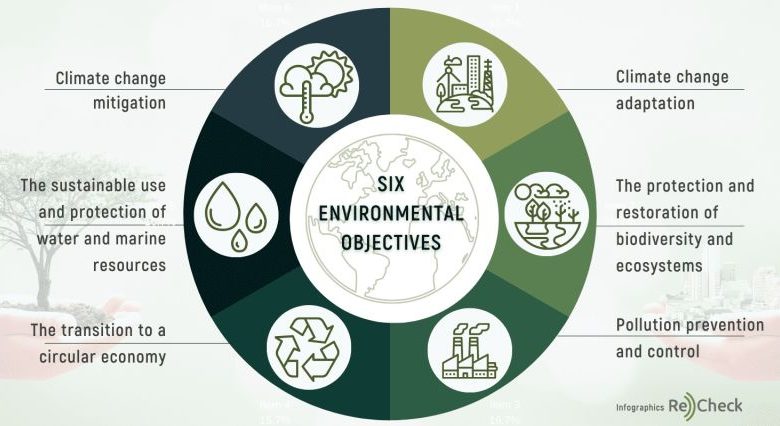
Six evironmental objectives
In an era where sustainability is no longer optional, the EU Taxonomy for Sustainable Activities emerges as more than a framework it’s a visionary blueprint for aligning economic growth with the well-being of the planet. This taxonomy isn’t just about regulations; it’s about redefining how businesses, investors, and societies approach environmental challenges.
By setting clear criteria for what constitutes “sustainable,” the EU Taxonomy lays the foundation for a greener future, offering a roadmap to achieve six pivotal environmental objectives. Let’s delve into what they mean and why they matter.
1️⃣ Climate Change Mitigation: Cutting Carbon, Building Hope
At its core, climate change mitigation is about slashing greenhouse gas emissions to curb global warming. This isn’t merely a call for action; it’s an invitation to innovation. Renewable energy projects, energy-efficient buildings, and sustainable transport systems take center stage, proving that economic growth and environmental responsibility can coexist.
Imagine cities powered by clean energy, transportation systems free from fossil fuels, and buildings that generate as much energy as they consume. This is the vision of climate change mitigation—a future where sustainability powers progress.
2️⃣ Climate Change Adaptation: Preparing for the Inevitable
As climate risks like floods and extreme weather become more frequent, adaptation is no longer optional. This objective focuses on resilience ensuring businesses, infrastructure, and communities are prepared to withstand and thrive in the face of climate challenges.
From flood-resistant buildings to early-warning systems for extreme weather, adaptation is about safeguarding lives and livelihoods. It’s not just about surviving; it’s about thriving in a changing climate.
3️⃣ Sustainable Use and Protection of Water and Marine Resources: Lifelines Worth Protecting
Oceans, rivers, and lakes are the veins of our planet, yet they face unprecedented threats. This objective emphasizes reducing water pollution, conserving marine ecosystems, and managing freshwater resources responsibly.
Picture pristine waterways supporting vibrant ecosystems, sustainable fisheries that feed millions, and innovative wastewater treatment systems ensuring clean water for all. This isn’t a dream; it’s the promise of sustainable water management.
4️⃣ Transition to a Circular Economy: Redefining Consumption
The days of “take-make-dispose” are over. The circular economy promotes a regenerative approach where waste is minimized, materials are reused, and products are designed to last.
Think of a world where your old smartphone isn’t trash but a source of valuable materials for the next generation of devices. Where industries thrive by turning waste into wealth. This is the transformative power of a circular economy efficiency meets sustainability.
5️⃣ Pollution Prevention and Control: A Cleaner, Healthier Planet
Pollution knows no borders, affecting air, water, and soil worldwide. This objective calls for the adoption of clean technologies and practices that reduce industrial emissions and minimize environmental harm.
Envision cities with clean air, industries powered by green energy, and water bodies free from toxins. Pollution prevention isn’t just an environmental necessity; it’s a moral imperative for future generations.
6️⃣ Protection and Restoration of Biodiversity and Ecosystems: Safeguarding Nature’s Legacy
Biodiversity is the foundation of life, yet it’s under relentless threat. This objective focuses on preserving natural habitats, protecting endangered species, and restoring ecosystems to their former glory.
Imagine thriving forests, rewilded landscapes, and ecosystems brimming with life. This isn’t just about conservation it’s about restoration, ensuring nature’s resilience in the face of human activity.
Why These Objectives Matter: Beyond Compliance
The EU Taxonomy isn’t just about ticking boxes; it’s about creating real, measurable change across three critical dimensions:
Environmental Impact:
- Reducing carbon footprints with renewable energy and sustainable practices.
- Preserving ecosystems through reforestation and biodiversity protection.
- Managing resources efficiently, from water to waste.
Financial Benefits:
- Driving investments toward green projects like solar farms and clean transport.
- Empowering businesses to make informed, future-proof decisions.
- Encouraging innovation in sustainability, unlocking new economic opportunities.
Transparency and Accountability:
- Eliminating greenwashing by setting clear, enforceable standards.
- Holding businesses accountable for genuine environmental contributions.
- Building trust with investors and consumers through measurable outcomes.
A Vision for the Future: Growth Without Compromise
The EU Taxonomy isn’t just a regulatory framework it’s a statement of intent. It challenges businesses and governments to see sustainability not as a burden but as an opportunity to innovate and lead.
This blueprint aligns economic ambition with ecological necessity, proving that growth doesn’t have to come at the environment’s expense. It’s a call to action a reminder that a sustainable future isn’t just possible; it’s already within our reach.
source :