
Tourism and the SDGs
A Blueprint for Sustainable Destination Development
The global tourism sector, a powerful engine for economic growth and cultural exchange, stands at a critical juncture. As the world grapples with pressing environmental and social challenges, aligning tourism development with the United Nations Sustainable Development Goals (SDGs) is not merely an aspiration but a necessity for long-term viability and positive impact.
A groundbreaking report, launched a couple of years ago by the World Economic Forum, provides an invaluable and enduring framework for achieving this alignment. Despite the passage of time, its principles remain remarkably relevant, offering a robust guide for shaping destinations that are not only desirable for travelers but also genuinely inclusive, resilient, and environmentally responsible.
Ten Guiding Principles for Sustainable Tourism
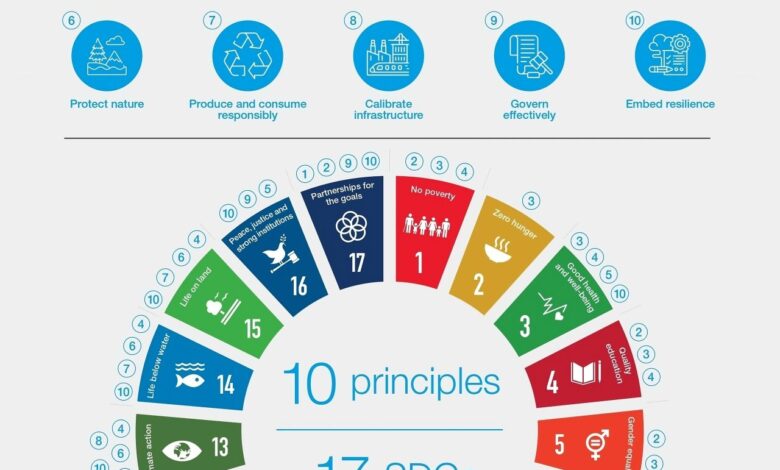
The report articulates ten core principles, each meticulously designed to translate global sustainability ambitions into actionable strategies for destinations worldwide. These principles serve as a compass, directing decision-makers toward practices that address both immediate challenges and long-term sustainability.
Crucially, each principle is directly mapped to specific SDGs, providing a clear roadmap for integrating global priorities into local tourism strategies. This direct alignment helps bridge the gap between high-level ambition and practical, measurable implementation:
- “Protect Nature” and “Produce and Consume Responsibly” are intrinsically linked to SDG 12 (Responsible Consumption and Production) and SDG 15 (Life on Land). This connection underscores the imperative for tourism to minimize its ecological footprint, conserve biodiversity, and promote sustainable resource management within ecosystems.
- “Prioritize Communities” and “Cultivate the Workforce” directly support SDG 8 (Decent Work and Economic Growth) and SDG 10 (Reduced Inequalities). These principles emphasize the social dimension of sustainable tourism, advocating for equitable distribution of benefits, fair employment practices, and the empowerment of local populations, ensuring that tourism truly serves as a vehicle for inclusive development.
Beyond these specific linkages, the framework champions several essential elements for truly sustainable growth:
- Science-Based Monitoring: Emphasizes the need for data-driven approaches to track environmental and social impacts, enabling informed decision-making and adaptive management.
- Improved Visitor Alignment: Calls for guiding traveler behavior towards more responsible choices and fostering a deeper appreciation for the local culture and environment.
- Protection of Cultural and Natural Heritage: Stresses the critical importance of safeguarding the unique assets that attract visitors, ensuring their preservation for future generations.
Enabling Structures: Governance, Infrastructure, and Resilience
The framework recognizes that effective implementation hinges on robust enabling structures. Governance and infrastructure are highlighted as pivotal:
- Effective Planning and Policy Coordination: Essential for coherent and integrated destination management, ensuring that all stakeholders are aligned on sustainability objectives.
- Capacity Building: Investing in the skills and knowledge of local communities and tourism professionals is crucial for delivering consistent value across economic, social, and environmental dimensions.
Ultimately, resilience emerges as a strategic outcome. Destinations that proactively integrate resilience principles into their planning and operations are significantly better equipped to:
- Manage Uncertainty: Navigate unforeseen challenges, whether economic downturns, natural disasters, or public health crises.
- Recover from Disruptions: Bounce back stronger and more quickly from adverse events.
- Adapt to Evolving Conditions: Continuously adjust to changing climate patterns, market demands, and technological advancements.
As global tourism systems continue their dynamic evolution, the World Economic Forum’s framework stands as a foundational and highly relevant blueprint. It provides a comprehensive approach for aligning the sector’s development with the universally agreed-upon Sustainable Development Goals, ensuring that tourism can indeed be a force for good, fostering long-term prosperity, protecting our planet, and enriching lives for all.
source:


