What a make up micro plastic?
The Invisible Invasion: Unmasking the True Sources of Microplastic Pollution
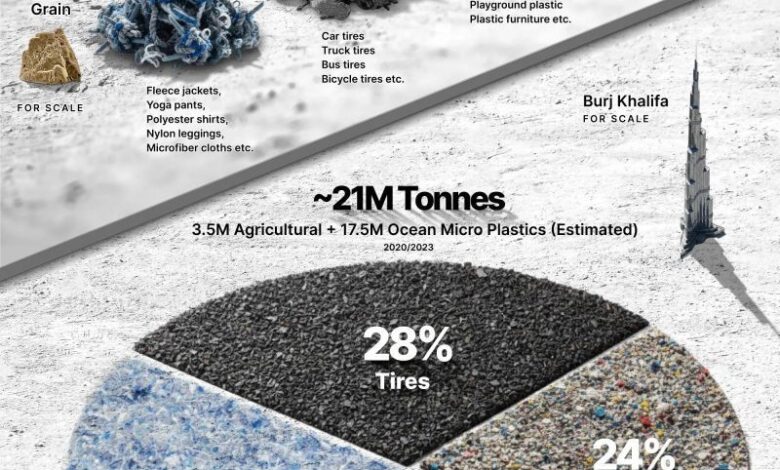
When we picture plastic pollution, our minds default to the visible: the ghost nets and floating bottles. Yet, the real crisis is a silent, global invasion orchestrated by fragments too small to see the microplastics. These invisible particles, totaling around 21 million tonnes annually, are relentlessly contaminating our air, water, food, and even our bodies.
This scale of pollution is staggering, equivalent to a plastic layer two miles wide and ten feet deep released into the environment every single year. Understanding the true origins of this pervasive contaminant is the first step toward combating this invisible health and ecological threat.
What Exactly Makes Up Microplastic? The Top 5 Culprits
The vast majority of microplastic pollution stems not from discarded packaging, but from the everyday wear-and-tear of modern life. Our daily habits and critical infrastructure are the primary sources:
1. Synthetic Textiles (35%): The Laundry Leak
The single largest source of microplastic pollution comes directly from our wardrobes. Every time a fleece jacket, pair of yoga pants, or polyester shirt is washed, synthetic fibers tiny plastic threads known as microfibers are shed and enter the sewage system. Our reliance on quick-drying, flexible synthetic clothing is actively poisoning our waters.
2. Tires (28%): The Road Dust Menace
As vehicles move, the friction between tires and the road surface causes them to wear down. This friction releases plastic dust into the air and washes it into waterways. The ubiquity of cars, trucks, and buses means this source is a continuous, massive contributor to both atmospheric and aquatic microplastic load.
3. City Dust (24%): The Urban Shedding
Our built environment constantly sheds plastic. This “city dust” includes microscopic fragments from countless sources: worn-down shoe soles, flaking outdoor paint, degraded playground equipment, and even materials from furniture and construction sites. This ubiquitous urban shedding ensures that microplastics are always present in the air we breathe.
4. Road Markings (7%): The Fading Lanes
The bright, durable paints and materials used for lane markers and traffic symbols on our roads are slowly, but surely, breaking down. Exposed to constant weather and traffic abrasion, these essential infrastructure markings gradually fragment into fine microplastic dust.
5. Other Sources (6.4%): The Hidden Contributors
The remainder of the pollution is completed by a mix of specialized products, including industrial plastic pellets (nurdles), marine coatings (paint flaking off ships), and plastic microbeads once common in personal care products.
The Human Imperative
This environmental crisis has crossed the boundary into human biology. Microplastics have now been detected infiltrating our lungs, bloodstreams, and even the placenta of unborn babies. This is no longer just an issue for marine life; it is an intimate threat to our collective health.
To confront this invisible crisis, we must demand a fundamental shift:
- Rethinking Consumption: Choosing durable, natural fibers over disposable synthetics.
- Innovating Production: Developing tires and road markings with non-plastic, environmentally benign materials.
- Material Choice: Investing in closed-loop systems and filtration technologies for textiles.
The evidence is clear: the most dangerous pollution is the one we cannot see. Addressing the origins of microplastics requires an overhaul of our consumption, production, and material choices now, before this silent invasion causes irreparable harm.
source: