
What Does ESG Really Mean? And How Do You Use it?
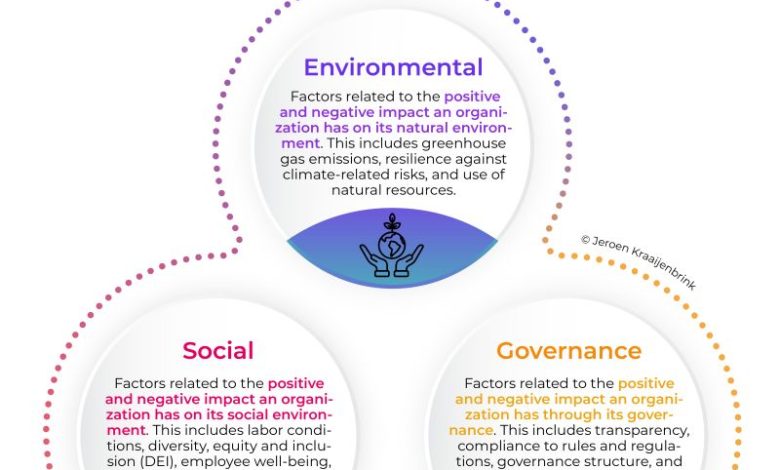
Environmental, Social, and Governance (ESG) is a framework originally developed to assess risks and opportunities in investments. Over time, it has evolved to become a key method for organizations to manage their sustainability efforts. ESG serves as a structured and focused middle ground between two other sustainability frameworks: the Triple Bottom Line (TBL) and the UN’s 17 Sustainable Development Goals (SDGs). The simplicity of TBL and the broad scope of the SDGs make ESG an appealing alternative for many organizations aiming to integrate sustainable practices.
Here’s a breakdown of what each component of ESG encompasses:
Environmental: This aspect examines how an organization impacts the natural environment. Key areas of focus include the organization’s carbon footprint, its resilience to climate-related risks, and its resource utilization practices.
Social: This dimension addresses the impact of an organization on its social surroundings. It covers a range of issues from labor conditions and diversity, equity, and inclusion (DEI) initiatives to employee well-being and community relations.
Governance: Governance in ESG pertains to how an organization is controlled and overseen. Important factors include adherence to regulations, the transparency of business practices, the structure of governance itself, and how the organization manages data privacy and security.
Implementing ESG can be complex due to its broad scope, but various tools and resources are available to help organizations navigate this process.
ESG can be utilized in several ways:
Greenwashing: Unfortunately, some organizations misuse ESG as a tool for greenwashing, using it superficially to enhance their corporate image without implementing genuine sustainable practices.
Risk Management: Consistent with its origins, ESG is effectively used to identify potential investment, business, and operational risks related to environmental, social, or governance issues.
Opportunity Identification: More proactively, ESG can help organizations identify new business or marketing opportunities that align with sustainable development goals.
True Change: Ideally, ESG is used to drive substantial and positive change within an organization, improving practices across all three dimensions in a manner that is both impactful and sustainable.
Understanding and implementing ESG can lead to significant benefits, including improved reputation, increased operational efficiency, and better alignment with global sustainability goals. Organizations looking to embrace ESG should strive for a comprehensive approach that transcends mere compliance and fosters genuine sustainable growth.
source :


