What is carbon credit?

The Financial Engine of Climate Action: Deciphering the Carbon Credit
We stand at a critical crossroads in the climate crisis. While technology and policy are essential, the sheer scale of the challenge demands a powerful, market-driven mechanism to channel trillions of dollars toward genuine solutions. This is where the carbon credit steps onto the world stage it is more than an accounting tool; it is the financial catalyst for global decarbonization.
For too long, the environmental cost of carbon emissions was invisible. A carbon credit makes it tangible.
What is a Carbon Credit, Really?
Imagine a golden ticket, but instead of entry, it represents a climate achievement:
- It is a certified, legally transferable instrument representing the reduction or removal of one metric ton of carbon dioxide CO2 equivalent from the atmosphere.
- It’s the mechanism that translates climate benefit from planting a forest to powering a village with solar energy into a verifiable, tradeable asset.
The Chain of Trust: From Idea to Impact
The true power of a carbon credit lies in its rigorous verification process. It ensures that the climate impact is real, permanent, and additional (meaning it wouldn’t have happened without the credit finance).
Here’s the practical journey from a project on the ground to a measurable climate benefit:
- Project Initiation: A tangible, real-world project begins a new wind farm, a massive reforestation effort, or a methane capture system. Intention is not enough; action is required.
- Independent Verification: Highly qualified third-party auditors swoop in. They assess the project against stringent international standards (like those set by the VCS or CDM) to confirm that the CO2 reductions or removals have actually occurred.
- Registration and Issuance: Verified credits are officially issued by established registries, acting as digital ledgers that prevent double-counting.
- Purchase and Retirement: A business or individual purchases the credit to offset their own emissions. Crucially, the credit is then permanently retired, removing it from circulation and allocating the climate benefit transparently to the buyer.
The Mandate for Responsible Use
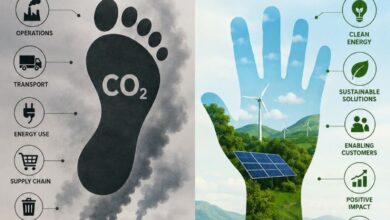
Carbon markets are not a magic wand to simply “erase” a company’s carbon footprint. They are a powerful complementary tool, not a replacement, for fundamental corporate change.
- The Golden Rule: High-quality carbon credits must never replace deep, internal decarbonisation efforts (i.e., switching to renewable power, redesigning logistics, or optimizing energy efficiency).
- Quality Over Quantity: The value is entirely dependent on the rigor of the underlying project. Insist on credits with top-tier, verifiable standards.
- Unlocking Global Finance: When used responsibly, these credits become the essential financial pipeline, unlocking capital for renewable energy expansion and community resilience in developing regions where climate finance is desperately needed.
Beyond the Balance Sheet
Understanding the mechanics of carbon credits is not just for sustainability officers; it’s for every leader, investor, and engaged citizen.
When you understand this system, you are empowered to ensure that climate finance is channeled into solutions that genuinely reduce global greenhouse gases, creating not just an accounting offset, but a verifiable, traceable, and positive climate legacy.
source: