What is Sustainable Tourism Transportation?
We often remember the destination, but sustainability begins long before we arrive. Travel and tourism involve the movement of people between places, connecting visitors with destinations, communities, and tourism experiences. As tourism continues to develop, the way people travel to and within destinations has become an important part of sustainable tourism planning.
Sustainable tourism seeks to consider the economic, environmental, and socio-cultural effects of tourism and balance these dimensions over the long term. Tourism can generate economic and social benefits, but its development can also place pressure on the environment and local communities. Sustainable tourism planning therefore requires attention not only to tourism activities themselves but also to how visitors move to, from, and within destinations. (United Nations Environment Programme [UNEP] & United Nations World Tourism Organization [UNWTO], 2005).
Transportation is fundamental to tourism because it enables visitors to reach destinations and move between attractions, accommodation, and other tourism-related services (International Transport Forum [ITF], 2015). However, these movements also contribute significantly to tourism-related greenhouse gas emissions. Different transport modes have different environmental impacts, making the transition toward lower-emission and more efficient mobility an important part of addressing climate change in tourism (World Tourism Organization & International Transport Forum, 2019).
Achieving more sustainable tourism transportation requires more than changing individual travel choices. It involves the development of appropriate infrastructure, accessible public and low-emission transport options, effective policies, and cooperation between tourism and transport stakeholders (ITF, 2015). As destinations seek to reduce the environmental impacts of tourism while maintaining accessibility and visitor mobility, emerging technologies and new transport systems are also becoming increasingly important. These developments are shaping the future of sustainable tourism transportation and include electric mobility, charging infrastructure, alternative fuels, sustainable aviation, and more integrated forms of travel.
Sustainable Tourism Transportation
Transportation is an essential component of the tourism system because it connects tourism-generating regions with destinations and enables visitors to move between attractions, accommodation, commercial services, and other tourism experiences. The location, capacity, efficiency, and connectivity of transport systems can influence destination development and determine how easily visitors can access and move within destinations (International Transport Forum [ITF], 2015). Transportation therefore includes reaching a destination as well as how tourism is experienced and managed.
Sustainable tourism transportation refers to the provision and management of mobility in ways that support tourism accessibility while reducing environmental impacts and contributing to the long-term sustainability of destinations. Effective tourism transportation requires attention to transport infrastructure and capacity, connectivity, border-crossing arrangements, inter modality, traveller information, and the compatibility of transport technologies with tourism services (ITF, 2015). Addressing these factors can help destinations provide more efficient and accessible mobility while supporting the wider objectives of sustainable tourism.
The environmental dimension is particularly important because tourism depends on the movement of people, and different modes of transportation generate different levels of environmental impact. Sustainable tourism mobility therefore involves encouraging lower-emission and more resource-efficient forms of travel. Public transport, walking and cycling, flexible transport systems, multimodal travel information, electric buses and vehicles, bike-sharing, and pedestrian-friendly infrastructure can provide visitors with alternatives to more carbon-intensive forms of mobility (OECD, 2024).
Sustainable tourism transportation also depends on effective coordination among tourism, transport, environmental, and other relevant stakeholders. Integrating sustainable mobility into tourism and national transport strategies can help destinations coordinate infrastructure, services, policies, and visitor mobility more effectively (OECD, 2024). As destinations move toward more sustainable mobility systems, this approach also creates a foundation for adopting emerging solutions such as electric mobility, charging infrastructure, alternative fuels, and other technologies that can shape the future of tourism transportation.
What Makes Tourism Transportation Unsustainable?
Tourism depends on the movement of people to and within destinations, making transportation an important part of the environmental and social impacts associated with tourism. The sustainability challenges arise not only from greenhouse gas emissions but also from the pressure that visitor mobility can place on transport infrastructure, destinations, local communities, and the management of visitor flows. The scale and nature of these impacts also vary according to the transport modes used and the characteristics of individual destinations.
Greenhouse Gas Emissions
Greenhouse gas emissions are one of the main environmental concerns associated with tourism transportation. Transport contributes substantially to the carbon footprint of tourism, although the level of emissions varies across transport modes. An analysis by the United Nations World Tourism Organization (UNWTO) and International Transport Forum (ITF) estimated that transport-related emissions from tourism accounted for approximately 5% of global human-caused carbon dioxide emissions in 2016 and projected an increase to 5.3% by 2030 under the scenarios examined. These projections demonstrate the importance of addressing transport emissions as tourism demand continues to develop (UNWTO & ITF, 2019). Tourism therefore faces an important challenge: maintaining the accessibility and economic benefits provided by transportation while reducing its contribution to climate change.
Pressure on Infrastructure and Destinations
Tourism transportation can also become unsustainable when transport infrastructure and destination capacity are unable to accommodate visitor demand effectively. Rapid or concentrated tourism development can increase pressure on roads, public transport, and other infrastructure needed to move visitors efficiently. Sustainable transport planning therefore requires destinations to consider tourism alongside wider infrastructure development and to assess the environmental, social, and economic consequences of transport investments (UNEP & UNWTO, 2005; OECD, 2024). Managing tourist traffic and improving the capacity and efficiency of transport systems can help reduce congestion and other pressures on destinations and their surrounding environments.
Pressure on Local Communities
The effects of tourism transportation extend beyond visitors and can influence the everyday lives of local communities. High visitor volumes can place pressure on local environments and community infrastructure, while the benefits generated by tourism may not always be distributed evenly. Sustainable tourism planning therefore needs to consider local needs and the experiences of communities alongside visitor mobility. Community involvement in tourism planning can contribute to greater local acceptance and help destinations respond to the social and environmental pressures associated with tourism development (OECD, 2024).
Tourism Concentration and Visitor Flows
The spatial and seasonal concentration of tourism can intensify the pressures associated with transportation. When large numbers of visitors travel to the same destinations or attractions during peak periods, transport systems and local infrastructure can experience increased demand. Managing these visitor flows can help destinations reduce pressure on communities and the environment. Approaches such as spreading visitors across different locations and periods, improving infrastructure, and providing more sustainable mobility options can support more balanced tourism development.Transportation is particularly relevant to visitor-flow management because mobility systems influence where, when, and how visitors move within destinations. Public transport, active mobility, flexible transport systems, and multimodal travel can provide alternatives for moving visitors while supporting more sustainable patterns of mobility (OECD, 2024).
Impacts Differ Across Transport Modes and Destinations
Tourism transportation does not produce the same environmental or social impacts in every situation. Emissions and other impacts vary according to the transport mode, while the sustainability challenges faced by destinations depend on factors such as their location, infrastructure, visitor patterns, and tourism characteristics. Transport-related emissions therefore need to be considered across different modes rather than treated as a single, uniform problem (UNWTO & ITF, 2019).The appropriate sustainability response can also differ between destinations. Long-haul and island destinations, for example, may face particular challenges related to transport decarbonisation because of their dependence on longer-distance travel, while other destinations may face greater pressures from local congestion, infrastructure capacity, or visitor concentration (OECD, 2024). Sustainable tourism transportation therefore requires context-specific planning rather than reliance on a single solution.
Tourism transportation becomes a sustainability concern through its contribution to greenhouse gas emissions, its interaction with infrastructure and visitor flows, and the pressures that tourism mobility can place on local communities and destination environments. Understanding these interconnected challenges is essential for identifying transport solutions that can support tourism while reducing its environmental and social impacts.
Environmental Impacts of Tourism Transportation
Transportation is an important contributor to the environmental impacts associated with tourism because tourism depends on the movement of people between and within destinations. Among these impacts, greenhouse gas (GHG) emissions are particularly significant because they contribute to climate change. Tourism is both affected by climate change and contributes to it through emissions generated by transport, accommodation, and other tourism-related activities (United Nations Environment Programme [UNEP], United Nations World Tourism Organization [UNWTO],)
Transport related emissions are especially important within the environmental footprint of tourism because different forms of tourist mobility generate different levels of carbon dioxide emissions. An analysis by the UNWTO and International Transport Forum (ITF) examined emissions from tourism-related transport across different transport modes and demonstrated the significant contribution of transportation to tourism’s overall carbon emissions (UNWTO & ITF, 2019). This makes transport decarbonisation an important component of efforts to reduce the environmental impacts of tourism.
The environmental implications of tourism transportation are closely connected with the broader challenge of climate change. Climate change mitigation requires reductions in the emissions generated by tourism activities, while adaptation is necessary to respond to the effects that climate change can have on tourism destinations and their operations. Transportation therefore needs to be considered as part of a wider approach to managing the environmental sustainability and climate impacts of tourism. Reducing the environmental impact of tourism transportation requires changes in both transport choices and the systems that support visitor mobility. Lower-emission options such as public transport and active mobility can reduce reliance on more carbon-intensive forms of travel, while sustainable aviation fuels offer a potential pathway for reducing emissions from air travel (OECD, 2024). The appropriate approach depends on the transport mode and destination, as tourism must continue to provide accessibility and mobility while progressively reducing its environmental impact.
The environmental impacts of tourism transportation demonstrate why mobility is a central consideration in sustainable tourism development. Reducing transport-related emissions is an important part of limiting tourism’s contribution to climate change and requires a transition toward more efficient, lower emission, and increasingly sustainable transport systems.
Sustainable Transportation Options
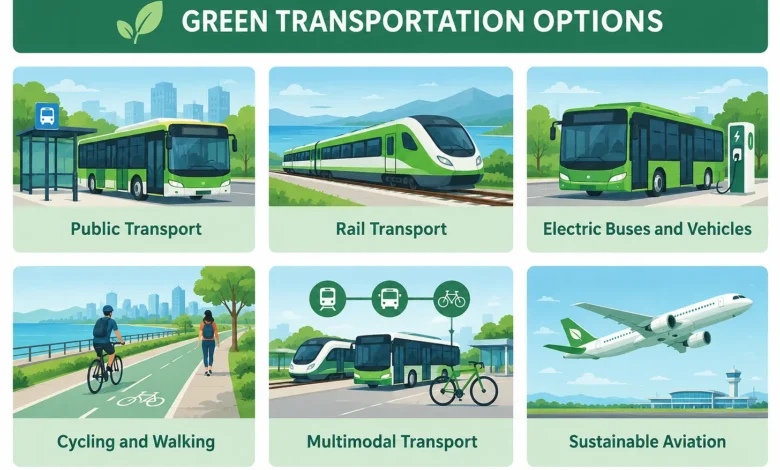
Tourism requires transportation both to reach destinations and to move within them. A sustainable tourism transportation system therefore needs to provide accessible and reliable mobility while reducing environmental impacts. Different transport options can contribute to this transition in different ways, depending on travel distance, destination characteristics, infrastructure, and visitor needs. Key approaches include public transport, rail, electric mobility, active mobility, multimodal transportation, and the decarbonisation of aviation.
https://openlibrary.substack.com/p/what-is-sustainable-tourism-transportation