𝗧𝗵𝗲 𝗙𝗼𝗿𝗺𝘂𝗹𝗮 𝗕𝗲𝗵𝗶𝗻𝗱 𝗘𝘃𝗲𝗿𝘆 𝗡𝗲𝘁 𝗭𝗲𝗿𝗼 𝗖𝗹𝗮𝗶𝗺
A lot of ESG conversations jump straight to net zero targets, carbon neutrality claims, and transition plans. But the real work starts with something much more basic: What did we do and how much did it emit? 🧐 🏭
𝗧𝗵𝗮𝘁 𝗶𝘀 𝘁𝗵𝗲 𝗹𝗼𝗴𝗶𝗰 𝗯𝗲𝗵𝗶𝗻𝗱 𝗚𝗛𝗚 𝗰𝗮𝗹𝗰𝘂𝗹𝗮𝘁𝗶𝗼𝗻:
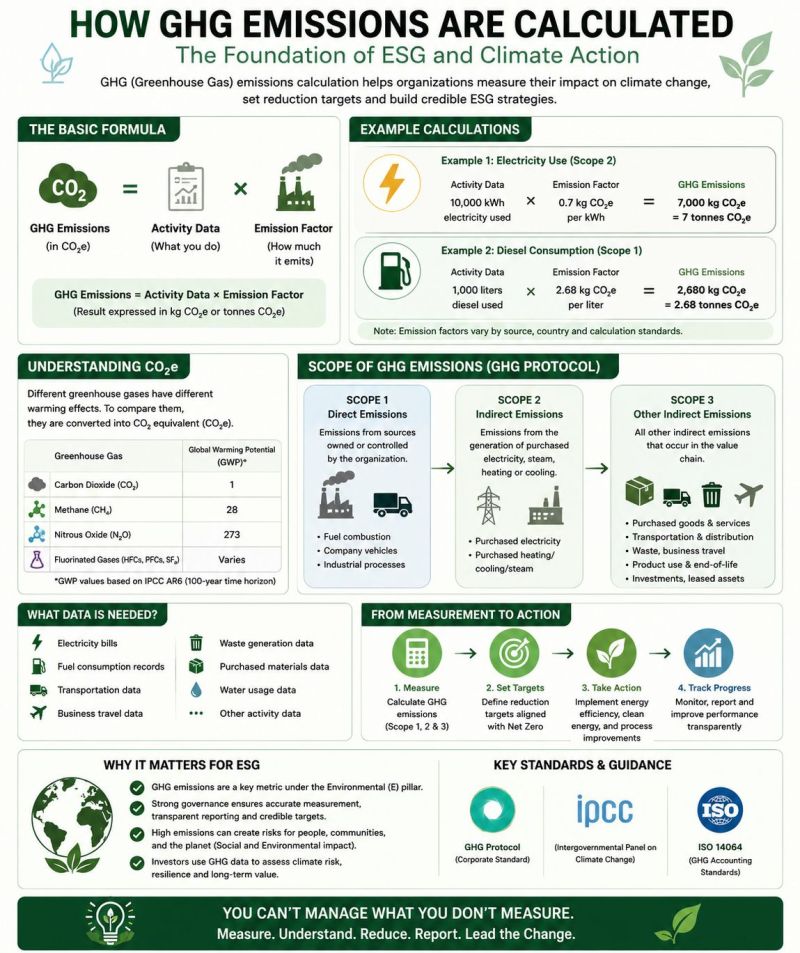
Activity Data × Emission Factor = GHG Emissions
▪️ Activity data is the real-world evidence: electricity used, diesel consumed, waste generated, business travel, purchased materials.
▪️Emission factors translate those activities into climate impact. The result is usually expressed as CO₂e, so gases such as carbon dioxide, methane and nitrous oxide can be compared on a common basis. GHG Protocol guidance explains that emissions calculations commonly use activity data and emission factors, while IPCC provides the scientific basis for global warming potential values.
For ESG teams, the calculation is only one part of the work. The bigger question is whether the boundaries are clear:
-Scope 1 direct emissions
-Scope 2 purchased energy
-Scope 3 value-chain emission
The GHG Protocol Corporate Standard remains a key reference for organisations preparing corporate-level GHG inventories and reporting across scopes.
𝗪𝗵𝗮𝘁 𝘁𝗵𝗶𝘀 𝘃𝗶𝘀𝘂𝗮𝗹 𝗿𝗲𝗺𝗶𝗻𝗱𝘀 𝗺𝗲:
-Data quality matters more than polished reporting.
-Emission factors must be relevant to the source, country and reporting year.
-Scope 3 cannot stay in the “too difficult” box.
-Measurement only matters if it leads to reduction.
-GHG accounting is not just a reporting exercise.
It helps organisations see energy waste, supplier risks, operational inefficiencies and the real pathway to decarbonisation. Because in climate action, measurement is not the destination. It is the starting line.