2050: A Net-Zero World Awaits
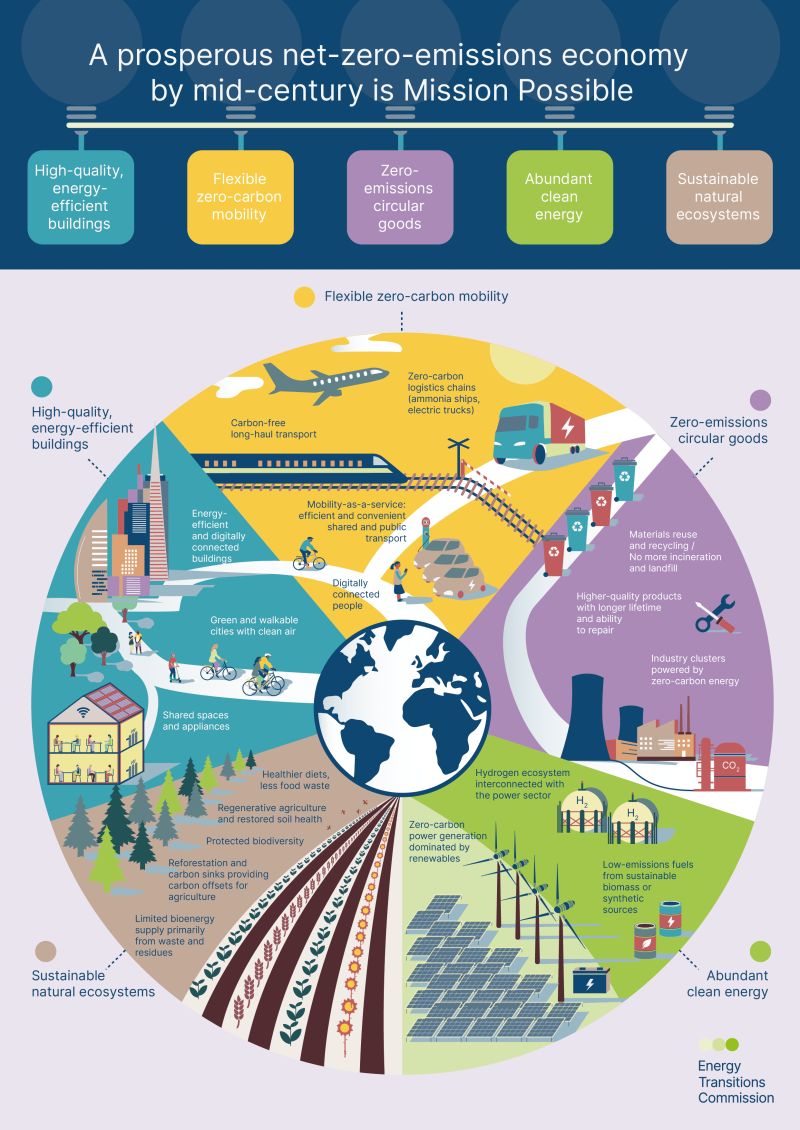
When people hear net zero by 2050, it often sounds like a distant dream. But here’s the truth: a prosperous, zero-emissions future is not only possible—it’s achievable.
The Energy Transitions Commission shows us what this future looks like. It’s not just about cutting emissions—it’s about creating healthier, smarter, and more inclusive societies.
Here’s what a net-zero world really means:
🏢 High-Quality, Energy-Efficient Buildings
Digitally connected and energy-smart homes
Shared appliances and spaces to reduce waste
Green, walkable cities with clean air
🚆 Flexible Zero-Carbon Mobility
Carbon-free aviation and shipping
Electric trucks and ammonia-powered ships
Efficient public transport and mobility-as-a-service
♻️ Zero-Emissions Circular Goods
No more incineration and landfills
Materials reused and recycled
Higher-quality products designed to last and be repaired
⚡ Abundant Clean Energy
Renewable power dominating global grids
Hydrogen ecosystems integrated into power systems
Low-emissions fuels from biomass and synthetic sources
🌳 Sustainable Natural Ecosystems
Reforestation and carbon sinks to restore balance
Regenerative agriculture and healthier diets
Protected biodiversity and reduced food waste
💡 The best part?
This isn’t about sacrifice—it’s about opportunity.
Cleaner air and healthier diets.
New jobs in green industries.
Smarter cities that are more livable for everyone.
The transition to a net-zero world isn’t just a climate strategy. It’s an economic growth strategy, a health strategy, and a survival strategy.
2050 is not far away. Every decision we make today—whether in energy, finance, policy, or daily choices—determines if this vision becomes reality.
Source: