6 biggest threats to Biodiversity
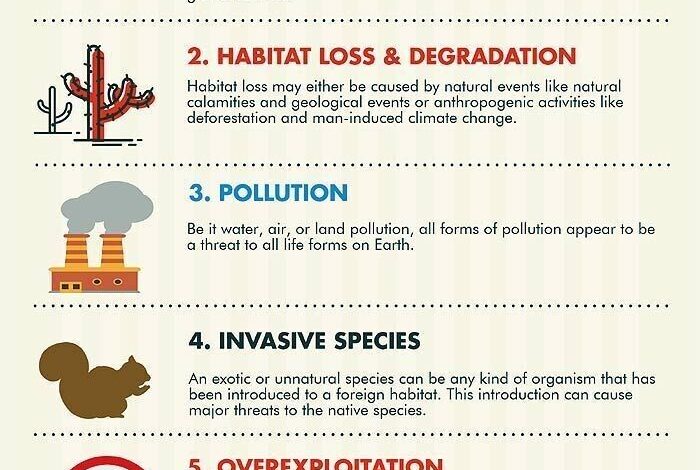
Biodiversity, or the variety of life on Earth, is in a state of crisis. Human activities are pushing countless species to the brink of extinction and disrupting the delicate balance of our ecosystems. Understanding the primary threats is the first step toward finding solutions. Here are the six biggest challenges facing our planet’s rich and complex web of life.
1. Habitat Loss and Degradation
This is the single greatest threat to biodiversity. As the human population expands, we clear forests for agriculture, drain wetlands for development, and urbanize natural landscapes. This doesn’t just reduce the size of habitats; it fragments them, isolating animal and plant populations. These isolated “islands” of nature are often too small to support healthy, genetically diverse populations, making them vulnerable to disease and local extinction.
2. Overexploitation
Overexploitation refers to the harvesting of a species at a rate faster than it can replenish its population. This includes overfishing, illegal wildlife poaching, and unsustainable logging. When a species is removed from its ecosystem too quickly, it creates a ripple effect throughout the food web, disrupting the balance and, in some cases, causing a collapse. The overhunting of passenger pigeons in the 19th century, once the most abundant bird in North America, serves as a stark warning of this threat.
3. Pollution
From plastic waste in our oceans to chemical runoff in our rivers and a build-up of greenhouse gases in the atmosphere, pollution is poisoning the building blocks of life. These pollutants can harm and kill species directly or subtly alter their environment, making it impossible for them to survive. For example, plastic waste can entangle and starve marine animals, while chemical pollutants can accumulate in the food chain, leading to health issues for top predators.
4. Climate Change
A changing climate is forcing species to adapt or face extinction. As global temperatures rise, habitats are shifting, sea levels are rising, and extreme weather events are becoming more frequent. Animals and plants that can’t migrate or adapt quickly enough are at risk. Melting Arctic ice threatens polar bears, and warmer oceans are causing widespread coral bleaching, devastating fragile marine ecosystems.
5. Invasive Species
An invasive species is a non-native organism that is introduced to a new environment and causes harm to the native ecosystem. Without their natural predators or competitors, these species can multiply unchecked, outcompeting native wildlife for resources, preying on them, or introducing new diseases. The brown tree snake, for example, was accidentally introduced to the island of Guam and has since driven several of the island’s bird species to extinction.
6. Disease
The spread of disease can have a devastating impact on biodiversity, especially in already weakened or isolated populations. As climate change alters habitats and human activity connects different parts of the globe, diseases can jump between species and spread across continents. For example, a fungal disease known as chytridiomycosis has caused the decline or extinction of hundreds of amphibian species worldwide, highlighting the vulnerability of entire groups of animals to a single pathogen.
A Call to Action
While the threats are significant, there is hope. By understanding these challenges, we can work towards solutions. This involves protecting and restoring natural habitats, promoting sustainable consumption, and supporting policies that address climate change.
source: